
Beach Hacks for Kids
Beach hacks for kids are simple, low-cost strategies covering gear, timing, and food that reduce stress, keep sand under control, and make a family beach day fun.
Last updated: June 2026
Quick Answer: Beach Hacks for Kids
The most impactful beach hacks for kids come down to three things: removing sand with baby powder, pre-packing everything the night before, and timing your day around the sun’s peak hours. Layer those basics with smart snack prep and a shady retreat for little ones, and you’ve got the foundation for a day that’s more fun than frantic. Everything below builds on that foundation.
Here’s the thing about a beach day with kids: you can’t wait for it, and you’ve also lived the chaos of sandy meltdowns, forgotten sunscreen, and a car that doubles as a sandbox on the way home. The good news is that beach tips with kids don’t have to be complicated. A little prep goes a long way.
Beach hacks for kids are simple, low-cost strategies covering gear choices, timing tricks, and packing habits that cut down on stress so you actually enjoy the day. Here’s everything that works, organized so you can use it on your very next trip.
The #1 Beach Hack You Need Right Now: Baby Powder
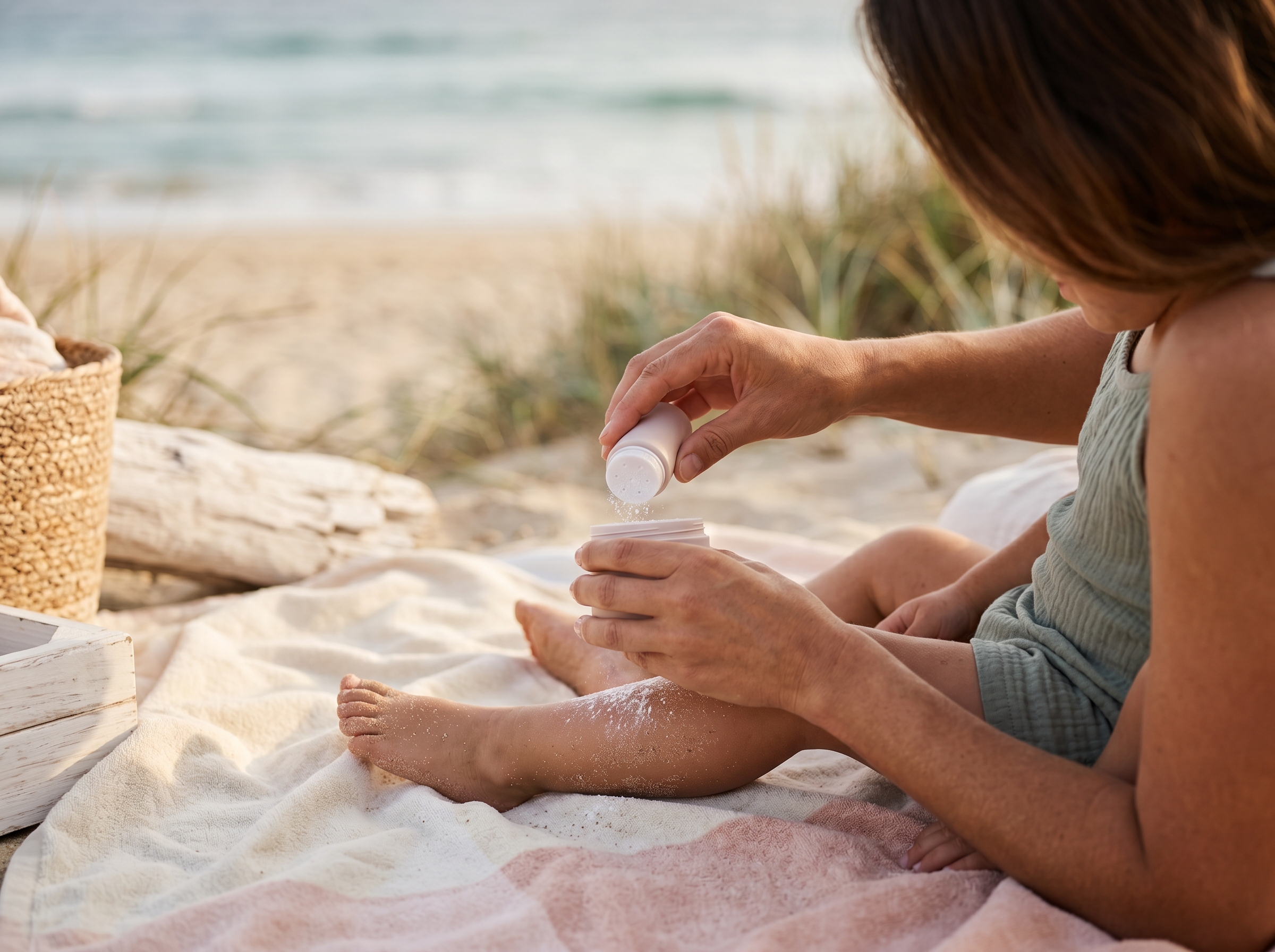
Before you do a single thing else, put a container of baby powder in your beach bag. That one move will make the whole day smoother.
Here’s why it works: damp skin is a sand magnet. Baby powder absorbs the moisture, which means sand stops clinging and brushes right off. It sounds almost too simple, but it’s the hack that gets the most gasps from parents who haven’t tried it yet.
A 6–9 oz bottle is plenty for two kids for a full day. Cornstarch works equally well and is often cheaper at the grocery store. Both are food-safe, which matters when you’re dealing with toddlers who put their hands in their mouths.
How to do it:
- Sprinkle baby powder generously over sandy legs, feet, and arms
- Rub briskly for about 10 seconds
- Brush the sand off with a dry towel, it comes right off
- For a beach day with toddlers, distract with a snack while you work on their legs
- Repeat before getting in the car at the end of the day
Sand-Proof Your Setup Before You Ever Leave the House
The families who show up looking relaxed? They packed the night before. Pre-trip setup is one of those family beach hacks that sounds boring but saves your entire morning.
Pack in Mesh, Not Plastic
Mesh laundry bags (the $4 dollar-store kind) are the unsung heroes of beach toy organization. Shake them clean before they ever touch your car. A 24-inch by 24-inch mesh drawstring bag holds a full set of sand toys and lets every grain fall through the holes.
Avoid solid-bottom totes for beach gear. Open-weave bags are your friend here.
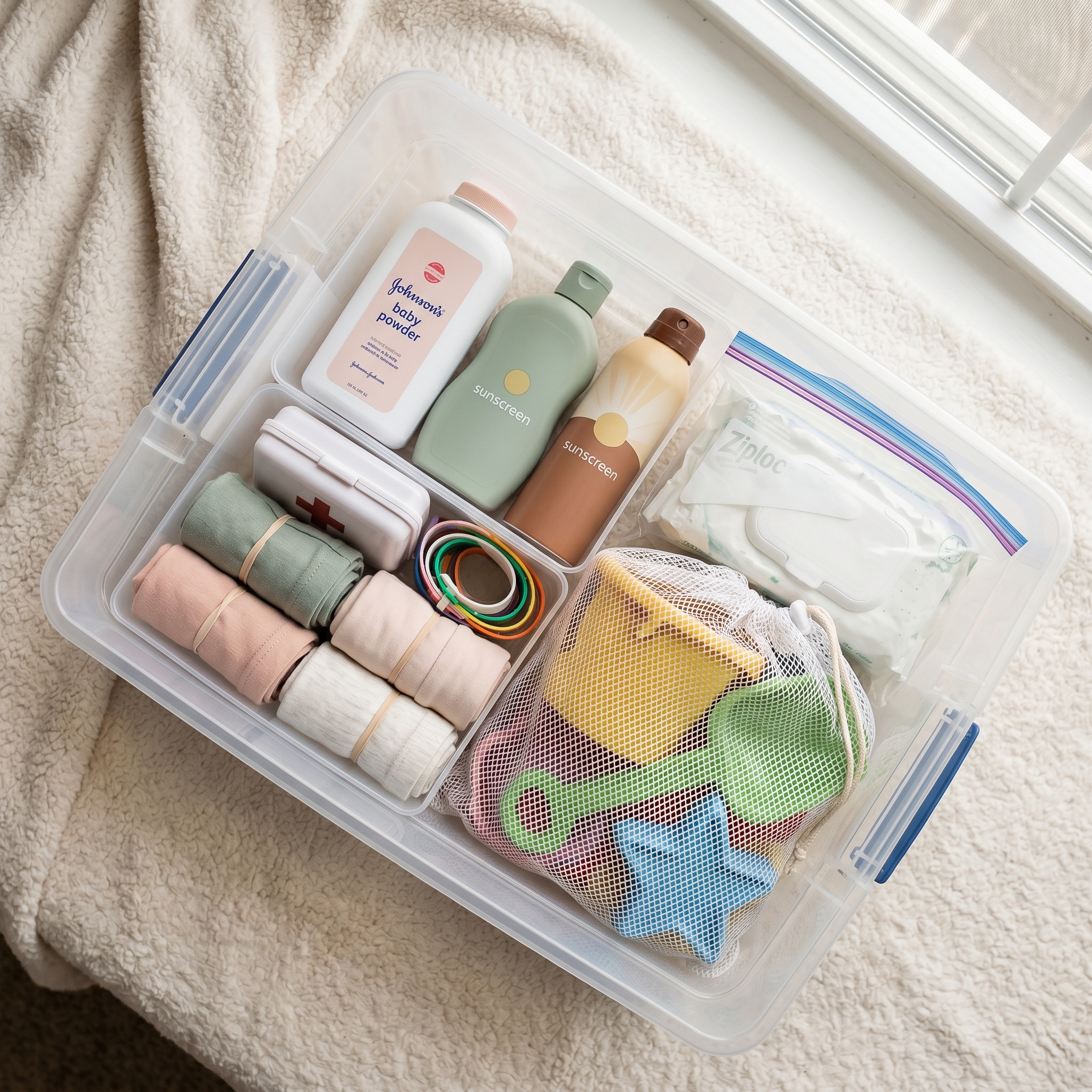
Pre-Pack the Night Before Using a Dedicated Beach Bin
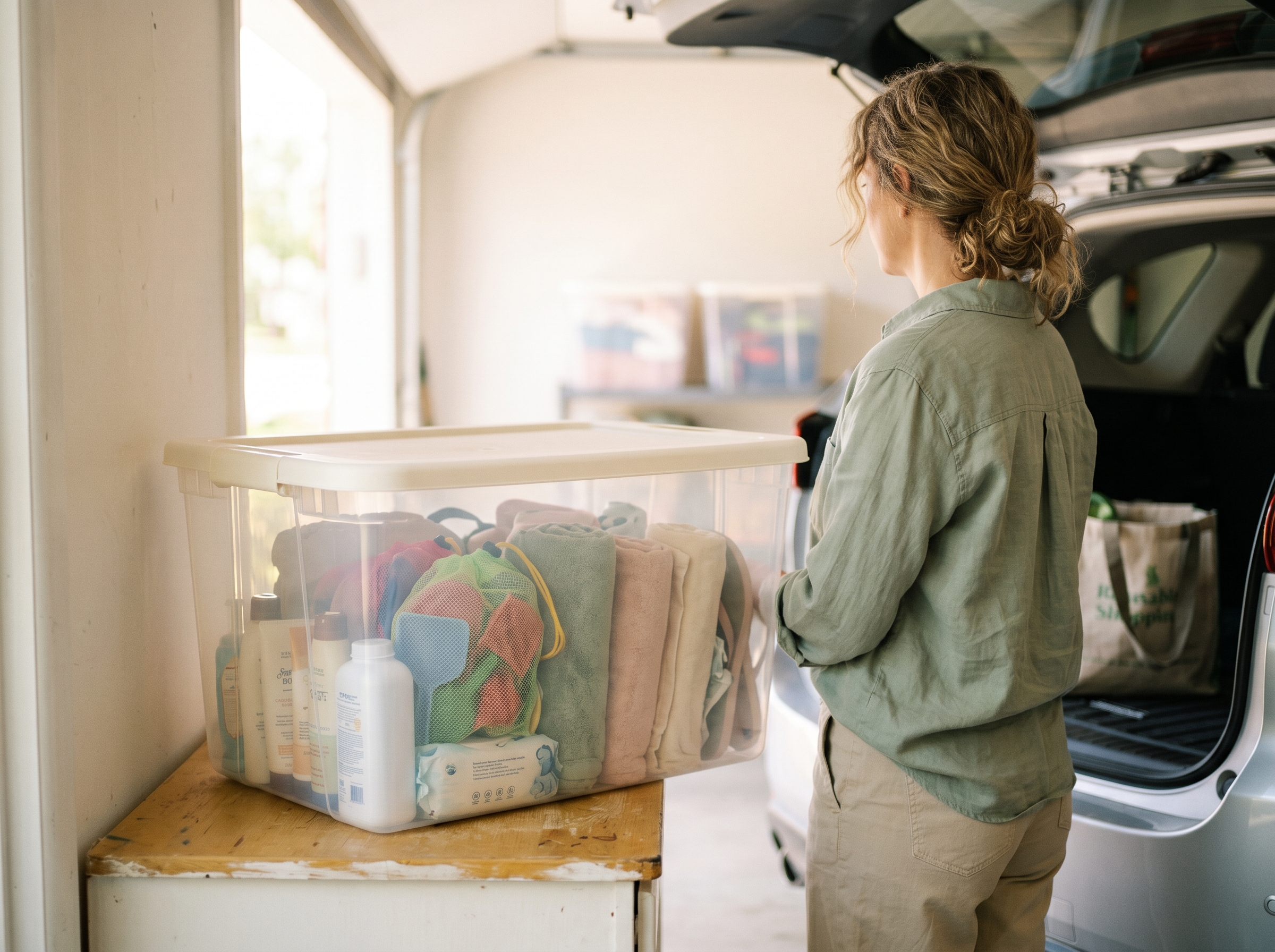
Use a single stackable bin (a 14–16 gallon Sterilite-style bin works great) that lives in your garage or car trunk all summer. Some things stay in it permanently so you’re never scrambling.
Items to keep in the bin year-round:
- Baby powder: the 6–9 oz bottle, replaced when empty
- Sunscreen: one lotion, one spray
- Mesh bags: for toys and sandy items
- Change of clothes per child: rolled and rubber-banded
- Gallon Ziploc bag of wipes: sealed tight
- First aid mini-kit: see safety section below
- Waterproof ID bands: one per child
- Trash bag: you’ll need it
Add food, drinks, and towels the morning of. That’s it. You’ll shave 20–30 minutes off your departure and actually leave in a good mood.
If the beach is a longer haul from home, that same night-before mindset is exactly what powers a smooth drive too. These road trip with kids tips pair perfectly with the beach bin for the journey there.
The Fitted Sheet Trick (and When It Doesn’t Work)
You’ve probably seen the viral fitted sheet hack where you fold the corners over your cooler and bags to create a sand-free zone. It does work, but only on calm, dry days. On a breezy day it goes airborne immediately.
A more reliable option is a purpose-built sand-free beach mat with mesh backing. The sand falls through instead of collecting on top. They run roughly $25–$40 and hold up over multiple seasons.
Sunscreen Hacks That Actually Get Done (Even on a Squirmy Toddler)
The Lotion-First Rule
Apply lotion sunscreen 15–30 minutes before you leave home. Skin needs time to absorb it. Once you’re at the beach, reapply with spray every 60–90 minutes and set a phone timer so you don’t lose track.
The American Academy of Pediatrics recommends SPF 30 or higher, broad-spectrum UVA/UVB protection for children. When using spray on kids’ faces, spray it onto your hands first, then rub it on. That avoids any inhalation risk.
Make Reapplication Not a Fight
The “sunscreen song” trick works surprisingly well: put on a two-minute song and tell your kids sunscreen is done when the song ends. It turns a battle into a game.
Stick sunscreen for faces is worth having in your bag. No drips, no eye sting, and kids tolerate it way better than spray near their heads.
The five spots most often missed:
- Ears: both the tops and the lobes
- Back of the neck: especially under ponytails
- Tops of feet: often uncovered in sandals
- Shoulders: burn fast in direct sun
- Lower back: exposed every time a shirt rides up
Keep your sunscreen in a small insulated pouch in the shade. Hot sunscreen gets thin and spreads unevenly, which matters more than most people realize.
Keeping Kids Fed, Hydrated, and Happy All Day Long
Freeze Everything You Can
Freeze juice pouches and water bottles the night before. They pull double duty as ice packs in the cooler and cold drinks once they thaw. Freeze grapes, yogurt tubes, and cut watermelon chunks for snacks that cool kids down from the inside.
A standard 48-quart cooler keeps ice for roughly 24 hours when pre-chilled and holds snacks comfortably for two kids and two adults for a full day.
Snacks That Don’t Attract Every Seagull on the Beach
The key is lidded containers and a zip-close cooler bag. Open chip bags are an open invitation to every seagull within a quarter mile.
Best beach snacks for kids:
- Grapes (frozen for toddlers over 4, halved for younger kids)
- String cheese
- PB&J cut into quarters
- Pretzels in a sealed container
- Veggie straws
- Banana slices
- Freeze-dried fruit
Offer water every 30–45 minutes on active beach days. Kids get absorbed in play and forget to drink, and the combination of sun and saltwater makes dehydration happen faster than you’d expect. For more easy options to pack, these no-fuss snacks for kids travel well in a cooler.
The Snack Caddy Setup
Keep a small over-the-shoulder insulated bag at the blanket separate from the main cooler. It holds the snacks kids need most often. Once kids are old enough, they can access it independently, which cuts down on the “I’m hungry” interruptions while you’re actually sitting down for five minutes.
Building a solid beach packing list for kids around this two-cooler system (one main, one grab-and-go) makes the whole food situation so much smoother.
Shade, Shelter, and Keeping Cool Without Losing Your Mind
A pop-up UPF 50+ beach tent is the single piece of gear I’d tell every parent to buy before their first family beach trip. UPF 50+ fabric blocks 98% of UV rays, and most two-person tent sizes fit one to two toddlers plus gear. Setup takes under 60 seconds once you’ve practiced once.
For a beach day with toddlers, the tent is non-negotiable. It’s a nap space, a meltdown retreat, and a diaper-change station all in one. Add a small battery-operated clip fan ($8–$12) and a shaded tent becomes comfortable even in peak summer heat.
Full shade checklist:
- UPF 50+ pop-up tent
- Sun hat per child (wide brim)
- UV-protective rash guard per child
- Sunglasses with UVA/UVB rating
- Wet microfiber towels in the cooler for draping over shoulders
Timing matters as much as gear. Arriving by 8–9 a.m. means you get prime play time before UV levels peak between 10 a.m. and 2 p.m. Plan a shade and snack break at midday and your kids will last the whole afternoon.
Safety Hacks Every Beach Parent Needs
The Jellyfish and Sting Kit
Keep a 4 oz travel bottle of white vinegar in your first aid kit. Pour it directly over a jellyfish sting (don’t rub) to deactivate the stinging cells. Skip the old “pee on it” advice entirely, vinegar or rinsing with seawater is the correct approach, and according to the American Red Cross, vinegar is the most evidence-supported first-aid response for most jellyfish species. Follow up with a lidocaine-based sting relief spray once the area is cleaned.
Keeping Track of Kids in the Water
Bright-colored rash guards make kids visible at a distance in crowded water. That alone is worth the purchase.
On the gear side: water wings are swim aids, not safety devices. For actual water safety, a Coast Guard-approved life vest is the right choice for kids who can’t swim independently.
Designate one adult as the water watcher at a time, rotating the role explicitly. The moment that job becomes “everyone’s responsibility,” it becomes no one’s. Phone stays down during water watcher shifts.
Write your phone number on your child’s wrist in permanent marker before heading to the water, or use a waterproof ID bracelet. It takes 30 seconds and it’s the kind of thing you hope you never need.
First Aid Mini-Kit for the Beach Bag
- White vinegar (4 oz): jellyfish and sting treatment
- Bandages: assorted sizes
- Antihistamine (children’s Benadryl): for allergic reactions
- Sunburn relief spray: aloe-based
- Antibiotic ointment: small tube
- Tweezers: for splinters or sea urchin spines
Your Stress-Free Beach Day Timeline (Hour by Hour)
The single biggest difference between a chaotic beach day and a fun one? Timing. Here’s a schedule that works for families with young kids.
- 7:00–7:30 AM: Apply first layer of lotion sunscreen at home; load pre-packed bin into the car
- 8:00–8:30 AM: Arrive and set up tent, blanket, and snack caddy before kids scatter; spray sunscreen top-up on arrival
- 9:00–10:00 AM: Prime water play time, cooler temps, lower UV, kids are fresh and excited
- 10:30 AM: Sunscreen reapply alarm #1; snack break in the shade
- 11:30 AM–1:00 PM: Lunch, shade tent time, optional toddler nap in the tent (this is your reading window)
- 1:00–3:00 PM: Second round of play; sunscreen reapply alarm #2 at 12:30 PM
- 3:00–3:30 PM: Wind-down, pack up; baby powder sand removal on everyone
- 3:30–4:00 PM: Rinse station and post-beach car routine
If you’re working around a toddler’s nap schedule, build your arrival time so the nap happens in the tent during the hottest part of the day. Beach arrival before an overdue nap is a recipe for a meltdown before you’ve even set up the tent.
The Post-Beach Cleanup Routine (So Your Car Doesn’t Become a Sandbox)
No top-3 competitor seems to cover what happens between “pack up the beach” and “get home without losing your mind.” Here’s what actually works.
Before anyone gets in the car: do the baby powder pass on all feet and legs and shake out every towel facing away from the car. Sand that doesn’t make it in is sand you don’t have to vacuum out later.
A 5-gallon solar shower bag ($10–$15) hung on the car trunk lid gives a full rinse-off for two kids with no waiting in line for a beach shower. Fill it that morning and let the sun warm it during the day.
The “change at the car” kit, keep it in your bin:
- Dry clothes per child
- Flip-flops
- Second dry towel per child
- Baby wipes
- Gallon Ziploc bags for wet swimsuits
For the car itself, lay two old fitted crib sheets or a cheap waterproof seat cover across the back seat before the kids climb in. Shake them out or toss them in the laundry when you get home. Sand toys go in the mesh bag in the trunk cargo area, not in the passenger cabin. Ever.
A zippered wet bag keeps damp suits and towels completely separate from dry gear and prevents that sour mildew smell that sets in if wet items stay bundled together too long.
Beach Packing List for Kids (By Age Group)
What you pack for a 10-month-old is almost completely different from what you pack for a 7-year-old. Here’s the breakdown. According to a reviewer at Tripadvisor covering beach destinations with young children, bringing your own inflatable pool or ocean toys is especially smart at spots where the ocean floor drops quickly from shallow to deep, it gives kids a contained water area that’s safe and keeps them entertained for hours.
For Babies (Under 12 Months)
- UPF 50+ sun tent with good ventilation
- Swim diapers plus 2 backups
- Rash guard and wide-brim sun hat
- Baby-safe mineral sunscreen (SPF 30+)
- Extra formula or purees in an insulated pouch
- Portable changing pad
- Portable white noise app or small speaker for tent naps
For Toddlers (1–3 Years)
- Pop-n-go low-to-ground chair
- Baby powder (a full bottle)
- Sand toys in a mesh bag
- Water shoes (hot sand burns small feet fast)
- Lidded snack container
- Portable potty or swim diapers
- Swim floaties or Coast Guard-approved vest for water play
- Small inflatable pool if the shoreline is steep
For Big Kids (4–10 Years)
- Boogie board or kickboard
- Waterproof ID band
- Swim goggles
- Their own labeled water bottle
- Snorkel kit (for ages 6 and up)
- Waterproof bag for shell and treasure collecting
- Larger beach umbrella or second tent panel for extra shade
Universal must-haves for every age:
- SPF 30+ sunscreen in both lotion and spray form
- Two towels per child
- Full change of clothes per child
- Baby wipes
- First aid mini-kit
- Baby powder
- Cooler with snacks and frozen water bottles
- Trash bag
- Mesh bag for sandy toys
Building out your beach packing list for kids by age means you’re not hauling gear that doesn’t apply, and you’re not arriving and realizing you forgot the one thing that would’ve kept the littlest one happy for two solid hours.
Heading to Galveston specifically? The Moody Gardens aquarium makes an easy, air-conditioned pairing for the hottest stretch of a beach day.
Looking for more like this? Browse all our family travel guides.
FAQ: Beach Hacks for Kids
What are the best beach hacks for kids?
The single most useful is baby powder to remove sand from skin, it works better than any rinse. Beyond that, the combination of pre-packing a dedicated beach bin the night before, setting sunscreen reapply alarms every 60–90 minutes, and bringing a pop-up UPF tent covers the majority of what makes a beach day with kids go smoothly. Add frozen water bottles and a timeline built around nap schedules and you’ve covered almost everything.
What do I need for a beach day with kids?
At minimum: SPF 30+ sunscreen (lotion for the first application, spray for reapplies), a UPF shade tent, two towels per child, snacks and frozen water bottles in a cooler, a full change of clothes per child, baby powder, and a mesh bag for toys. The age-by-age packing list above breaks it down further based on how old your kids are.
How do you keep sand off kids at the beach?
Baby powder or cornstarch is the go-to move. Sprinkle it on sandy, damp skin, rub it in for about 10 seconds, and brush the sand off with a dry towel, it comes right off. A sand-free beach mat with mesh backing also reduces how much sand collects at your base throughout the day. Those two things together make a noticeable difference.
How do you surprise your kids with a beach trip?
Pack the car the night before and tell the kids you’re “running errands” in the morning. When they see the water, the reaction is priceless. A brown paper bag with one small beach item each, a new pair of goggles, a sand mold set, a boogie board, makes the reveal feel extra special. Pack according to the list above so the day lives up to the excitement.
What’s the best way to handle jellyfish stings at the beach?
Keep a small 4 oz travel bottle of white vinegar in your first-aid kit. Pour it directly on the sting without rubbing to deactivate the stinging cells. Skip the seawater rinse for box jellyfish stings specifically, and avoid the “pee on it” myth entirely. Vinegar is the most evidence-supported first-aid response per the American Red Cross. Follow up with a lidocaine sting relief spray once the area is treated.


