
Ways to Keep Kids Busy (Without Screens)
The best ways to keep kids busy without screens combine open-ended materials, just enough novelty to spark curiosity, and minimal setup time for parents.
Last updated: July 2026
Quick Answer: Ways to Keep Kids Busy Without Screens
Stock a simple “Busy Kit” on a low shelf your kids can reach, rotate supplies weekly so things feel fresh, and match the activity to your child’s age. Toddlers need sensory and open-ended materials. Elementary kids need a mission or a challenge. Tweens need autonomy and something that feels like a real accomplishment. The ideas below cover all three, with honest time estimates so you know what you’re actually buying yourself.
The kitchen smells like reheated coffee, your inbox has seventeen unread emails, and you sat down approximately four seconds ago before the couch cushions were rearranged into what your toddler is calling “a fort emergency.” If you’ve lived this moment, you already know that finding activities to keep kids busy isn’t about being a fun mom every second. It’s about survival strategy mixed with a little creativity.
Figuring out how to keep kids busy at home doesn’t have to mean a special trip to the craft store or a Pinterest project that takes longer to prep than the kids spend doing it. Most of the ideas in this guide use supplies you already own, take under five minutes to set up, and hold attention for at least 15 minutes, sometimes far longer.
Ages: 2-10+ (age-specific breakdowns inside)
Setup time: 2-5 minutes | Activity window: 15-45+ minutes depending on age
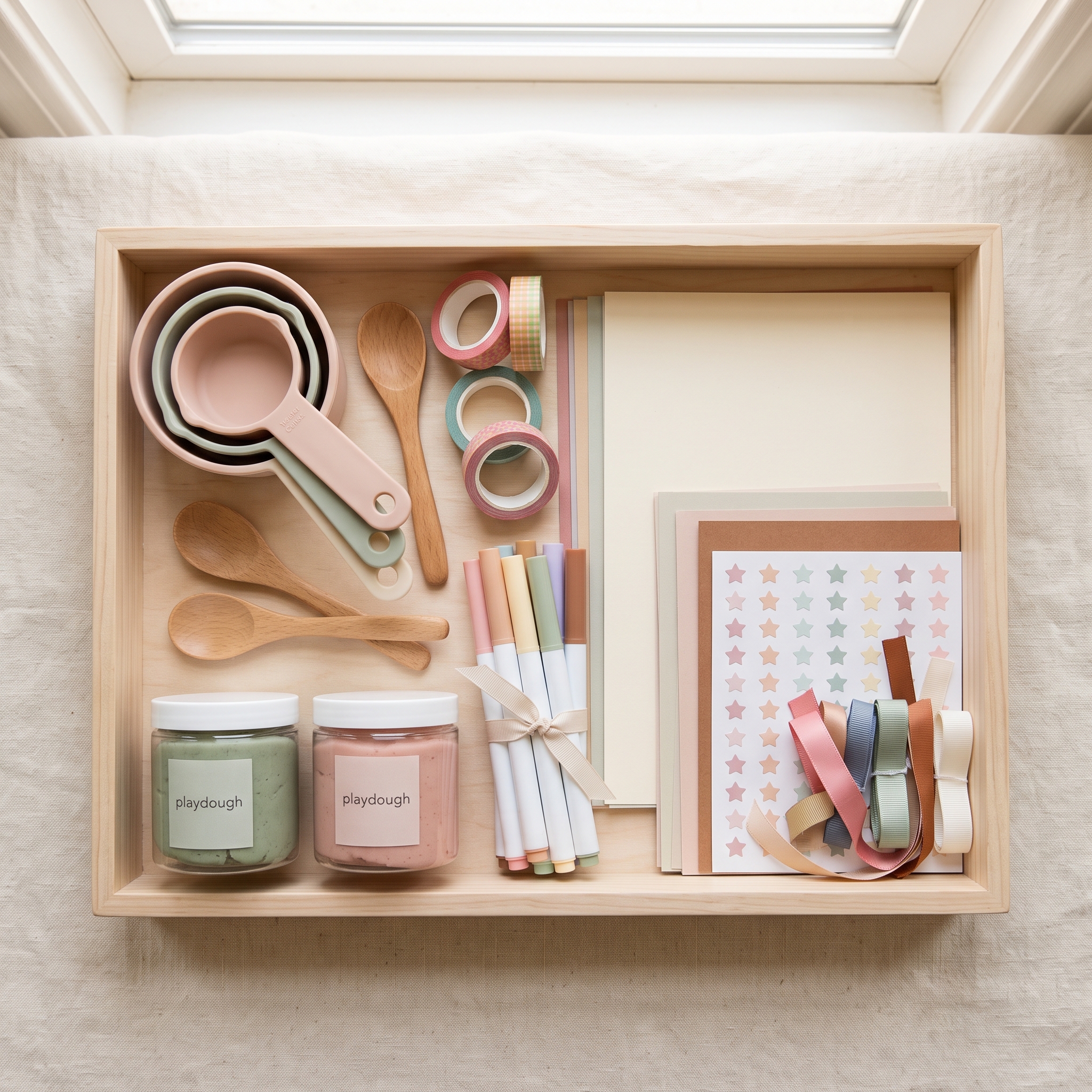
What You’ll Need (aka Your “Busy Kit” Starter Shelf)
The concept is simple: instead of scrambling every time you need 20 uninterrupted minutes, you build a dedicated bin or shelf stocked with go-to supplies your kids can access in under 60 seconds. No hunting for scissors, no “Mom, where’s the tape?” It’s already there. This is one of the most inexpensive ways to keep your kids busy because most of what goes in it is already in your house.
Here’s what to gather, organized by category:
- Kitchen drawer finds: measuring cups, plastic cups, wooden spoons, a muffin tin, empty spice containers
- Craft basics: construction paper, washable markers, painter’s tape ( priceless), age-appropriate scissors, stickers
- Sensory staples: dried pasta or rice, a plastic tub, a hand towel nearby for water play. Safety note: dried pasta, rice, and other small loose materials are choking hazards. Always supervise children under 3 during sensory bin play, and keep these materials away from children who still mouth objects.
- Open-ended toys: building blocks, LEGO (for ages 5+), playdough (store-bought or homemade in five minutes)
- Repurposed and free: cardboard boxes, paper towel rolls, ribbons, old magazines for cutting
If you’re starting from scratch, a basic Busy Kit costs under $15 at the dollar store. For a homemade sensory play option that takes almost no time, a two-ingredient moon sand is a great first addition to the rotation.
How to Set It Up
The system matters as much as the supplies. Here’s the setup in five steps:
- Pick a low shelf, drawer, or plastic bin your kids can reach independently, and teach them where it lives so they can grab it themselves.
- Rotate three or four items in and out each week so supplies feel “new” without buying anything. A measuring cup inside a fresh bowl of dried rice hits differently on Tuesday than it did last Thursday.
- Before you need focused time, do a quick two-minute “activity launch” where you show your kids what’s available and let them choose. Ownership matters.
- Set a visual timer facing toward them, a phone timer works fine, so they know when “busy time” ends and aren’t constantly checking in with you.
- Keep a small cleanup bin right next to the activity zone so reset takes two minutes, not twenty.
Novelty matters more than newness. A familiar measuring cup inside a new bowl of dried rice or a fresh color of painter’s tape can add 20 extra minutes to an activity your kids have done a dozen times before.
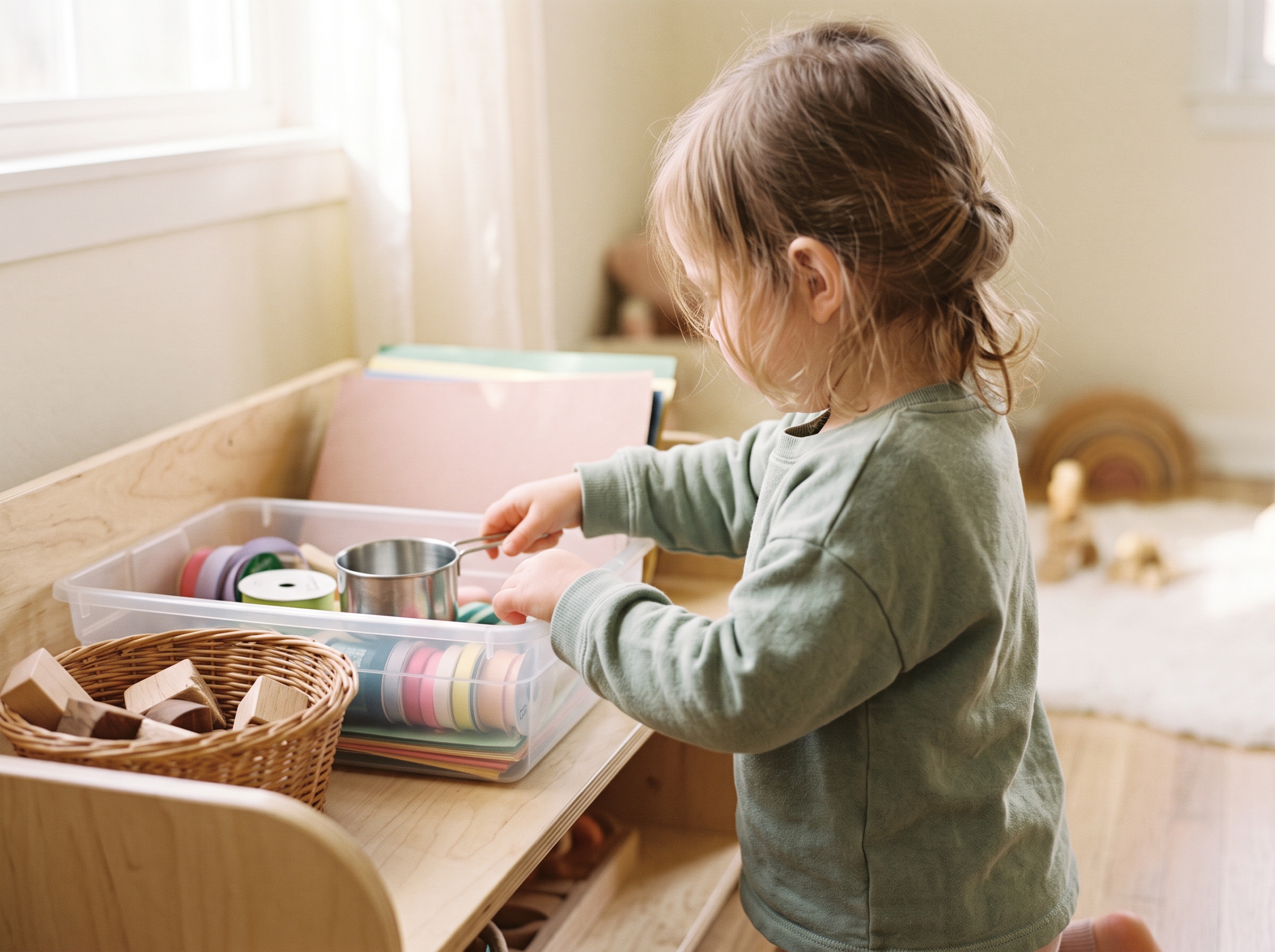
25+ Ways to Keep Kids Busy Without Screens (By Age Group)
Most lists dump activities in random order and call it a day. Organizing by age makes a real difference because what works for a 3-year-old and what works for a 10-year-old are different things, not just different levels of the same thing. Each activity below includes an honest “buys you approximately X minutes” note so you can match the activity to how much time you actually need.
For Toddlers and Preschoolers (Ages 2-4)
At this age, simpler is better and sensory wins every time. According to ZERO TO THREE, play activities designed for toddlers serve a dual purpose: they keep kids entertained while actively supporting developmental growth. That means the “busywork” is actually doing something important.
Important safety note for all toddler activities: Several activities in this section involve small objects (ribbons, pom-poms, dried rice, pasta) that are choking hazards for children under 3. Always keep a supervising adult nearby during these activities. If your child still puts objects in their mouth, swap small items for larger ones and skip loose sensory materials like rice or dried pasta entirely until they’re past that stage.
- Ribbon threading: Push ribbons through the hole of an empty water bottle. Fine motor gold. Buys approximately 15-20 minutes. Supervise closely with children under 3, as ribbon lengths can also be a safety concern.
- Measuring cup play: A set of measuring cups and a big mixing bowl, dry rice or water both work. Buys approximately 20 minutes. (Towel under the bowl if using water. Non-negotiable.) Dried rice is a choking hazard for toddlers under 3; adult supervision required.
- Pots, pans, and lids matching game: Empty your lower cabinet and let them figure out which lid goes where. Buys approximately 10-15 minutes.
- Painter’s tape roads: Tape lines and shapes on the floor for toy cars or stuffed animals to follow. Buys approximately 20-30 minutes.
- Muffin tin sorting: Pom-poms, tongs, and a muffin tin. Let them sort by color. Buys approximately 15 minutes. (Skip pom-poms for toddlers who still put things in their mouths, and use larger objects instead. Adult supervision required.)
- Sticker sheet and blank paper: Hand over a sheet of stickers and a piece of paper. This is a toddler’s love language. Buys approximately 20 minutes.
- Water tub on the kitchen floor: Fill a plastic tub with a few inches of water, set it on a towel, add cups and spoons. Wetness is guaranteed. Buys approximately 20-30 minutes. Never leave toddlers unsupervised near water, even shallow amounts.
- Cardboard box play: Decorate it, hide in it, push stuffed animals around in it. One box can stretch to 20-45 minutes depending on the imagination involved.
For more sensory setups your toddler can explore independently, this roundup of toddler sensory activities has easy configurations using everyday materials. If painting is on your list but the mess isn’t, these no-mess painting ideas are toddler-approved.
For Early Elementary Kids (Ages 5-7)
Kids this age can follow multi-step setups and love the feeling of having a “mission.” Frame the activity as a challenge and you’ll get more buy-in, more time, and way less “I’m bored.”
- Indoor scavenger hunt: Prep photo clues the night before (takes you 10 minutes). Buys approximately 30-45 minutes of independent searching.
- Paper tower challenge: Hand over 10 sheets of paper and some tape. Challenge: build the tallest freestanding tower. Buys approximately 30 minutes, longer if they keep trying to beat their own record.
- Kitchen science experiment: Baking soda plus vinegar plus food coloring equals a solid 20-30 minutes, and longer if they start iterating on the ratio. Do it in an open tray or bowl, and never seal the mixture in a closed bottle, jar, or zip-top bag, because the gas builds up pressure and it can pop. For a full setup guide, this baking soda and vinegar experiment walkthrough breaks it down step by step.
- Comic strip or handmade book: Fold four pieces of paper in half and staple. They write the story, draw the panels, and design the cover. Buys approximately 30-45 minutes.
- LEGO free-build challenge: Write a theme on an index card (“build something that flies” or “build a house for a frog”) and let them go. Buys approximately 30-45 minutes.
- Tracing and decorating: Tracing paper over maps, their own hands, or book illustrations, then coloring the results. Low-prep, high-focus. Buys approximately 20-30 minutes.
- Hardboiled egg peeling: Prep a batch and hand them over. This sounds absurd until you try it. Buys approximately 15 minutes and you end up with egg salad.
- Indoor restaurant: They write a menu, take your order, and “deliver” pretend food. If your kid is in this phase, lean in. Buys approximately 30-60 minutes.
For Tweens and Older Kids (Ages 8-12)
This age group doesn’t want to be entertained. They want to accomplish something, make something real, or solve something hard. Give them challenge and autonomy and they’ll disappear for an hour.
- DIY escape room: Set up a five-clue puzzle chain around the house using combination locks, riddles, and hidden notes. Takes you 20 minutes to build, buys approximately 45-90 minutes of focused problem-solving.
- Journaling and world-building: Give them a blank notebook and the prompt: create a fictional town, complete with a map, residents, and a local problem that needs solving. Buys approximately 45-60 minutes.
- Stop-motion animation: LEGO figures or stuffed animals plus a free phone app equals a surprisingly absorbing project. Buys 1+ hours, often more.
- Independent baking: Set them up with a simple muffin or cookie recipe and clear instructions, then step back. Buys approximately 45-60 minutes and produces something everyone can eat. Worth it.
- Card games or board games they teach you: Challenge them to learn a new game and then teach it to you. The “teaching” phase alone is 20 minutes of focused independent prep.
- Perler bead or friendship bracelet projects: These require patience and concentration, which makes them perfect for this age group. Buys approximately 45+ minutes. Perler beads are small and a choking hazard; keep away from younger siblings and supervise any child under 5 in the area.
- Design challenge cards: Write five prompts on index cards and let them pick one: “design a treehouse,” “invent a new snack,” “plan a perfect birthday party.” Drawing and writing the plan out takes longer than you’d expect.
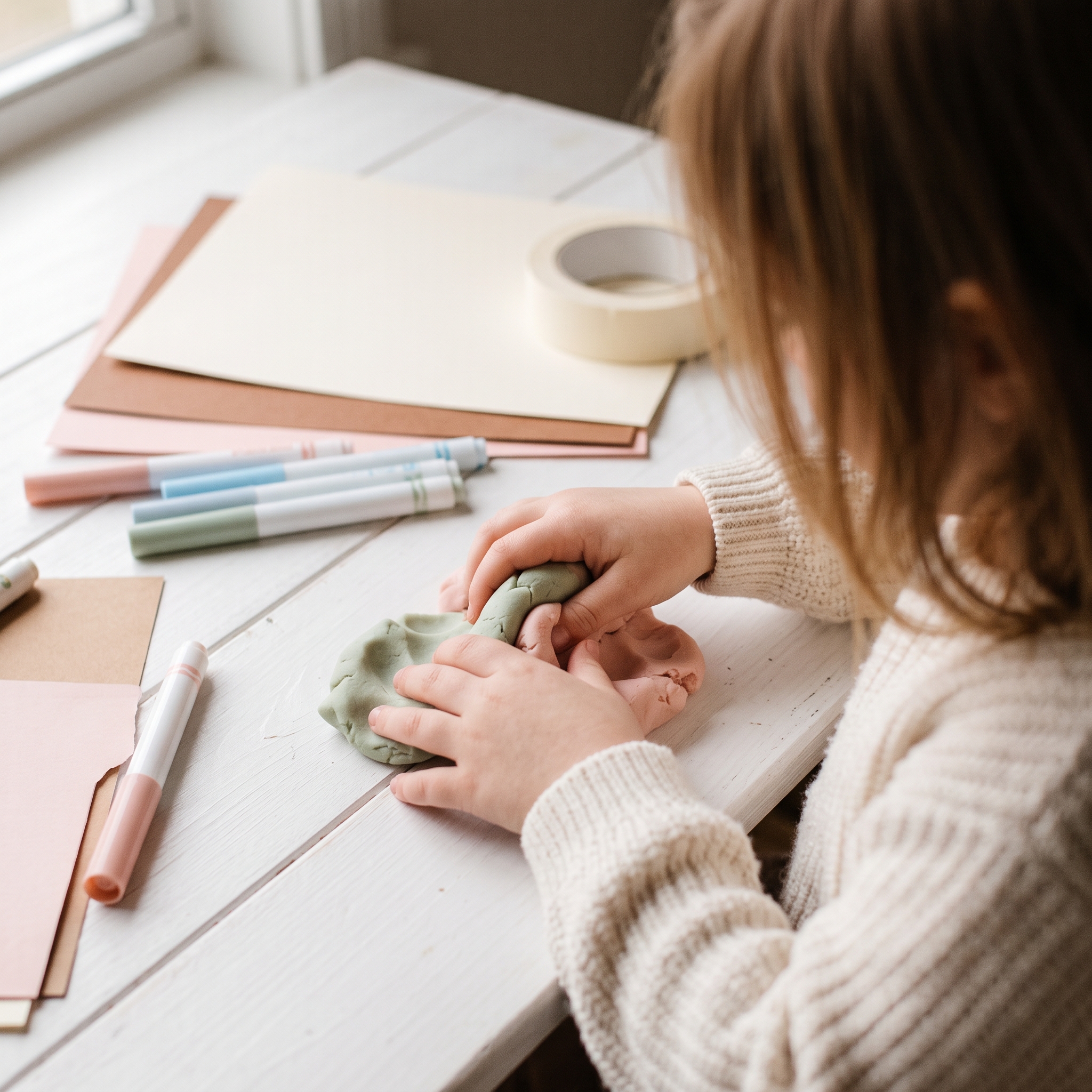
What Kids Learn (Why These Activities Are More Than Just Busywork)
Reaching for these things to keep kids busy isn’t just survival. It’s actually good for them, and that’s worth saying out loud when you’re feeling guilty for needing 20 minutes to think.
Here’s what’s happening developmentally beneath the surface:
- Fine motor skills: Ribbon threading, muffin tin sorting, Perler beads, and anything involving tongs or small objects all strengthen the hand muscles kids need for writing.
- Problem-solving and spatial reasoning: Building challenges, escape rooms, and LEGO projects ask kids to think ahead, test ideas, and adjust when something doesn’t work.
- Creative thinking and narrative play: The restaurant game, comic strips, and world-building all build the ability to hold a story in mind, sequence events, and imagine things from someone else’s perspective.
- Early science concepts: Water play and baking soda experiments introduce cause and effect, measurement, and observation in the most hands-on way possible. For more ideas, try these easy science experiments for kids.
- Independent play stamina: This one compounds. The more kids practice playing on their own, the longer they can sustain it. The American Academy of Pediatrics says play can improve children’s abilities to plan, organize, and regulate emotions, and that’s exactly the muscle these solo activities exercise.
Screen-free independent play isn’t just a tactic for getting dinner on the table. It’s practice for focusing, problem-solving, and entertaining themselves throughout their lives.
Quick-Grab Activities When You Have Zero Time to Prep
Some days you don’t need a system. You need something to work in the next 45 seconds. These are no-prep, grab-it-right-now ideas that require nothing from you except handing over an object:
- A roll of painter’s tape: Toddlers will stick it to everything. Older kids will make floor mazes and road systems for their toys.
- A stack of plastic cups from the cabinet: Stack, knock over, sort, repeat. That’s the whole activity.
- Old magazines and child-safe scissors: Cutting practice disguised as collage. 30 minutes, easy.
- A pile of clean laundry to sort or fold: Some kids love this. Don’t question it, just hand it over.
- Stuffed animals and a shoebox “stage”: Instant puppet theater or scene setup. Provide nothing else.
- A notebook and one prompt: “Draw your dream bedroom.” That’s it. You’ll be surprised how long this holds.
- A bowl of dry rice and measuring spoons on a towel: Already in your Busy Kit, but even if it’s not, this takes 20 seconds to pull together. Keep children under 3 supervised during rice play, as dried rice is a choking hazard.
- A cardboard box from recycling: No instructions needed. Kids will figure it out.
These are the kinds of things to keep kids busy that cost nothing and require no creativity on your part when you’re already running on empty.
Frequently Asked Questions About Keeping Kids Busy
How do you keep kids busy all day without screens?
The key is rotating activities in 20-45 minute blocks rather than finding one thing that lasts all day (that doesn’t exist). Move from high-energy to quiet: active play first, then a craft or sensory bin, then something independent like drawing or building. Your Busy Kit makes transitions easier because kids know where to go and what’s available without asking you every time.
What are the most inexpensive ways to keep kids busy at home?
Kitchen drawers, the recycling bin, and a roll of painter’s tape will take you further than any toy. The activities in this guide cost between $0 and $5 each, mostly because they use what you already own. If you want to invest in anything, painter’s tape and a bag of dried rice cover about 30% of what’s on this list.
How do I keep a 4-year-old busy at home?
Start with sensory and open-ended materials: measuring cups, a tub of water, pom-pom sorting, or ribbon threading. At four, 15-20 minutes of focused independent play is a genuine win. Don’t expect more than that, and don’t set up anything that requires you to stay and facilitate once it’s launched.
How do I keep a 10-year-old busy at home?
Ten-year-olds need a challenge with a real outcome, not just an activity. DIY escape rooms, stop-motion animation, and independent baking projects are particular hits at this age because they have a finish line. Give them full ownership of the process and resist the urge to step in unless they ask.
How long should kids play independently?
Developmental context matters here. Toddlers can realistically sustain 10-20 minutes of independent play, and that’s completely normal. Kids ages 5-7 can build toward 30-45 minutes with the right setup. Kids ages 8 and up can often go an hour or more when they’re absorbed in a project. The range grows with practice, so starting early and doing it consistently makes a real difference.


