
How to Make a Sick Kid Feel Better (Comfort Tips for Moms)
The most effective ways to make a sick kid feel better are keeping them hydrated, prioritizing rest, and managing fever safely at home.
Last updated: June 2026
Quick Answer: How to Make a Sick Kid Feel Better
Rest and fluids do more heavy lifting than almost anything else during a mild illness. Most childhood colds and flu-like bugs resolve on their own within 7 to 10 days with consistent supportive care, according to the American Academy of Pediatrics. That means your main job isn’t to “fix” the illness. It’s to keep your child comfortable while their body does the work.
Here’s the thing about sick days with kids: they hit differently at 2 a.m. when you feel your child’s forehead burning under your palm and every instinct you have is screaming do something. The good news is there’s a lot you can do. And most of it doesn’t require a prescription.
This guide walks through fever management, hydration tricks, food for sick kids, comfort setup, a loose sick-day rhythm that keeps you both sane, and the question a lot of exhausted moms are too tired to Google: why does this keep happening, and when does it stop?
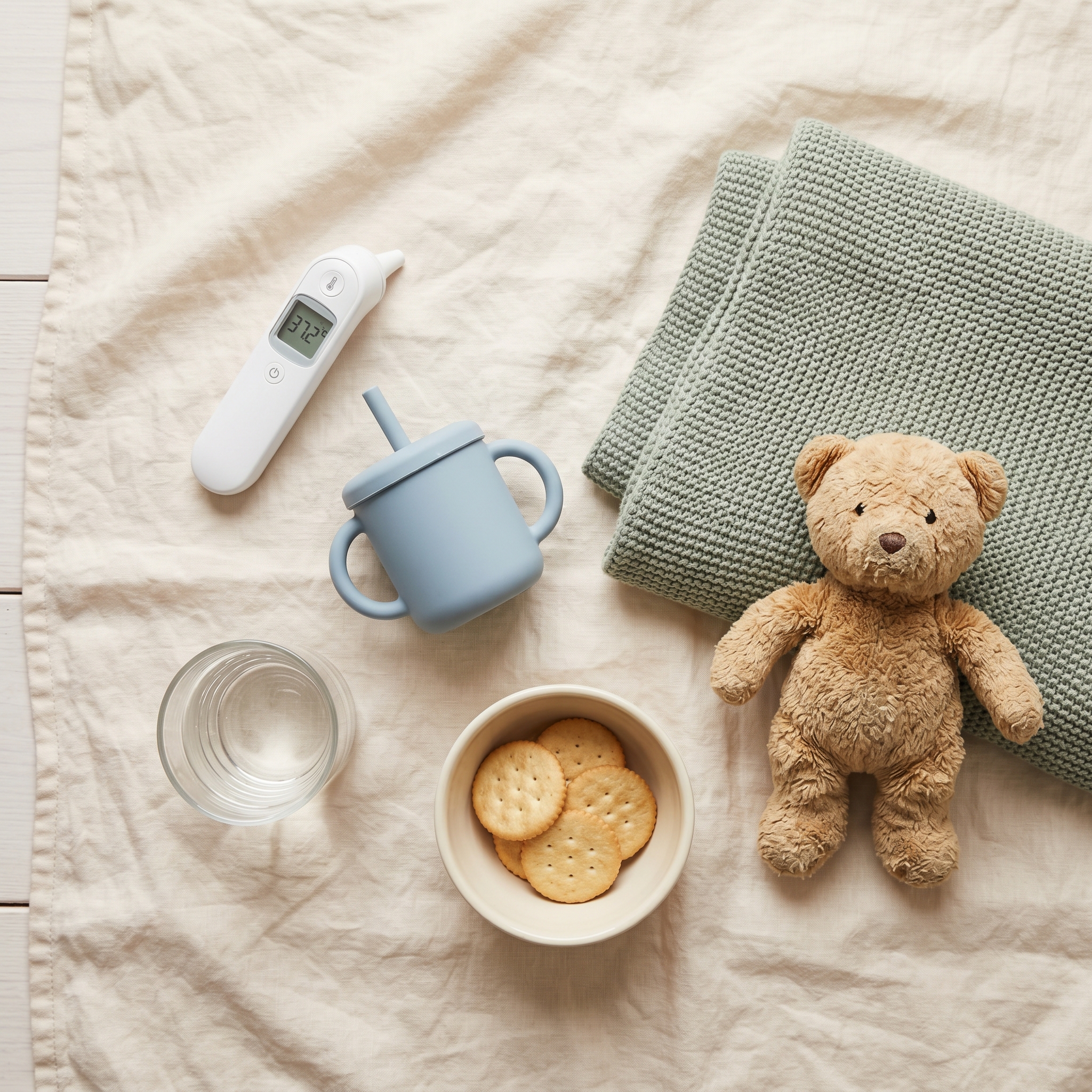
Your Kid Has a Fever. Here’s What to Do First
Know the Numbers Before You Panic
A fever is officially 100.4°F (38°C) or higher. Anything in the 99 to 100.3°F range is considered a low-grade temperature, not a true fever. That distinction matters because a lot of parents treat a mild temperature spike the same as a raging one, and that’s not always necessary.
Here’s the reassuring part: fever is your child’s immune system working correctly. Unless your child is uncomfortable or miserable, you don’t automatically need to suppress it. The goal is comfort, not a perfect number on the thermometer.
One hard rule, though: any fever at all in a baby under 3 months means calling the pediatrician immediately, no waiting to see how it develops.
Two Safe Ways to Bring It Down at Home
According to Children’s Healthcare of Atlanta, a lukewarm (never cold) bath for up to 20 minutes can help ease a fever without medication. For babies too small for the tub, lukewarm washcloths applied to the chest, neck, and underarms work just as well. Skip cold water entirely. Cold causes shivering, which drives core temperature up.
For fever reducers, acetaminophen is safe for most ages. Ibuprofen is safe for children 6 months and older. Always dose by weight, not age, and never give aspirin to children due to the risk of Reye’s syndrome (per AAP guidance). If your child is under 2, check with your pediatrician before medicating.
You’re not overreacting by watching it closely. And you’re not missing something obvious by choosing to wait before reaching for medicine.
They Won’t Drink Anything: How to Get Fluids In
Why Hydration Matters More Than Almost Anything Else
Kids lose fluids faster than adults, especially when fever, vomiting, or diarrhea are in the mix. The warning signs of dehydration are worth knowing: no tears when crying, a dry mouth, dark urine, or no wet diaper in six or more hours for infants.
Catching dehydration early means you can usually handle it at home. Let it go too long and you’re looking at a doctor’s visit.
Fluids They’ll Take
Plain water is always the first choice. But when a sick kid flat-out refuses it, here are options that work:
- Oral electrolyte solution (Pedialyte): the best call for vomiting or diarrhea cases; sports drinks like Gatorade have too much sugar and not enough sodium for small kids
- Clear broth: chicken or vegetable broth doubles as hydration and comfort; the warmth also soothes a sore throat
- Warm water with honey and lemon: safe for kids 1 year and older; never honey under 12 months due to botulism risk
- Popsicles: the oldest trick in the book, and it works; juice popsicles or homemade electrolyte pops are great options
The American Academy of Pediatrics notes that warm liquids like broth, hot water with lemon, and caffeine-free tea serve a dual purpose: they replenish fluids and ease sore throats at the same time.
Offer small amounts frequently (every 15 to 20 minutes) rather than pushing a full cup at once. A few sips at a time adds up faster than you’d think.

Food for Sick Kids (Even When They Have Zero Appetite)
Don’t Force It, But Keep Offering
Appetite suppression during illness is a normal immune response. If your child goes most of a sick day barely eating, that’s not a problem you need to solve. Fluids come first. Food is a close second.
Many parents find that small portions offered casually, without pressure, get a better response than sitting a child down and insisting they eat a full meal.
What to Offer and What to Skip
The gentlest options for food for sick kids are the ones easy on a tired digestive system. Think bananas, plain rice, toast, unsweetened applesauce, plain crackers, scrambled eggs, and chicken noodle soup. Warm soup in particular checks multiple boxes: mild hydration, some sodium, and the comfort factor is real.
If your child is vomiting, give their stomach a 30 to 60 minute break after each episode before offering anything at all. Then start with sips of an electrolyte solution. Once they’ve gone two or more hours without vomiting, plain crackers are a reasonable next step.
What to skip: dairy-heavy foods if they’re congested (it can thicken mucus), sugary juices, and anything fried or heavy. For a child with no appetite, mini portions on a fun plate with a short “pick one” menu tend to work better than a full spread.
When they’re feeling a little more themselves and asking for snacks again, having a few go-to options ready helps. You might already keep a list of easy no-fuss snacks for kids that come together in minutes, and leaning toward healthier, nutrient-dense snacks as they bounce back gives their energy a gentle boost.
Making the Rest of Their Body Feel Better (Beyond the Thermometer)
Set Up the Comfort Zone Right
Keep the sick child’s room airy without being drafty. A room temperature of roughly 65 to 70°F tends to work well for most kids. Light blanket layers they can kick off work better than one heavy one they’re stuck under.
For congestion in infants, keep the crib completely flat — never add a pillow, wedge, or mattress incline, since anything that props a baby up raises the risk of unsafe sleep. Saline drops, gentle suctioning, and a cool-mist humidifier are the safe ways to ease a stuffy nose at this age. Older toddlers (roughly 2 and up) can use a thin pillow if it helps them breathe easier overnight.
A cool-mist humidifier on the nightstand adds moisture to dry air, loosens nasal congestion, and soothes irritated airways. Just clean the reservoir every one to three days to prevent mold buildup.
Sore Throat and Congestion Relief
Saline nasal spray or drops are safe for all ages and make a real difference before naps and bedtime. For babies too young to blow their own nose, a bulb syringe after the saline drops clears things out effectively.
For cough, honey (for kids 1 year and older) is worth considering. In a frequently cited pediatric study, a small dose of honey before bed reduced nighttime cough as well as or better than dextromethorphan, a common over-the-counter cough suppressant. A warm compress on the sinuses can offer some relief for older kids, too.
Give the Day a Sick-Day Rhythm
This is the part nobody talks about, but it makes a real difference. A sick kid with no structure tends to get more distressed, not less. A loose rhythm gives their body and your patience an anchor.
It doesn’t need to be a tight schedule. It just needs a shape:
- Morning: temperature check, fluids, a light breakfast attempt, one show or audiobook
- Midday: a nap push (even 20 to 30 minutes of quiet rest counts), broth or a small snack
- Afternoon: one calm activity (more on this below), more fluids, a little fresh air by an open window if the weather allows
- Evening: lukewarm bath if fever allows, humidifier on, earlier bedtime than usual
Rest is the medicine. You’re not failing if you put on the same movie three times in a row. That familiarity is calming for a sick child, not lazy parenting.
Quiet Activities That Won’t Exhaust a Sick Kid (By Age)
Baby and Infant (Under 12 Months)
Skin-to-skin contact is both comforting and helpful for a sick infant. Soft music, gentle rocking, and looking at high-contrast picture books together give them stimulation without overstimulation. Your presence is the activity at this age.
Toddler (1 to 3 Years)
Play-dough at the coffee table in pajamas, simple matching games, coloring one page at a time, and audiobooks or lullabies on low are all low-energy, low-mess options. For more ideas along these lines, a list of indoor toddler activities for rainy days has a solid range of sensory and quiet options that work just as well on sick days.
Big Kids (4 and Up)
Audiobooks and podcasts are underrated here because they require zero screen energy. Sticker books, simple card games, and a comfort movie (something familiar, not something new and exciting) are all good picks. New, stimulating content can make it harder for a kid to settle into rest. Familiar is calming. Save the new shows for when they’re well.
Why Do Kids Get Sick So Often? (And When Does It Finally Slow Down?)
If you’re running your third load of sick-day laundry at midnight and wondering what is even happening, this section is for you.
Young children have immune systems that are still building their library of defenses. They haven’t yet been exposed to the hundreds of viruses circulating in any given preschool or daycare setting, so each new bug hits them fresh. According to the CDC, children catch colds far more often than adults, who average only two to three a year. For young kids, pediatric sources put the typical number around six to eight colds annually. That can feel constant, especially in fall and winter when kids are clustered indoors together.
Daycare in particular front-loads a lot of that exposure. It can feel brutal in the early years, but many kids who go through that gauntlet early actually get sick less once they hit elementary school, because their immune memory is already broader than their peers’.
Most parents notice a genuine shift around age 5 or 6. The constant cycle of back-to-back illnesses tends to ease significantly once kids have accumulated enough viral exposure to stop catching everything in sight.
If you’re in the thick of it right now: you are not alone, nothing is wrong with your child, and it does get better.
When to Put Down the Home Remedies and Call the Doctor
Most mild illnesses don’t need a doctor’s visit. But some symptoms cross a line where home care isn’t enough. Call your pediatrician if you’re seeing any of the following:
- Any fever in a baby under 3 months: call immediately, no waiting
- Fever lasting more than 24 hours in kids under 2: or more than 72 hours in kids 2 and older
- Difficulty breathing or wheezing: or ribs visibly pulling in with each breath
- Signs of dehydration: no wet diaper in 6 or more hours, no tears when crying, sunken eyes
- Rash alongside fever: always worth a call
- Child is inconsolable, unusually limp, or won’t wake easily: go in, don’t wait
- Symptoms that improve and then suddenly get worse: this pattern can signal a secondary infection
Your gut matters here. If something feels off beyond a normal sick day, trust that instinct and make the call. Pediatricians would rather hear from you than have you waiting at home with a child who needs to be seen.
Frequently Asked Questions
What is the fastest way to make a sick kid feel better at home?
Rest and hydration are the two most effective things you can do. A cool-mist humidifier, age-appropriate fever reducers when needed, and a calm, airy environment all support recovery. According to the American Academy of Pediatrics, most mild illnesses improve within 7 to 10 days with consistent supportive care at home.
What should I feed a sick child who won’t eat anything?
Don’t force it. Offer small amounts of easy-to-digest foods like plain crackers, banana, toast, or broth every few hours, and focus on fluids first. Appetite typically returns on its own as the illness improves. Keeping portions small and low-pressure usually works better than full meals.
How do I help a sick baby with a cold?
Use saline drops to clear the nasal passages before feedings and sleep, then follow with a bulb syringe to remove mucus. Run a cool-mist humidifier in the room, and offer extra nursing or bottle feeds for hydration. Never give over-the-counter cold medicine to a baby under 2 without a doctor’s direction.
Why does my kid seem to get sick every other week?
Young children average six to eight colds per year, which clusters heavily in fall and winter. Their immune systems are still encountering and building defenses against hundreds of viruses for the first time. It’s normal, not a sign that something is medically wrong.
When do kids stop getting sick all the time?
Most parents notice a real shift around age 5 to 6, once their child has had enough exposure to build broader immune memory. Kids who attended daycare early often get the worst of it before kindergarten and may actually get sick less than peers who didn’t have that early exposure. It does get better.


