
Gratitude Activities for Kids
Gratitude activities for kids are structured exercises like journaling, crafts, and family games designed to help children regularly notice and appreciate the good things in their lives.
Last updated: June 2026
Quick Answer: Gratitude Activities for Kids
Gratitude activities for kids range from a 3-minute bedtime check-in to a jar full of handwritten thankful slips the whole family reads together on Sundays. Some take zero prep and five minutes. Others become a cherished weekly ritual. The best one is simply the one your family will actually do consistently, because consistency is what produces real change in kids’ mood, empathy, and resilience.
Kids are wired to notice what they don’t have. The toy they didn’t get. The dinner they didn’t want. That’s not a parenting failure, it’s just how young brains work. Teaching gratitude is a skill like reading or tying shoes. It takes practice, repetition, and a little structure before it sticks on its own.
Why Teaching Gratitude to Kids Actually Matters
The research behind gratitude practice is pretty compelling. A landmark 2003 study by Dr. Robert Emmons and Dr. Michael McCullough found that people who kept gratitude journals exercised more, reported fewer physical complaints, and felt more optimistic about the week ahead. According to Dr. Emmons at UC Davis, people who practice gratitude regularly report up to 25% higher life satisfaction and sleep an average of 30 minutes more per night. Those benefits show up in kids too, not just adults.
The Anxiety and Depression Association of America has also linked regular gratitude practice to better sleep quality, stronger social connections, and reduced anxiety symptoms in both children and adults.
Here’s what a consistent gratitude habit builds in kids specifically:
- Reduced entitlement and complaining: this is a genuine behavioral shift, not just better manners
- Stronger emotional regulation and empathy: kids learn to notice what others do for them
- Better sleep: an average of 30 extra minutes per night, per Emmons’ research
- Higher long-term happiness and resilience: kids bounce back from disappointment faster
- A brain that defaults toward the positive: gratitude practice literally rewires attention over time
None of this comes from forcing “say thank you.” It comes from building a genuine inner habit, slowly, consistently, in ways that feel natural for your kid’s age.
How Gratitude Practice Changes by Age
The same activity that works beautifully for a 9-year-old will completely frustrate a 3-year-old. Here’s how to match the approach to the developmental stage so it actually lands.
Ages 2–4 (Toddlers and Preschoolers)
No writing needed here. Verbal-only exercises work best at this age. A simple “what made you smile today?” at bedtime is a solid starting point. You can also try point-to-it gratitude: ask them to name three things they can see right now that they like. Keep it concrete and sensory (“your soft blanket,” “the dog,” “this cup”). Abstract concepts don’t click yet, but naming tangible things they love absolutely does. For more ideas that fit this age, an article full of toddler learning activities using everyday household items pairs well alongside these gratitude habits.
Ages 5–7 (Early Elementary)
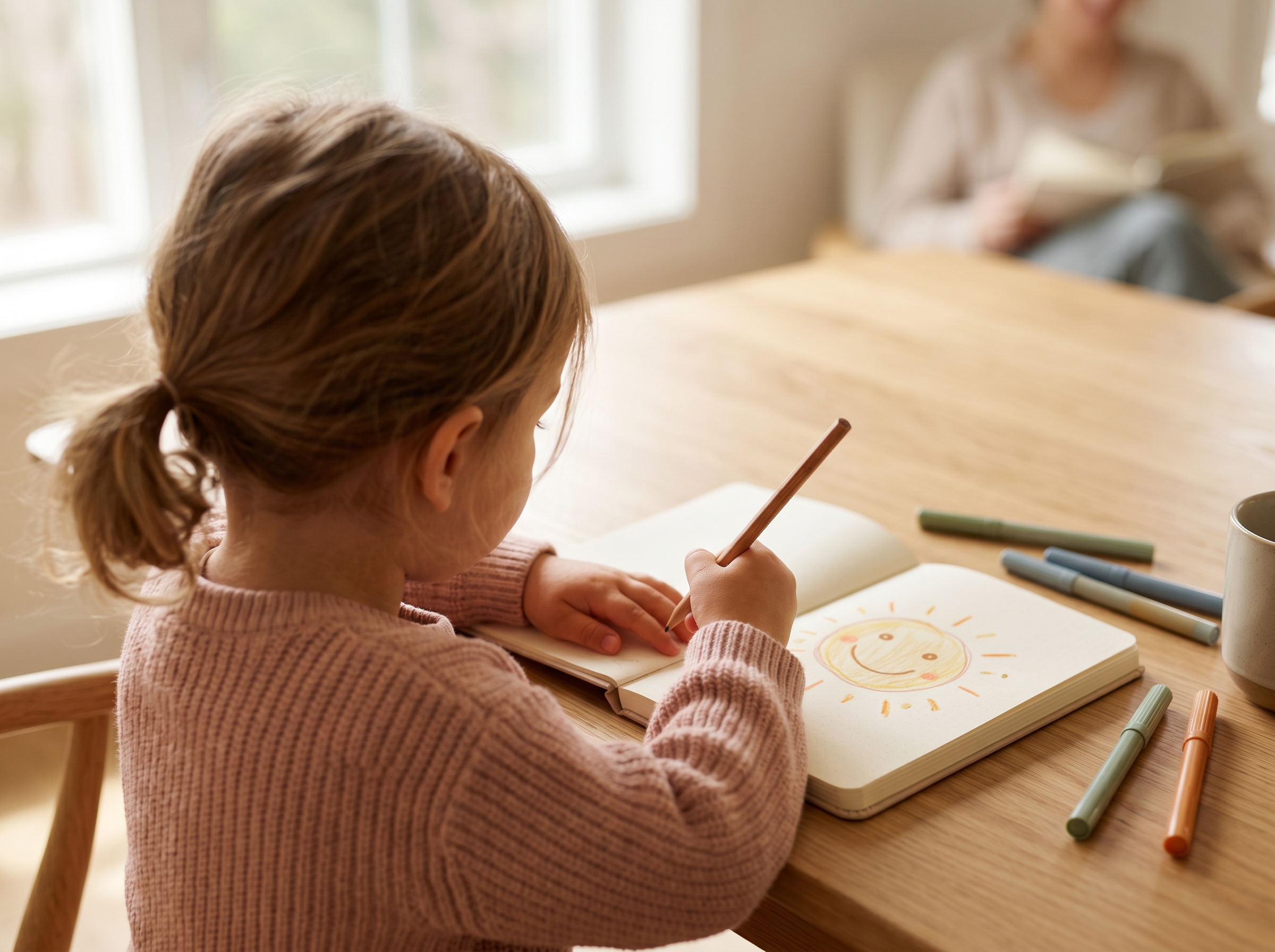
Now you can introduce simple drawing-based journals, a grateful jar with folded paper strips, and craft activities like a Thankful Tree. Kids this age can copy-write one word or draw a picture, both count. The visual, hands-on element keeps them engaged. This is also the perfect age to start a family jar ritual at the dinner table.
Ages 8–12 (Upper Elementary)
Written journals work well here, especially the “Three Good Things” format (more on that below). Kids this age can also write gratitude letters to specific people, a teacher, a neighbor, a grandparent. A gratitude scavenger hunt makes a great weekend activity for this group. They’re old enough to reflect with some depth but still young enough to enjoy the craft side of it.
Ages 12+ (Tweens)
Tweens do better with more open-ended reflection prompts than structured fill-in-the-blank formats. Gratitude playlists (songs that represent happy memories or people they love) and photo journaling on their phones are natural fits for this age. Peer-directed thank-you notes, written to a friend, not just a family member, carry a lot of emotional weight at this stage.
What You’ll Need
Most of these supplies are probably already in your house. If you need to pick anything up, you’re looking at under $5 total.
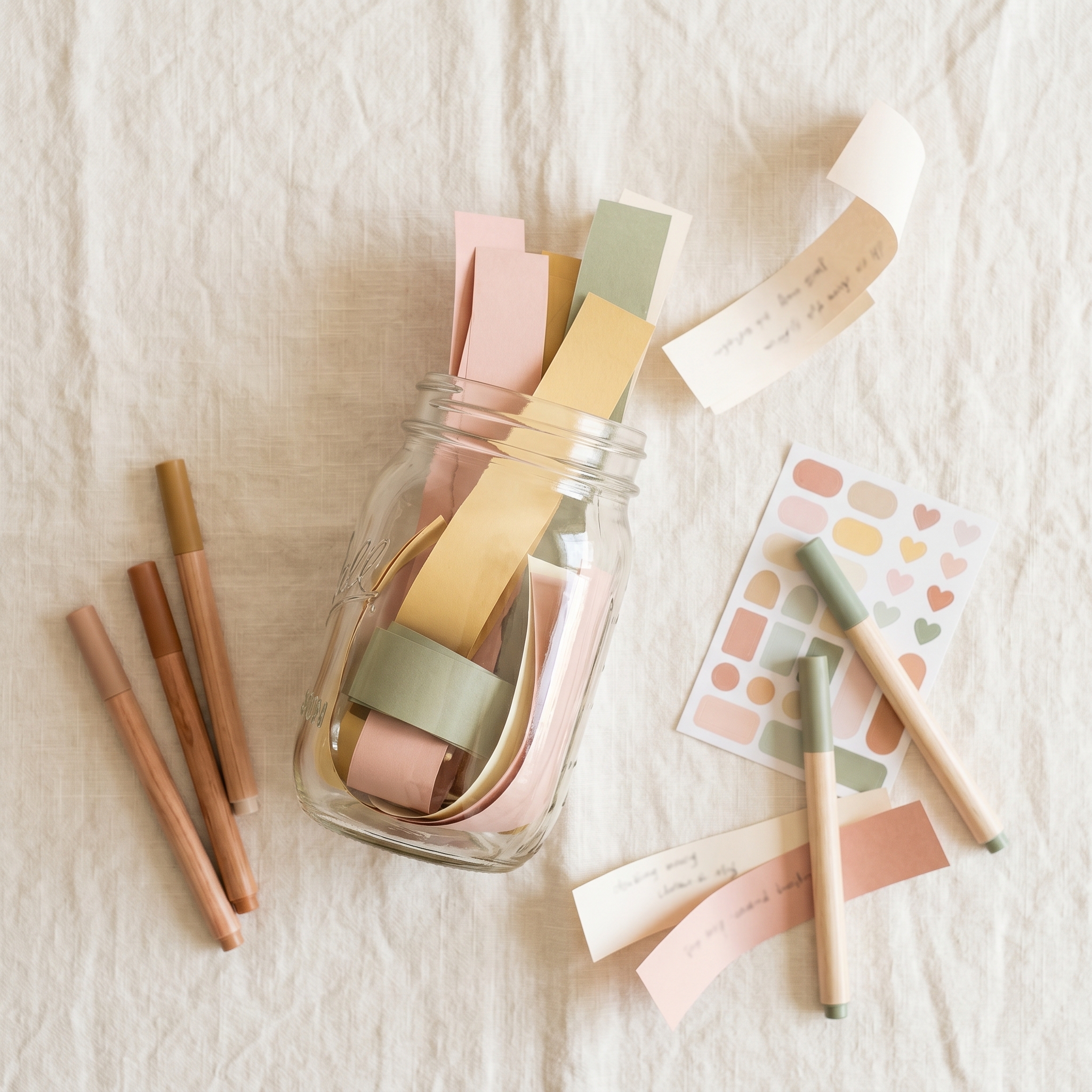
- Mason jar or any clear jar with a lid: for the Gratitude Jar activity
- Small strips of paper or sticky notes: about 2″ x 4″ works well
- Colored markers or crayons: one set for each child if possible
- Construction paper in fall colors: for the Thankful Tree leaves
- One small notebook per child: composition books are perfect and inexpensive
- Scissors and a glue stick or tape: for tree and collage activities
- Optional: stickers and washi tape for decorating the jar or journal cover
10 Gratitude Activities for Kids (With Setup Instructions)
Some of these are crafts, some are games, and a few take less than five minutes with zero prep. Pick one that fits your family’s rhythm this week and go from there.
1. The Gratitude Jar
This one is my favorite because it builds over time. By December, you’ve got a jar full of your family’s whole year. According to the early childhood experts at Zero to Three, giving kids a visual, tangible representation of gratitude, like a jar they can see filling up, helps make the concept feel real and meaningful at every age.
Steps
- Set a clean mason jar (or any clear container) on the kitchen table or counter where your family gathers each evening.
- Cut a small stack of paper strips roughly 2″ x 4″ and keep them right next to the jar with a pen or marker so there’s no hunting for supplies.
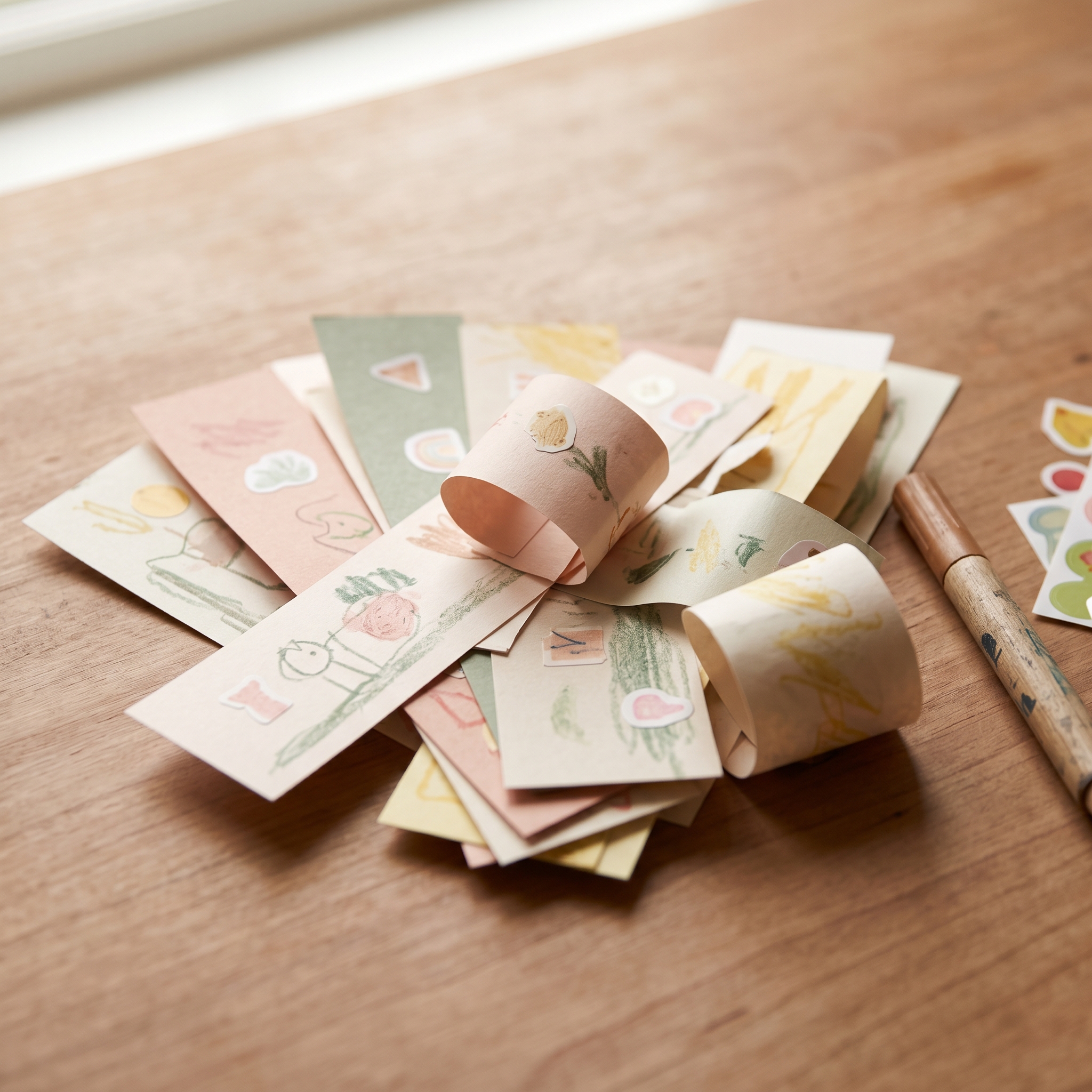
- Each evening after dinner or before bed, have every family member write or draw one thing they’re grateful for that day, then fold the slip and drop it in.
- Toddlers can dictate while you write for them. Older kids can also decorate the jar with stickers or paint as a separate craft activity before you start using it.
- Set a reading day once a week (Sunday evenings work well) or at the end of each month, pour out all the slips, and read them together as a family.
What kids learn: Delayed reflection, recognizing small everyday positives, family connection.
2. The Thankful Tree
Cut leaf shapes from construction paper in fall colors. Each family member writes one thing they’re grateful for on each leaf, then you tape them to a paper trunk on the wall or arrange them around a real branch in a vase. The visual accumulation is powerful for younger kids especially. It’s a natural fit for November, but there’s no rule that says it can’t live on your wall year-round.
What kids learn: Visual representation of gratitude, creative expression, fine motor skills.
3. Gratitude Journals (The Three-Good-Things Method)
Each day, kids write or draw three specific good things that happened. Sentence starters help a lot: “Today I’m grateful for ___ because ___.” Dr. Martin Seligman’s “Three Good Things” exercise, part of his positive psychology research at the University of Pennsylvania, showed a measurable increase in happiness lasting up to six months. A child-friendly version produces the same kind of shift when done consistently. More details on Seligman’s work are available at the Greater Good Science Center at UC Berkeley.
What kids learn: Reflective thinking, writing habits, emotional awareness.
4. Gratitude Scavenger Hunt
Build a list of things to find: something beautiful, something that helps you, something a friend did, something in nature, something that makes you laugh. This works indoors or outdoors, and it’s a great option for a slow weekend afternoon. Kids this age are often surprised by how much they find once they start looking.
Time: 20-30 minutes. Ages: 5-12.
5. Thank-You Note Making
Not just for birthdays. Writing a note to a teacher, a neighbor, or the mail carrier is one of the most powerful gratitude activities out there, because research shows the person writing the note gets a bigger happiness boost than the person receiving it. Give kids a simple prompt: “I’m grateful for you because ___ / One thing you did that helped me was ___.” For days when you want to pair this with a sweet message your child can share, a collection of love messages for kids to brighten someone’s day can give them a starting point.
What kids learn: Empathy, perspective-taking, meaningful communication.
6. The Gratitude Game (Dinner Table Version)
Go around the table and have each person name something or someone they’re grateful for that day. The rule: it has to be specific, not just “family” or “food.” Challenge round for older kids: your answer has to come from a different category than the person before you. This one takes five minutes and works any night of the week.
Ages: 4 and up.
7. Thankful ABC
Work through the alphabet together: A is for apples, B is for my best friend, and so on. This works as a written activity, a car game, or a bedtime ritual. It’s surprisingly fun once you hit the harder letters, and kids get creative around Q and X.
Time: 10-15 minutes. Ages: 5-10.
8. Gratitude Walk
On any walk outside, each person picks out five things they notice and appreciate. You can call them out as you go or save them for a share at the end. This one works with toddlers (point to things and name them) all the way through tweens. Nature has a way of making this feel easy even for reluctant participants.
Ages: 3 and up.
9. Gratitude Collage
Flip through old magazines or printed photos and cut out images that represent things your child is grateful for. Glue them onto poster board or into a journal. This is a great rainy-day activity and produces something beautiful. Collages work especially well for visual learners and kids who aren’t keen on writing.
Time: 30 minutes. Ages: 5-12.
10. Bedtime Rose, Bud, Thorn Check-In
Rose is something good from today. Bud is something you’re looking forward to. Thorn is something that was hard. I love this one because it validates the full emotional picture. Gratitude doesn’t mean pretending everything’s great. Acknowledging the thorn alongside the rose actually makes the practice feel more honest, and kids are more willing to participate when they’re not being asked to ignore the hard parts of their day.
Time: 3-5 minutes. Ages: 4 and up.
5-Minute Gratitude Habits for Busy Families (No Craft Required)
For the weeks when there’s no time for a craft, these micro-habits build the same muscle. Consistency beats intensity every time.
- Car ride gratitude: “Name three things from your day before we get home.” After a couple of weeks it becomes automatic.
- Mealtime one-liner: Before eating, each person names one specific thing they appreciated that day. Keep it short, keep it rotating.
- Grateful text or voice memo: Older kids record a quick voice note or send a text to a grandparent or family friend once a week expressing something they appreciate about that person.
- Morning intention: “What’s one thing you’re already grateful for today?” asked over breakfast or during the walk to the car. It takes 30 seconds.
- Gratitude photo: Kids snap one photo per day of something they appreciate. Review them together on Sunday evenings.
Two minutes every single day will do more than a 30-minute craft once a month. The brain responds to repetition, not to one big meaningful event.
What Kids Actually Learn From Gratitude Activities
The “learning” happens quietly here. Kids don’t realize they’re building a life skill, which is part of what makes these activities work so well. Here are the five concrete skills that develop with regular practice:
- Emotional regulation: naming good things gives kids a tool to self-soothe when harder moments hit
- Empathy: recognizing what others do for them is the foundation of perspective-taking
- Attention shifting: training the brain to notice positive details rather than defaulting to problems
- Verbal and written expression: articulating feelings, even in simple terms, builds real communication skills over time
- Resilience: kids with a consistent gratitude habit recover from disappointment faster, according to positive psychology research
None of this requires a big conversation about “being thankful.” It just requires small, repeated moments that eventually become part of how your kid sees their day.
Gratitude Activities for Kids at Specific Times of Year
Gratitude practice works best when it’s not confined to November. Here’s how to tie these activities to natural seasonal moments throughout the year so it stays fresh instead of feeling like a yearly obligation.
- Back to School (August/September): A “grateful for my new teacher” note on the first week, plus a journal page about what your child is excited to learn this year, sets a positive tone from day one. Pairing this with solid back-to-school tips for parents can help the whole transition feel smoother.
- After Birthdays and the Holidays (December/January): This is the single best time for thank-you note making. It turns naturally into a post-gift ritual and works against the entitlement that can creep in after a big gift haul. A gratitude jar reset on January 1st is also a nice way to start fresh.
- Spring: A gratitude walk focused on nature works beautifully this time of year. Kids who are feeling restless after winter respond to the sensory side of noticing what’s blooming and growing. You can also fold this into some of the spring crafts for kids already on your to-do list.
- Summer: A gratitude photo challenge (one image per day of something they love about summer) turns into an instant end-of-summer collage. Reviewing the photos together on the last week of break is a lovely way to close out the season.
Frequently Asked Questions About Gratitude Activities for Kids
What is the 3-minute gratitude journal for kids?
The 3-minute gratitude journal is a simplified journaling format where kids spend about three minutes writing or drawing three things they’re grateful for, one thing that made them smile, and one person they want to appreciate that day. It’s structured enough for young kids to follow on their own and short enough to fit into a school-night routine without any resistance.
At what age should you start gratitude activities with kids?
You can start as early as ages 2-3 with simple verbal exercises like “what made you happy today?” More structured activities like journals and crafts work well from about age 5. The key is keeping it developmentally appropriate. Drawing works just as well as writing for younger kids, and pointing to concrete things they love works better than abstract prompts for toddlers.
How often should kids practice gratitude activities?
Daily micro-habits are more effective than occasional larger activities. Even five minutes of gratitude practice done consistently produces measurable improvements in mood and empathy within a few weeks. Think of it less like a scheduled craft session and more like brushing teeth, a small, daily habit that compounds quietly over time.
Are there free printable gratitude activities for kids?
Yes, gratitude journal pages, thankful tree templates, and scavenger hunt lists are widely available as free printables online. That said, most of these activities are easy to DIY with basic supplies you already have. A jar, some paper strips, and a marker is all the Gratitude Jar requires. No printout needed.
Do gratitude activities really work for kids, or is it just a trend?
The research is solid. According to Dr. Robert Emmons at UC Davis, more than two decades of studies on gratitude show consistent benefits including better sleep, higher life satisfaction, stronger relationships, and greater optimism. These effects have been replicated with children and adolescents specifically. One activity won’t transform anything, but a small daily habit done consistently builds something real over time.


