
How to Stay Fit While Traveling (Mom Edition)
Staying fit while traveling means maintaining consistent daily movement through walks, bodyweight workouts, and active family time, even without a gym nearby.
Last updated: July 2026
Quick Answer: How to Stay Fit While Traveling
The one thing that keeps me moving on vacation? Treating one daily walk as non-negotiable. Everything else is a bonus. Staying fit while traveling doesn’t mean recreating your home gym routine in a hotel room. According to the CDC’s Physical Activity Guidelines, just 150 minutes of moderate activity per week (about 21 minutes a day) is the baseline recommended amount to stay active, and that’s a fine target to hit even on a trip. You don’t need an hour. You need a plan.
Here’s the mom-specific truth: you’re not a solo traveler optimizing macros. You’re managing nap windows, late resort dinners, and a six-year-old who suddenly can’t walk another step. That’s the real travel fitness challenge, and the tips below are built for that version of travel.
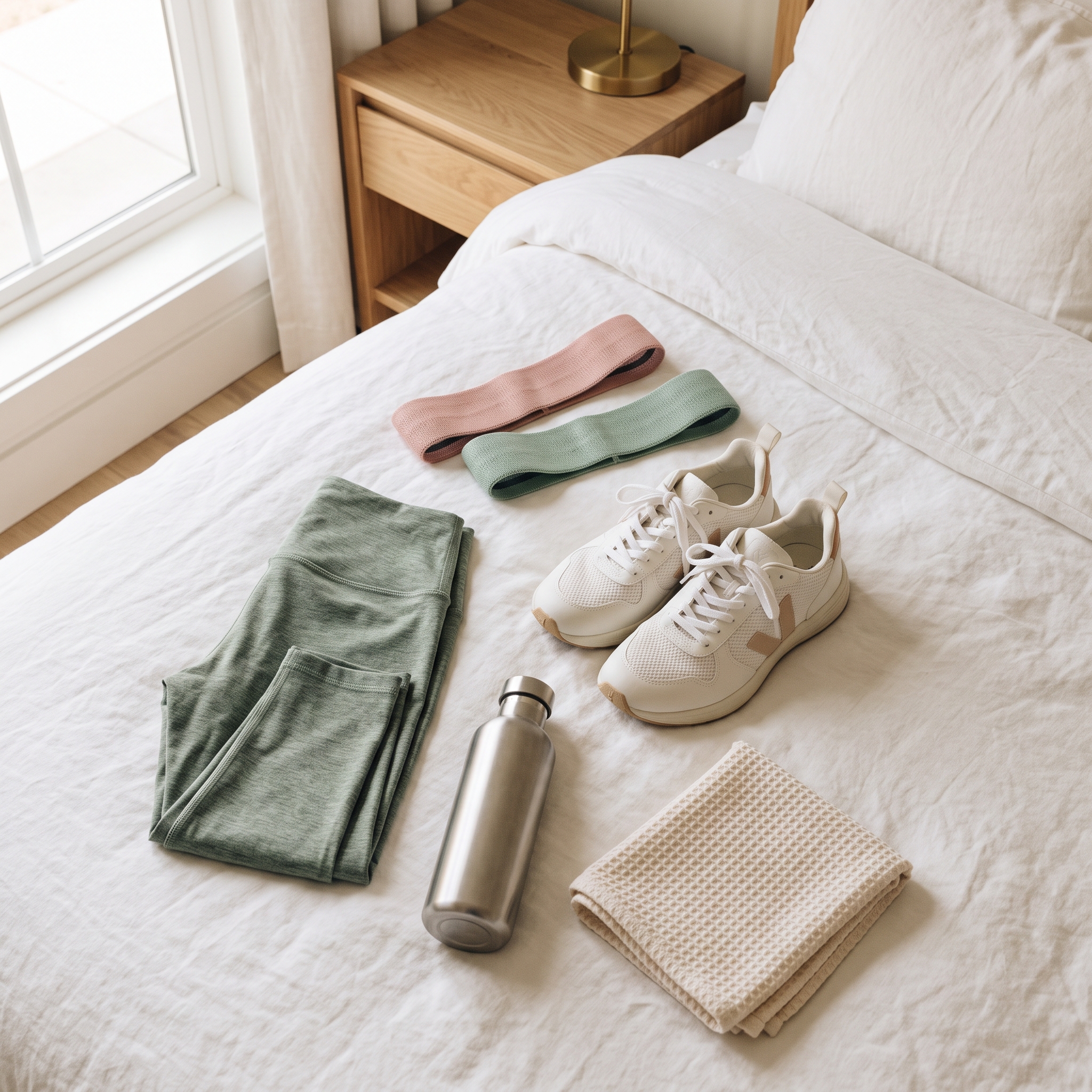
Plan Your Movement Before You Book the Hotel
Most fitness advice skips the pre-trip layer entirely. Don’t. A few minutes of planning at the booking stage removes the biggest barriers before you even pack your bag.
What to Look for in a Family-Friendly Hotel for Fitness
- Pool: Counts as cardio AND the kids are entertained. That’s a double win worth prioritizing.
- Fitness room hours: Many hotel gyms close at 10 p.m. Check before you book, not after you arrive at 9:45.
- Walkability: Look for a park, trail, or pedestrian-friendly area within half a mile of the property.
- Extras: Some hotels offer jogging stroller loans or bike rentals. Call and ask. You’d be surprised.
Map One Active Option Per Day in Your Itinerary
Open Google Maps before your trip and drop pins on the nearest parks, trails, or recreation centers at your destination. You don’t need to pre-plan every day. Aim to anchor at least three out of seven days with intentional movement: a hike, a beach walk, a pool session. Having a pin already saved means you’ll use it. Without one, you’ll keep saying “maybe tomorrow.”
Build Your Travel Fitness Kit (What to Pack)
Every travel fitness list says “pack a resistance band.” Great tip. But here’s what that looks like in a suitcase:
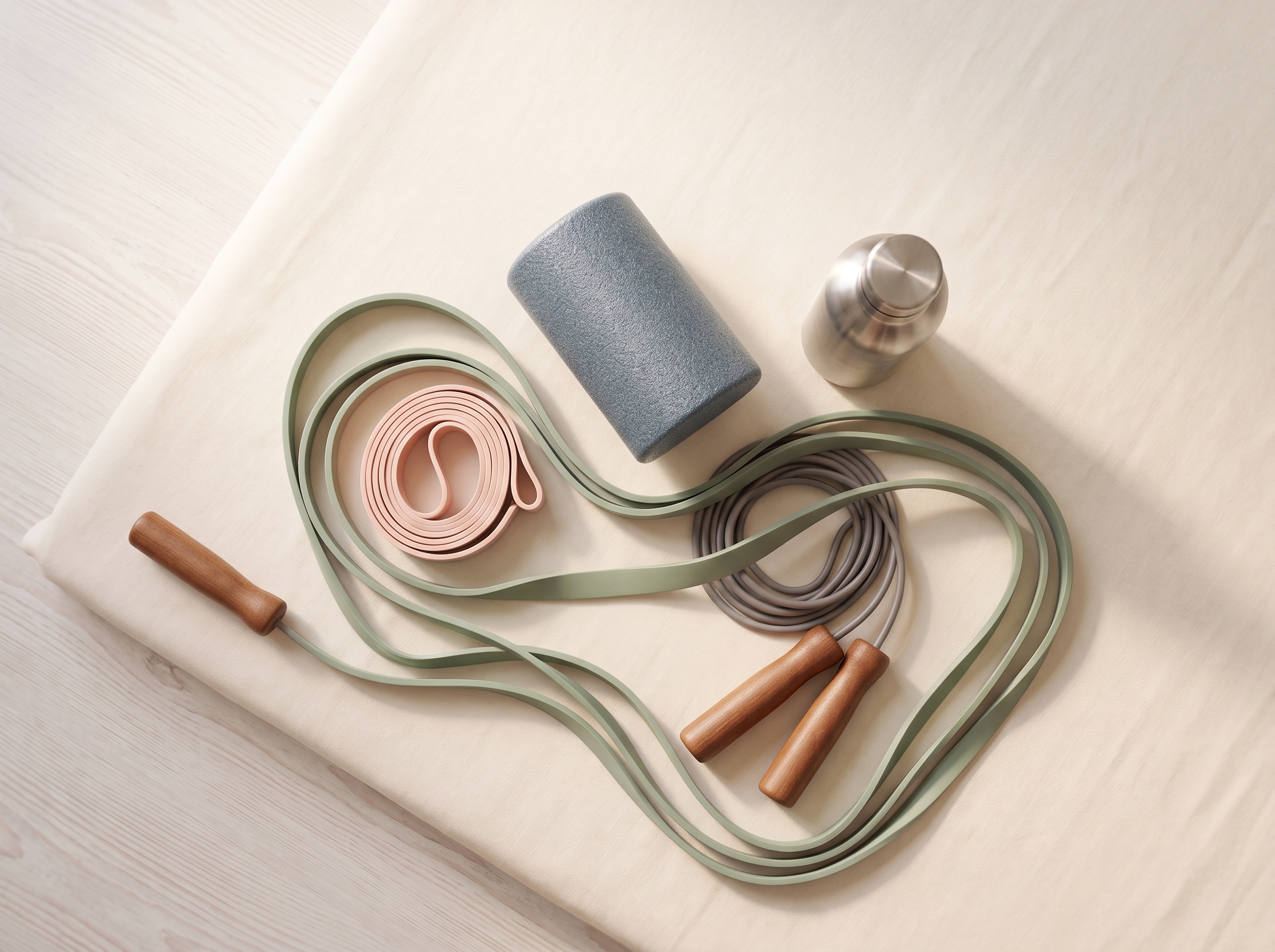
- Resistance bands: Loop bands in light and medium resistance. A compact set weighs around 7 ounces and fits in a makeup bag.
- Jump rope: A weighted cable rope under one pound. Ten minutes of jumping burns roughly 100 calories and takes up almost no space.
- Compact foam roller: A travel-size half roller (around five inches) fits in the side pocket of a carry-on. Your hips will thank you after a long flight.
- Workout clothes that pull double duty: Leggings that work for a hike and the hotel gym cut down on packing. Synthetic fabrics dry in two to four hours, which matters when you’re living out of a suitcase.
- A fitness app downloaded offline: Nike Training Club, FitOn, and the Peloton app all have no-equipment sessions under 20 minutes. Download before you go so spotty hotel Wi-Fi isn’t an excuse.
If you’re already thinking through what to bring on a family trip, the packing advice in this road trip guide for families pairs well with building out your travel kit.
The Mom-Realistic Morning Workout Strategy
Nobody on a family vacation has 90 minutes to spend in a gym. Nobody. The goal is sustainable, not perfect.
Work With Your Kids’ Schedule, Not Against It
Early mornings (before the kids are up) are the most reliable window for a 15-to-20-minute hotel room workout. If you have younger kids with a nap window, that’s your second option: resistance bands, a yoga flow, or a quick HIIT session from a fitness app. Research on training frequency actually makes this easier than you’d think: one study on reduced training frequency found that a single high-intensity strength session per week preserved about 95% of muscle strength and muscle size over a full 12 weeks. A 20-minute hotel-room circuit once or twice during a trip is more than enough to hold your ground.
For a quick starting point on no-equipment formats, these 5-minute workouts for busy moms are short enough to stack two or three rounds when you have a bigger window.
A 15-Minute Hotel Room Circuit (No Equipment)
This requires zero equipment and stays quiet enough to not wake anyone through a shared wall.
- 15 squats
- 10 push-ups (knees or standard)
- 20 reverse lunges (10 each leg)
- 30-second plank
- 15 glute bridges
Repeat two to three rounds. The whole thing takes 12 to 18 minutes depending on your rest. No mat required. No noise. Works in a space the size of a hotel bathroom floor.
Turn Family Time Into Exercise (Without Anyone Knowing It’s a Workout)
This is the section nobody else is writing for moms specifically, and it’s the most useful shift in thinking I can offer you.
According to a TripAdvisor survey on traveler fitness habits, walking is the most popular physical activity for travelers at 87%, followed by swimming at 46% and hiking at 35%. The thing is, moms with kids are doing all three of those already. The mindset shift is just calling it what it is.
- City sightseeing: A full day of walking a new city typically puts you at 8,000 to 12,000 steps. That’s four to six miles of cardio without a single “workout.”
- Pool time: Thirty minutes of active pool play burns roughly 200 to 300 calories and absolutely counts as cardio.
- Hiking: Frame it as an adventure. A two-mile trail is real aerobic work for you, and kids don’t even notice they’re exercising.
- Beach days: Walking on sand burns around 1.5 times more calories than pavement walking because of the added resistance.
- Bike rentals: Most beach and resort towns offer them. A 45-minute family ride is solid cardio and doubles as a way to cover more ground.
On a family trip, movement is already built into your day. You don’t need to carve out separate “workout time” from “family time.” They’re the same time.

How to Eat to Stay Lean Without Ruining the Trip
No rules. No guilt. Just two easy frameworks that make the rest of the trip feel less chaotic.
The 80/20 Rule on Vacation
Eat real, local food roughly 80% of the time. That covers most meals naturally. The other 20% or so? Full permission. The gelato, the funnel cake, the beach margarita. No tracking needed.
One practical anchor that helps: start each day with a high-protein breakfast (eggs, Greek yogurt, cottage cheese). A protein-forward morning reduces impulsive snacking by mid-morning, which is usually when airport or amusement park junk food starts looking attractive.
Smart Snack Strategies for the Family
Pack your own snacks for transit days. Airports and rest stops are not your friends when you’re hungry and tired. Aim for combinations of protein and fat: nuts, jerky, string cheese, protein bars.
Hydrate with intention. Aim for 64 oz of water daily. Dehydration mimics hunger signals and makes you feel sluggish, which is the last thing you need with a full family itinerary. For more ideas on no-fuss snacks that survive travel, this roundup of healthy snacks for kids has options the whole family will eat without complaint.
Stay Active at the Airport (Yes, Do It)
A long layover is wasted movement if you spend it sitting at a gate. Here’s what to do instead:
- Walk terminal laps: Major US airports like Atlanta Hartsfield-Jackson, Dallas/Fort Worth, and O’Hare have terminals long enough for half-mile to one-mile loops. A 45-minute moderate-pace walk can hit around 9,000 steps.
- Skip the moving walkways: Walk the full length of the terminal instead. Simple, free, effective.
- Stretch at a quiet gate: Hip flexors and hamstrings get tight from sitting. A five-minute stretch before boarding is worth it.
- Look for airport gyms: If your layover runs past three hours, search “[airport name] gym.” Several major US airports have pay-per-use fitness options available to travelers.
What to Do If You Miss a Few Days (No Mom Guilt Required)
Missing two or three days of exercise does not undo your fitness. That’s not motivation talk; it’s physiology. Meaningful muscle loss begins around day seven to fourteen of complete inactivity. A day off because the kids had a meltdown at the theme park and everyone went to bed at 7 p.m.? That’s not a setback. That’s a day.
One strategy that helps: the “never miss twice” rule. If you skip Monday, Tuesday becomes non-negotiable, even if it’s just a ten-minute walk around the block. One skip doesn’t compound into a habit unless you let it.
Also worth saying: rest is recovery. Especially when you’re traveling with kids, sleep does more for your body than a forced 5 a.m. workout on four hours of rest. Give yourself permission to prioritize sleep first.
If you want a weekly structure that travels well, the 3-3-3 rule is a solid starting point: three days of cardio, three days of strength, and three days of flexibility or active recovery. It’s flexible enough to adapt on the road without feeling like you’re starting from scratch every Monday.
Frequently Asked Questions
What is the 3-3-3 rule for workout?
The 3-3-3 rule is a weekly workout structure built around three cardio sessions, three strength sessions, and three active recovery or flexibility sessions. It travels well because each category is flexible: a beach walk counts as cardio, the hotel room circuit above counts as strength, and a ten-minute stretch before bed counts as recovery. No gym required for any of it.
How do I keep losing weight while traveling?
It’s doable with a few consistent habits. Prioritize protein at every meal to stay fuller longer. Keep your daily step count above 8,000 (a sightseeing day usually handles this on its own). Watch liquid calories, because cocktails and specialty coffee drinks add up faster than food does. You don’t need to be perfect; you just need to stay consistent on the basics.
How do I not lose muscle when traveling?
Maintain your protein intake at roughly 0.7 to 1 gram per pound of bodyweight daily, and aim for at least two resistance-based workouts per week. Bodyweight and bands both count. The hotel room circuit in this article is a solid starting point if you don’t have access to a gym. Two sessions a week is enough to maintain what you’ve built.
How do I detox my body after traveling?
“Detox” gets thrown around a lot, but your liver and kidneys handle that on their own. What you’re probably looking for is a reset: rehydrate aggressively on the day you return (aim for 80 to 100 oz of water), return to whole foods for two to three days, prioritize seven to eight hours of sleep, and take one easy walk. That’s it. You don’t need a cleanse; you need a few normal days.
How do I stay fit while traveling for work vs. traveling with family?
They are different situations. Work travel usually gives you more solo time and flexibility to use a hotel gym at 6 a.m. before the day starts. Family travel means less solo time, but more built-in movement through walking, swimming, and outdoor activities. Both benefit from pre-planning and the same core principle: commit to one non-negotiable daily movement, and let everything else be a bonus.


