
Teriyaki Chicken and Vegetables (One Pan)
Teriyaki chicken and vegetables is a one-pan dinner made with tender chicken, colorful vegetables, and a sweet-savory homemade sauce, ready in about 30 minutes.
Last updated: June 2026
Quick Answer: What Is Teriyaki Chicken and Vegetables?
Teriyaki chicken and vegetables is a quick sheet-pan or stir-fry dinner where bite-sized chicken pieces and fresh vegetables roast together in a sticky, glossy teriyaki sauce. The homemade sauce comes together in 5 minutes with pantry staples, and the whole meal lands on the table in about 30 minutes. Serve it over rice and you’ve got protein, carbs, and fiber in one bowl, with minimal cleanup.
Everyone assumes homemade teriyaki sauce is a complicated project. It’s not. Five ingredients, one small saucepan, five minutes. That’s it.
And the other big myth? That a one-pan weeknight dinner can’t taste like something you’d actually want to eat. This one does. The high oven heat caramelizes the edges of the chicken and vegetables, and that glossy homemade sauce ties everything together in a way that bottled sauce just can’t match. It’s the kind of dinner that gets requested on repeat, which is a win on any tired Tuesday.
Why This One-Pan Recipe Wins on a Busy Weeknight
The cleanup situation here is simple: one large rimmed baking sheet and one small saucepan for the sauce. That’s it. Line the pan with foil or parchment and you’re basically done before you’ve even started washing up.
The homemade teriyaki sauce takes about 5 minutes to whisk together, and it keeps in an airtight jar in the fridge for up to a week. That’s something competitors tend to skim over. Make it Sunday, use it all week. No more reaching for the bottle.
Speaking of the bottle: store-bought teriyaki sauce often contains high-fructose corn syrup, extra sodium, and thickeners you don’t need. When you make it at home, you control the sweetness and salt level, which matters a lot if you’ve got kids with sensitive palates or anyone watching sodium intake.
This recipe works as a sheet pan teriyaki chicken and vegetables in the oven (the method we’re using here), but the same sauce is equally great for a quick stovetop stir-fry on nights when you need dinner even faster. Both methods, one sauce. If you’re looking for more ideas like this, these kid-friendly weeknight dinners follow the same “fast, one-pan, everyone eats it” logic.
Ingredients
- For the Chicken and Vegetables:
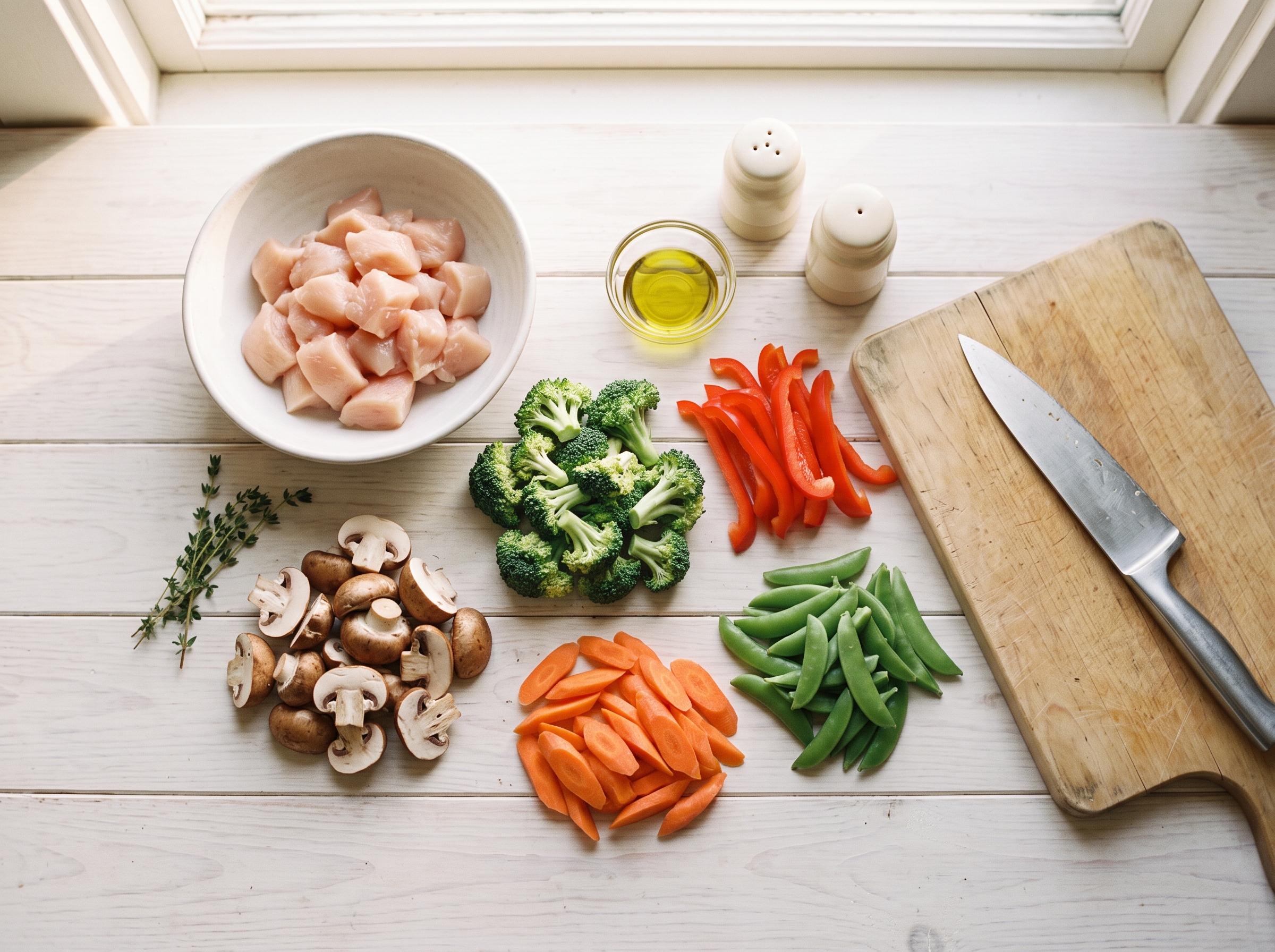
- 1.5 lbs boneless skinless chicken breasts or thighs, cut into 1-inch pieces (thighs stay juicier at high heat; breasts work great as long as you pull them at an internal temp of 165°F)
- 2 cups broccoli florets (a kid-favorite that holds up well at high heat)
- 1 large red bell pepper, sliced (adds sweetness and a pop of color)
- 1 cup snap peas or snow peas (they stay crisp and bright if you don’t overcook them)
- 1 cup carrots, thinly sliced on the diagonal (cut thin so they roast through in the same time as everything else)
- 1 cup mushrooms, halved (optional, but they soak up the teriyaki sauce beautifully)
- 2 tbsp olive oil
- Salt and black pepper to taste
- Sesame seeds and sliced green onions for garnish
- For the Homemade Teriyaki Sauce:
- ¼ cup low-sodium soy sauce (low-sodium keeps you in control of the salt level)
- 2 tbsp honey (gives the sauce its natural sweetness and helps it caramelize)
- 1 tbsp brown sugar (deepens the flavor with a slight molasses note)
- 1 tbsp rice vinegar (this is what gives the sauce its subtle tang, don’t skip it)
- 1 tsp sesame oil (adds that nutty, toasted depth you taste in restaurant teriyaki)
- 2 cloves garlic, minced
- 1 tsp fresh ginger, grated (or ½ tsp ground ginger in a pinch)
- 1 tsp cornstarch mixed with 1 tbsp cold water (the slurry is what makes the sauce thick and glossy, add it at the very end)
How to Make the Homemade Teriyaki Sauce
Traditional Japanese teriyaki uses soy sauce, mirin, and sake to build that signature sweet-savory glaze. This version swaps in honey, brown sugar, and rice vinegar to keep it weeknight-pantry friendly, without losing the flavor profile that makes teriyaki so good.
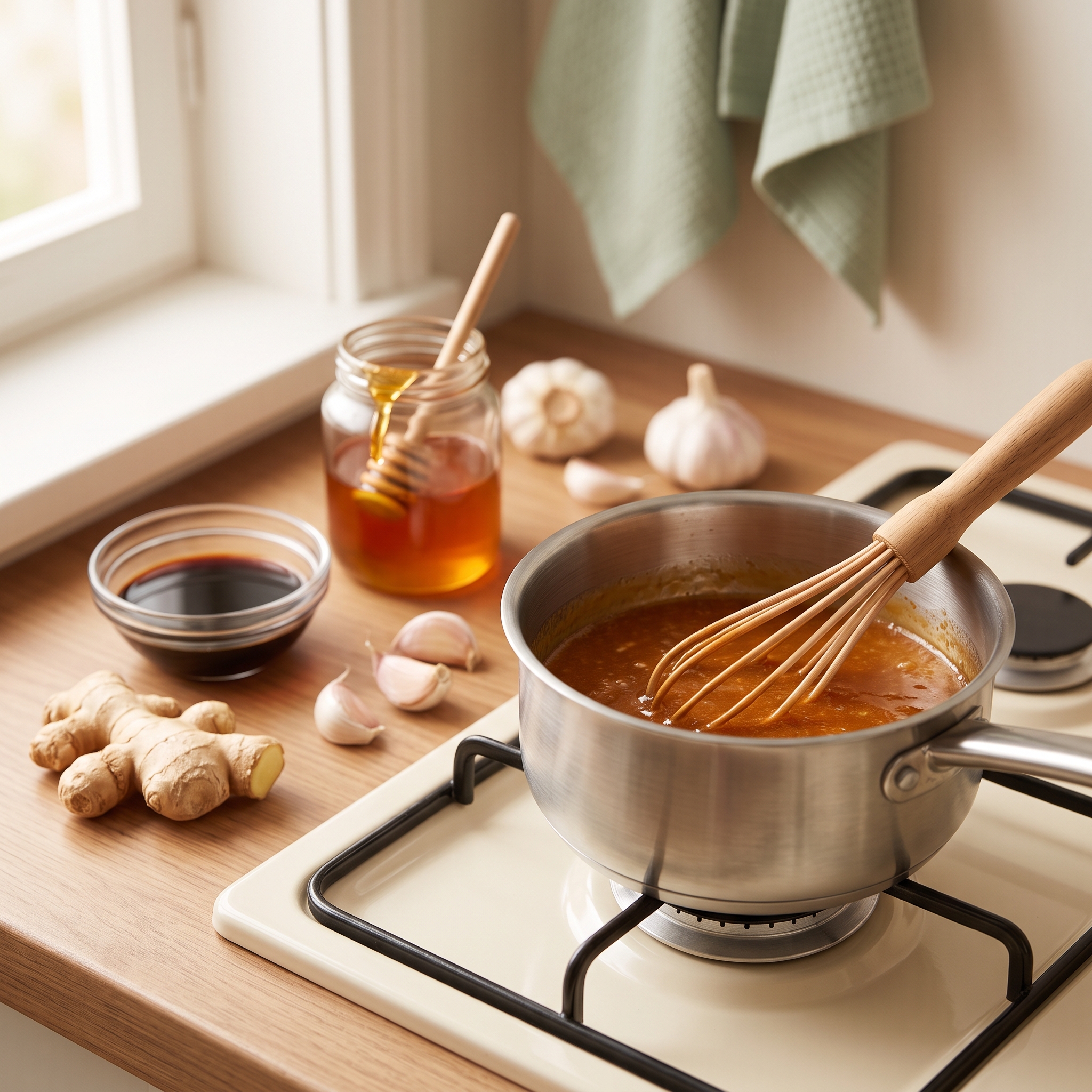
Whisk together all the sauce ingredients except the cornstarch slurry. Set it aside until the sheet pan comes out of the oven, then heat the sauce in a small saucepan over medium heat, stir in the slurry, and simmer for 1 to 2 minutes until it turns thick and glossy. That cornstarch step is what separates a watery sauce from a restaurant-style one.
According to the team at EatingWell, you can streamline teriyaki chicken even further by using pre-sliced vegetable mixes, which cuts prep down to just a few ingredients. I still prefer slicing my own for better caramelization, but on a chaotic evening, a bag of pre-cut stir-fry vegetables is a completely valid shortcut.
One practical tip: make a double batch of the sauce. Use half tonight, and refrigerate the rest for up to 7 days in a sealed jar. You can also freeze extra sauce in an ice cube tray for up to 3 months and pop out a cube whenever you need it.
Instructions
- Preheat your oven to 425°F. The high heat is what gives the vegetables slightly caramelized edges instead of a steamed, soggy texture.
- Line a large rimmed baking sheet (18×13 inches works best) with foil or parchment paper and lightly grease it.
- Whisk together all the teriyaki sauce ingredients except the cornstarch slurry in a small bowl. Set aside.
- Pat the chicken dry with paper towels (this helps it brown rather than steam). Toss chicken pieces with 1 tbsp olive oil, salt, and pepper. Arrange on one half of the sheet pan in a single layer.
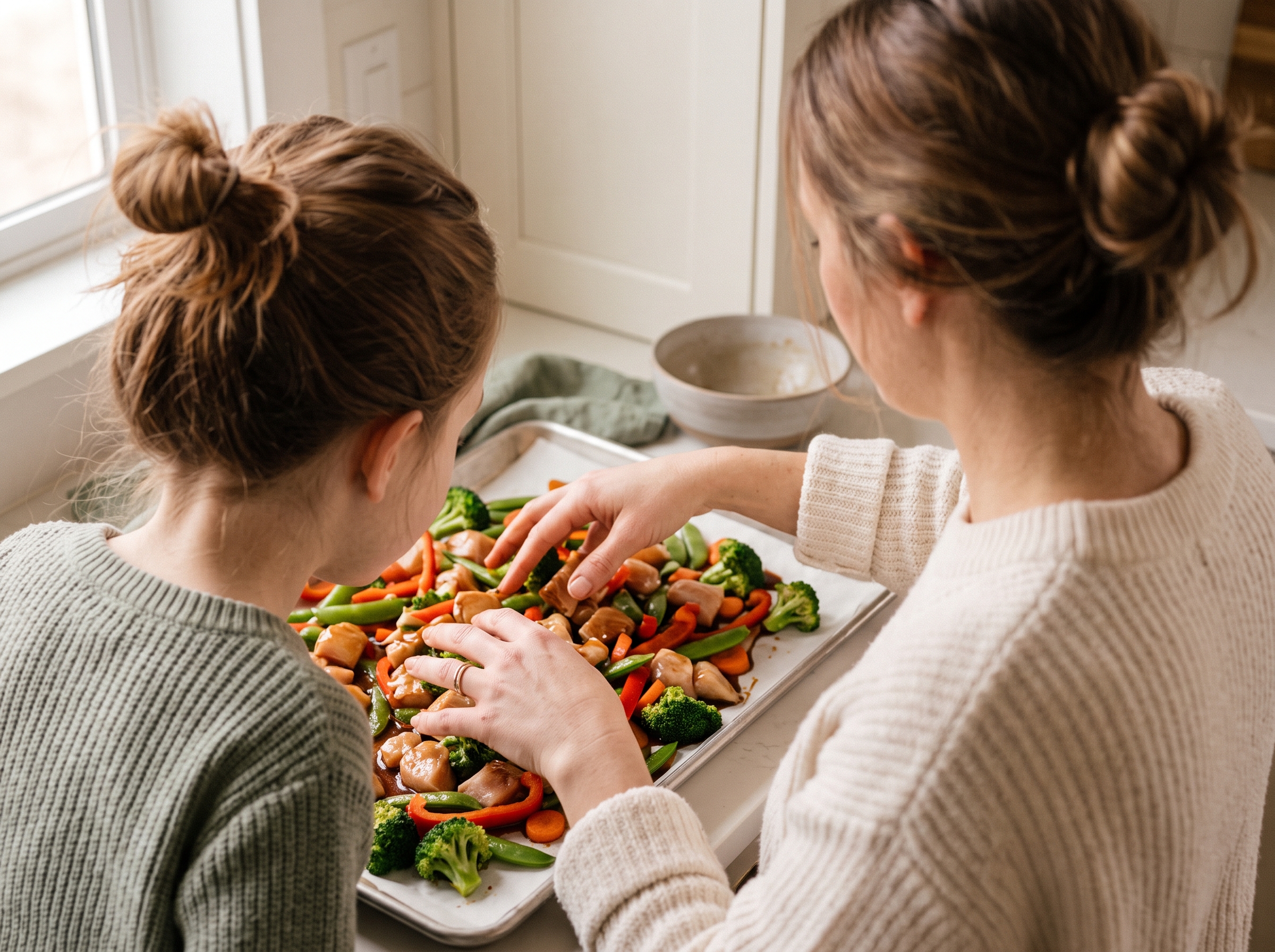
- Toss all vegetables with the remaining 1 tbsp olive oil and arrange on the other half of the pan. Try not to pile them on top of each other.
- Pour half the prepared teriyaki sauce over the chicken and vegetables. Toss gently to coat.
- Roast at 425°F for 20 to 22 minutes. At the 12-minute mark, pull the pan out and stir the vegetables. This single step prevents soggy spots and makes sure everything cooks evenly. Put it right back in.
- While the pan finishes roasting, heat the remaining teriyaki sauce in a small saucepan over medium heat. Stir in the cornstarch slurry and simmer for 1 to 2 minutes, stirring constantly, until the sauce is thick and glossy.
- Pull the sheet pan from the oven. Drizzle the thickened sauce over everything. Garnish with sesame seeds and sliced green onions. Serve immediately over rice.
The Best Vegetables for This Recipe (And When to Add Them)
Not all vegetables roast at the same speed, and this is where most recipes leave you guessing. Here’s a simple breakdown so nothing comes out undercooked or mushy:
Add from the start (these need 25+ minutes): carrots, broccoli stems, and thick-sliced onion. These are denser and need the full roast time to soften properly.
Add at the start, stir at the 12-minute mark (15 to 20 minute veggies): broccoli florets, red bell pepper, mushrooms, and snap peas. These go in with everything else but benefit from that mid-roast stir to keep their color and texture.
Add only in the last 5 to 7 minutes: asparagus, zucchini, thinly sliced spinach, and corn. These are delicate and will turn to mush if they roast the full 22 minutes. Just nestle them into the pan when you do the 12-minute stir, or wait until the last few minutes if they’re especially thin.
Try to get 3 to 4 colors on the pan. More color means more variety in nutrients, and it also makes the pan look inviting, which helps with picky eaters. If your child refuses one particular vegetable, you can pull that section off the pan a few minutes early. Same pan, different cooking windows, no arguments.
If you’re looking for another simple sheet-pan vegetable side to round out your weeknight rotation, this sheet-pan ranch carrot recipe uses the same high-heat method and is a big hit with kids.
Serving Suggestions, Especially Over Rice
Teriyaki chicken with rice and vegetables is the classic combination for good reason: it’s a complete, balanced meal in one bowl. White rice is the easiest pairing. If you’re going with brown rice, start it before you even prep the sheet pan since it takes 40 to 45 minutes to cook.
Short on time? Microwave rice pouches are done in 90 seconds and taste great with this sauce. Cauliflower rice is a solid lower-carb swap, and ramen noodles make a fun kid-friendly twist that goes over well when you’re trying to shake up the usual routine.
If you want to round out the meal further, a quick cucumber salad with a splash of rice vinegar and sesame oil pairs beautifully, as does a simple miso soup from a packet. Neither one adds much prep time and both make the meal feel a little more complete.
Tips, Substitutions and Make-Ahead Ideas
Protein swaps: Chicken thighs are the juiciest option at 425°F. Thinly sliced beef flank steak roasts in about the same time. Shrimp should go on the pan in the last 8 minutes only since it overcooks fast. Tofu works well too, just press it for 20 minutes first to remove extra moisture, then roast at the same temperature.
Bottled sauce shortcut: If you’re in a real time crunch, ½ cup of a quality low-sodium bottled teriyaki sauce works. Still make the cornstarch slurry and add it to the bottled sauce in a small saucepan over medium heat for that thick, glossy finish. Brands vary a lot in sodium, so taste before you add any extra salt.
Gluten-free option: Swap the soy sauce 1:1 for tamari or coconut aminos. The flavor is nearly identical and works for most gluten sensitivities.
Make-ahead: The sauce keeps refrigerated for up to 7 days. Cut vegetables can be prepped and stored in an airtight container in the fridge for up to 3 days. Night-before prep makes this recipe 10 minutes of active work on a weeknight.
Storage: Leftovers keep in an airtight container in the refrigerator for up to 4 days. Reheat in a skillet over medium heat with a small splash of water to revive the sauce. Freezing isn’t ideal here since the vegetables go soft, but the sauce itself freezes beautifully.
Recipe Card
| Prep Time | 10 minutes |
| Cook Time | 22 minutes |
| Total Time | 32 minutes |
| Yield | 4 servings |
| Method | Sheet Pan / Oven |
| Cuisine | Asian-American |
| Best For | Weeknight dinner, meal prep |
Serve over rice for a complete meal. See the serving suggestions section above for quick rice alternatives and fun kid-friendly swaps.
Frequently Asked Questions
Can I use bottled teriyaki sauce instead of homemade?
You can. A quality low-sodium bottled sauce works in a pinch. The one thing I’d still do is add a cornstarch slurry (1 tsp cornstarch mixed with 1 tbsp cold water) to the bottled sauce in a small saucepan over medium heat. Simmer for a minute or two and you’ll get that thick, glossy finish instead of a watery sauce that slides right off the chicken. Homemade only takes 5 minutes and tastes noticeably better, but the bottled shortcut is a perfectly valid weeknight move.
What vegetables go well with teriyaki chicken and rice?
Broccoli, red bell pepper, snap peas, carrots, and mushrooms are the classic combination, and they all roast well together. The key is adding them in order of density (see the veggie timing section above). Aim for 3 to 4 colors on the pan for both visual appeal and nutritional variety. Asparagus, zucchini, and corn can all join the party too, just add them in the last 5 to 7 minutes so they don’t overcook.
Can I make this on the stovetop instead of a sheet pan?
Absolutely. Use a large wok or a 12-inch skillet over medium-high heat. Cook the chicken pieces first, about 6 to 7 minutes, until cooked through, then remove and set aside. Add the vegetables to the same pan and stir-fry for 4 to 5 minutes. Return the chicken, pour in the thickened teriyaki sauce, and toss everything together for another minute. Total time is about the same as the oven method, and cleanup is just one pan.
How do I keep the vegetables from getting soggy?
Three things make the biggest difference. First, use a high oven temp (425°F), which roasts rather than steams. Second, use a large rimmed baking sheet (18×13 inches) so the vegetables have room to spread out in a single layer. Crowding the pan traps steam and gives you soft, watery vegetables. Third, stir the vegetables once at the 12-minute mark so every side gets some contact with the hot pan.
Is this recipe kid-friendly?
It’s one of the more reliably kid-approved dinners in my rotation. The sauce is mild and sweet-savory rather than spicy, which tends to go over well with most kids. You can customize the vegetables to what your family already likes, and if your child has a strong veggie opinion, pull their section off the pan a few minutes early. Kids ages 4 and up can help toss the vegetables with olive oil before they go on the pan. It’s a small thing, but kids who help make dinner are usually more willing to eat it.


