
Easy Thanksgiving Crafts for Kids
Thanksgiving crafts for kids are simple, low-supply projects using materials you already have at home, from handprint turkeys to leaf collages and paper plate cornucopias.
Last updated: June 2026
Quick Answer: Thanksgiving Crafts for Kids
The best thanksgiving crafts for kids don’t require a craft store run or a Pinterest-perfect setup. A handprint turkey made with washable paint and a sheet of cardstock checks every box: it works for ages two through ten, takes under thirty minutes, and ends up as a keepsake you’ll actually want to keep. That’s the anchor craft we’re walking through today, plus five variations and age-specific tips so the whole family can join in.
The Wednesday before Thanksgiving, my kitchen is already a disaster. The grocery bags are everywhere, something is simmering on the stove, and two kids are hovering asking what they can do. That’s exactly when I want a craft that requires zero prep and zero special supplies. This handprint turkey tutorial is the one I come back to every year, and I’ll show you how to scale it up or down depending on who’s sitting at the table.
The Quick Details
- Best for: Ages 2–10 (see age-specific tips below)
- Time: 20–30 minutes (about 15 minutes for toddlers with adult help)
- Mess level: Low to medium
- Cost: $0–3, mostly supplies you already have
- Craft type: Keepsake, seasonal decor, or Thanksgiving table setting
Why This Craft Works for Every Age Group
Most Thanksgiving craft roundups throw thirty ideas at you and call it a day. This is different. We’re doing one anchor craft and showing you exactly how to adapt it by age, which means you can do this with a two-year-old and a nine-year-old at the same table without losing your mind.
Handprint crafts have been a Thanksgiving staple forever for good reason. They’re free, they’re personal, and they become something meaningful over time. Here’s how the same basic project shifts by age:
- Thanksgiving crafts for toddlers (ages 2–3): An adult guides the hand, the child picks colors. Simple stamp-and-go.
- Thanksgiving crafts for preschoolers (ages 3–5): Kids can trace their own hand, practice cutting pre-drawn feather shapes, and name the colors as they go.
- Ages 6–10: Add detailed drawing, lettering, and gratitude prompts on each finger feather.
There’s a real fine-motor skill payoff here too. Tracing, cutting, and gluing all show up in early childhood development milestones, so this isn’t just a time-filler. It’s good, hands-on learning dressed up in turkey feathers.
Materials
You probably have ninety percent of this already. Here’s what you need:
- White or kraft cardstock or heavy paper (one sheet per child)
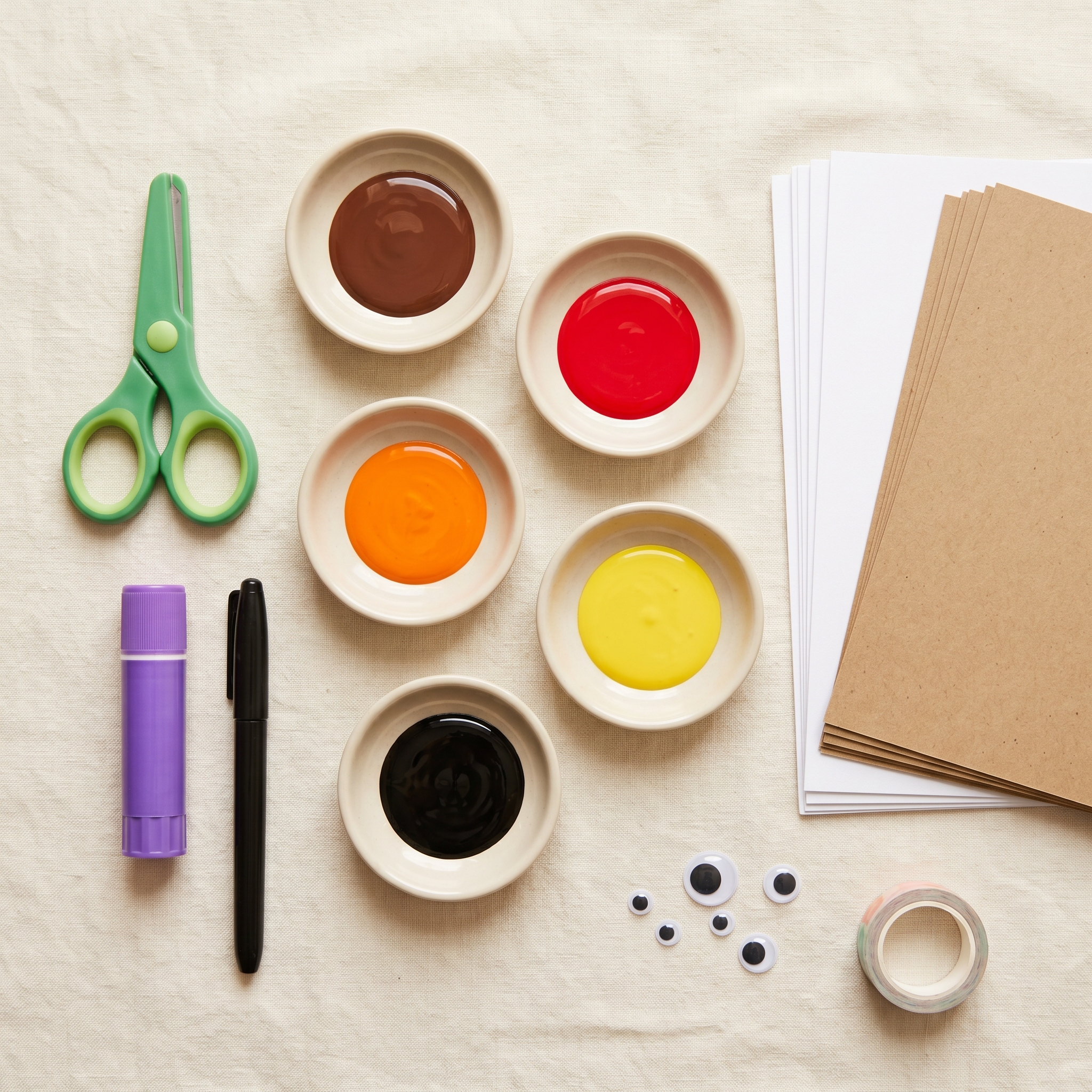
- Washable tempera paint or washable markers in five or more fall colors: red, orange, yellow, brown, black
- A shallow dish or paper plate for paint
- Child-safe scissors
- Glue stick or school glue
- Black marker or crayon for details
- Optional: googly eyes (or just draw them), washi tape, stickers
- Optional: pre-cut paper feather shapes for younger kids who aren’t ready to trace
Steps
- Prep your workspace. Lay down newspaper or a silicone mat and set out one color of paint per shallow dish.
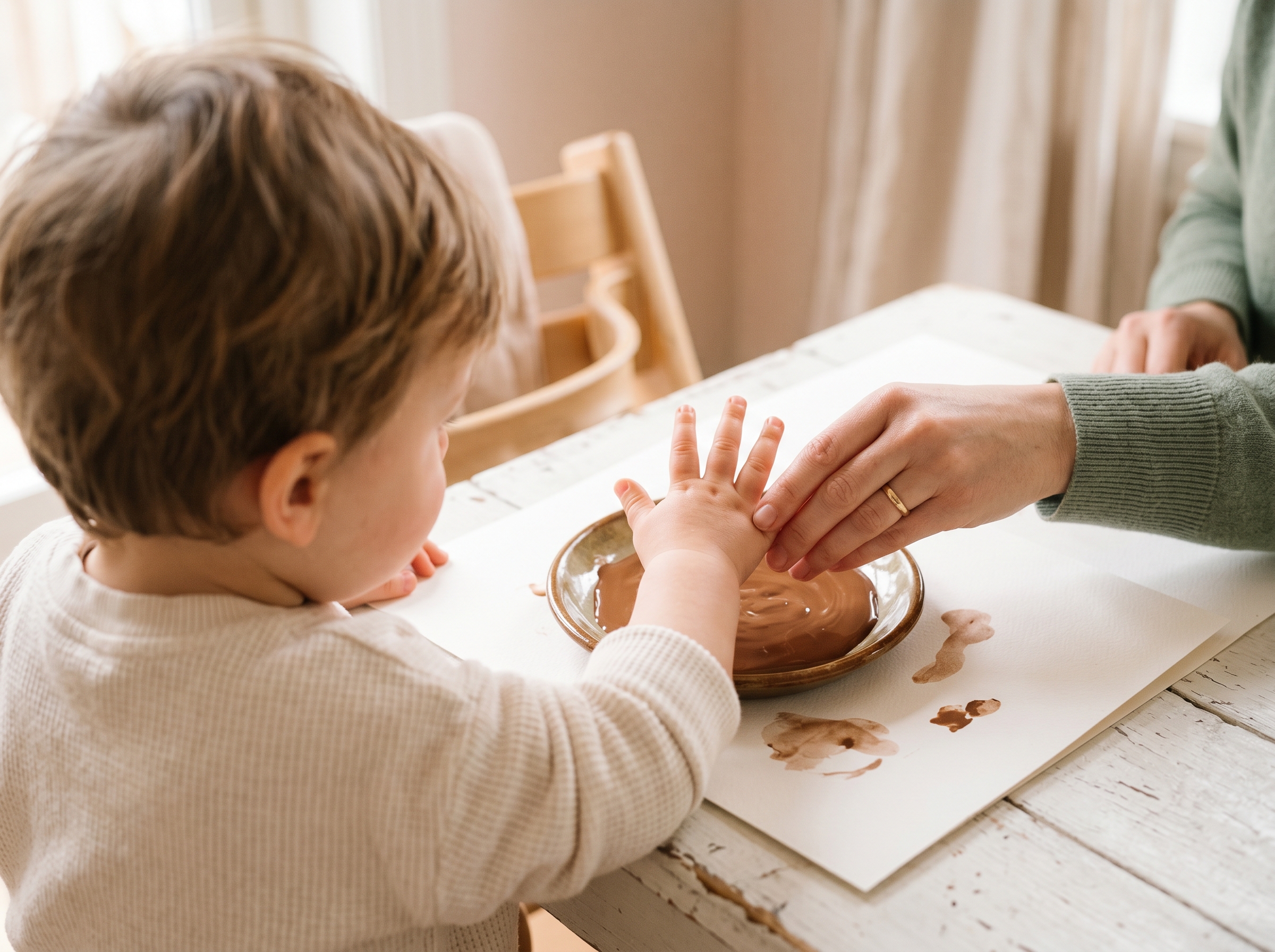
- Trace or stamp the child’s hand. For toddlers, dip the whole hand in brown paint and press firmly onto the paper. The palm becomes the turkey body and the fingers become the tail feathers. For older kids, trace the hand lightly in pencil first.
- Let the base dry for about five minutes. Use this time to cut out pre-traced feather shapes if you’re doing a paper-only version.
- Paint or color each finger feather a different fall color. Red, orange, yellow, and another pop of red work beautifully together.
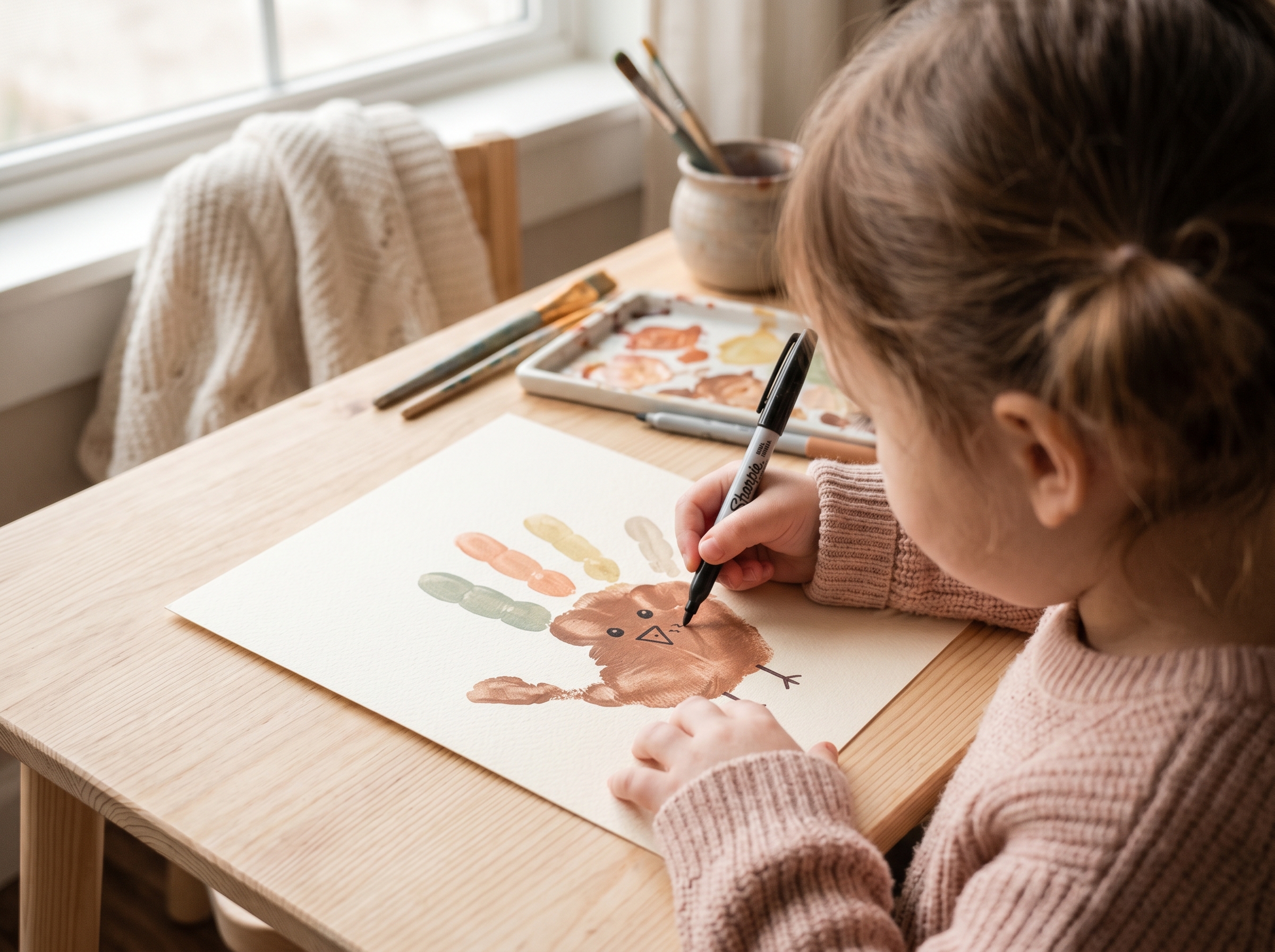
- Add the turkey’s face to the thumb. Draw two small eyes, a tiny orange triangle beak, and a red wattle. Kids love saying the word “wattle.”
- Draw two small legs and feet at the base of the palm using a black marker.
- Add a name and the year along the bottom edge. This is the keepsake moment.
- Let everything dry completely, about fifteen to twenty minutes, before displaying or gifting.
Tips for Making It Work with Toddlers and Preschoolers
For Toddlers (Ages 2–3)
Skip tracing entirely and go straight to the paint stamp. It’s faster, less frustrating, and honestly more fun for them. Use a foam brush to apply paint directly to the hand instead of dipping, which gives you more control over how much paint ends up where. While you have the paint out, do two or three prints at once. They make great cards for grandparents, and the extras dry quickly. If full hand-painting feels like too much mess for your little one, a few no-mess painting techniques give the same colorful fun with far less cleanup.
Expect about ten to fifteen minutes of focused attention from this age group, and count that as a win.
For Preschoolers (Ages 3–5)
Let them trace their own hand. It’s great pencil grip practice and they feel proud of doing it independently. Pre-cut feather shapes from construction paper so they can focus on the gluing step without getting stuck on scissors. Sneak in some color-naming (“which feather gets orange?”) and you’ve got a preschool learning moment hiding inside a craft.
A Note on Mess
Washable tempera paint cleans off skin and most surfaces in under a minute. Don’t skip the paint because you’re worried about cleanup. The paint is the most fun part, and your kids will remember the squishing and the stamping long after the turkey is hung on the fridge.
If you’re looking for more low-prep ideas when everyone’s stuck inside, check out these indoor toddler activities for rainy days that work well on rotation with craft time.
Variations
Footprint Turkey (Best for Babies and Young Toddlers)
Use a baby’s footprint instead of a handprint. The heel becomes the turkey body and the toes fan out as tail feathers. This one is the ultimate keepsake for year one and makes a beautiful card for the grandparent who has everything.
Paper Plate Turkey (Ages 4–7)
Use a small paper plate as the turkey body. Kids glue pre-cut construction paper feathers around the edge and paint the plate brown ahead of time. Zero tracing required, and toddlers can participate with minimal adult support.
Gratitude Turkey Feathers (Ages 5–10)
Same handprint turkey, but before painting, write one thing they’re thankful for on each finger feather. Ask them, jot it down lightly in pencil, and let them trace over it in marker. This turns the craft into a meaningful Thanksgiving tradition rather than just an activity to fill time.
Leaf-Print Turkey (Ages 6–10)
Collect five or six real autumn leaves, arrange them in a fan shape, and glue them down as the tail feathers. Add a hand-drawn turkey body in the center with markers or paint. This doubles beautifully as seasonal thanksgiving arts and crafts wall decor that actually looks great in the house.
Turkey Placemat (Ages 7–10)
Complete the handprint turkey on a standard 8.5×11 sheet, then run it through a self-laminating pouch (you can find packs of them at most big-box stores for a few dollars). Kids love using their own artwork at the Thanksgiving table, and you can pull it out again next year.
Turn the Craft Into a Thanksgiving Tradition
Here’s the thing most craft guides skip: the handprint turkey gets better every year. If you do this craft annually and date each one, you end up with a record of your child’s hand growing year over year. It’s moving to pull out a tiny two-year-old stamp and hold it next to the one your eight-year-old just made.
For families with multiple kids, make one turkey per child and frame them together as a November gallery wall. Start the craft with the gratitude feathers prompt: ask each child to name four things they’re thankful for before you open the paint. Write them lightly in pencil on each finger feather, then let them trace over in marker. It takes maybe three extra minutes and transforms a fun activity into something kids actually ask to do again.
If you want another easy keepsake craft your kids can make any time of year, the button heart craft uses the same simple supplies and works beautifully as a gift for grandparents.
Frequently Asked Questions
What are the easiest Thanksgiving crafts for kids to make at home?
Handprint turkeys, paper plate turkeys, and leaf collages are consistently the easiest options because they use materials most families already have. The handprint turkey tutorial above takes under thirty minutes with zero special supplies, and the whole thing can be done on the kitchen table while the rest of the house is in full Thanksgiving chaos.
What Thanksgiving crafts work for toddlers ages 2–3?
The best thanksgiving crafts for toddlers involve stamping or printing rather than fine scissor work. A paint handprint turkey or a footprint turkey are ideal for this age. They require only a few minutes of focused attention and produce a result toddlers are proud to show off. Keep a damp cloth nearby and you’re good to go.
Are these crafts good for preschoolers and kindergarteners?
Yes. Thanksgiving crafts for preschoolers work best when there’s a tracing, gluing, or sorting step they can complete on their own. The paper plate turkey and the basic handprint craft are both great for ages 3–6 with light adult guidance. The pre-cut feather shapes variation is especially well-suited to this age group.
Can I use these crafts as Thanksgiving decorations?
Absolutely. The leaf-print turkey and the laminated placemat variation both work as functional home decor. A framed set of annual handprint turkeys makes a beautiful seasonal gallery wall, and most parents find they can’t bring themselves to throw them away anyway. That’s a good sign.
Are there any safety things to keep in mind for young kids?
For paint-based crafts like these, washable tempera is the safest choice for toddlers who still put their hands in their mouths. If your family also does salt dough or flour-based craft projects around the holidays, it’s worth knowing that according to the CDC’s food safety guidance on raw dough, dough made from raw flour poses real food safety risks for young children who might taste or mouth it. Stick to cooked dough recipes if little ones are involved in dough-based crafts.
What Thanksgiving crafts work for older kids ages 8–10?
Kids in this age range enjoy more detail and more independence. Try the gratitude turkey feathers variation with full written sentences, the leaf-print version with watercolor details layered in, or challenge them to build a full Thanksgiving centerpiece using paper, paint, and collected natural materials like pinecones and acorns. At this age, giving them a loose prompt and letting them run with it usually produces better results than step-by-step guidance anyway.


