
Road Trip with Kids: Tips to Keep Everyone Sane
A successful road trip with kids comes down to smart timing, staged entertainment, and a car packed the night before everyone wakes up.
Last updated: June 2026
Quick Answer: Road Trip With Kids
A road trip with kids doesn’t have to mean white-knuckling it through three states while someone kicks your seat. The families who enjoy these drives aren’t doing anything magical, they’re just making a few intentional decisions before they pull out of the driveway. Nail your departure window, release entertainment in phases instead of dumping it all at once, and set up the car the night before. That’s most of it right there.
Every mom who has ever loaded three kids into a minivan at 6 a.m. knows the feeling: equal parts excitement and low-grade dread. This guide covers what actually works, from departure timing and car setup to snacks, meltdowns, and screens, with specifics instead of the vague “bring activities!” advice that fills every other list out there.

Leave at the Right Time (This One Decision Matters More Than Anything Else)
Departure timing is the single highest-use call you’ll make. The right window means kids sleep through your first hundred miles. The wrong one means everyone’s hungry and bored before you hit the highway on-ramp.
The Two Departure Windows That Work
- Early morning (5–6 a.m.): Kids often sleep through the first hour or two, and you cover real distance before anyone’s bored. I know 5 a.m. sounds brutal, but trust me on this one.
- After lunch or early evening (1–2 p.m. or 5–6 p.m.): Aligns naturally with nap time for toddlers, and the softer evening light keeps younger kids calm. If you have a child under 3, the post-lunch departure is your best friend since toddlers tend to nap within 45–60 minutes of settling in.
Mid-morning is the worst of all worlds. Kids are fully awake, hunger peaks around noon, and traffic is building. Skip it entirely.
One pre-departure rule: fill the gas tank and handle bathroom trips before your nap window kicks in. Stopping for gas during a sleeping toddler’s nap is a rookie mistake you only make once.
Know Your Drive-Time Limits Before You Map a Single Mile
Planning a route before you know how many hours your family can handle in a day is how people end up in a gas station parking lot in tears. Get honest about your realistic driving ceiling first, then build the map around it.
The 3-3-3 Rule for Road Trips (And When to Bend It)
The 3-3-3 rule for road trips means driving no more than 3 hours at a stretch, stopping every 3 hours to stretch and eat, and aiming to arrive at your destination by 3 p.m. so kids have time to decompress before bedtime. The “arrive by 3 p.m.” piece is underrated. Overtired kids who check in at 7 p.m. after a long day in the car are not your friends.
It’s a guideline, not gospel. A 10-year-old with headphones on a flat interstate is a different situation than a 2-year-old on a mountain highway. Adjust by age and temperament.
Realistic Daily Drive-Time Benchmarks by Kid Age
- Infants (0–12 months): Max 2 hours between stops. The American Academy of Pediatrics advises taking babies out of the semi-reclined car seat at regular breaks on long drives, since extended time in that position can affect a young infant’s breathing.
- Toddlers (1–3): 3–4 hours of total driving per day is realistic. They don’t just need to stretch, they need to run.
- Kids 4–8: 5–6 hours per day with two solid stops (20–30 minutes each).
- Kids 9–12: 6–8 hours per day. Audio entertainment extends their tolerance significantly at this age.
Building a realistic daily mileage plan around your family’s comfort level, rather than how far you could theoretically drive, makes the whole experience far more manageable. AAA advises drivers to plan frequent stops, about every 100 miles or two hours, to stay alert. As a general planning ceiling, keeping family driving days under about 400 miles (roughly 6–7 hours at highway speeds) leaves margin for those stops without overtaxing anyone.
Set Up Your Car the Night Before (Not in the Driveway)
This is the one tip that separates a calm departure from a chaotic one. Setting up the car the night before means you’re not hunting for the phone charger at 5:30 a.m. with three groggy kids standing in the driveway.
The Front-Seat Command Center
- Phone mount and charger: In place and tested before departure day.
- Cooler: Within the co-pilot’s reach, not buried in the trunk.
- Paper route printout: A backup for dead zones where GPS drops. Rural stretches are real.
- Wet wipes, hand sanitizer, small trash bag: Clipped to the console, not buried in a bag.
The Back-Seat Setup That Reduces “Mom, I Can’t Reach It”
Seat-back organizers with a tablet pocket, cup holder, and small pockets are worth every penny (check current pricing before you buy). Beyond that, give each child their own small backpack to keep in their lap or at their feet. Their bag, their responsibility.
What goes in each backpack:
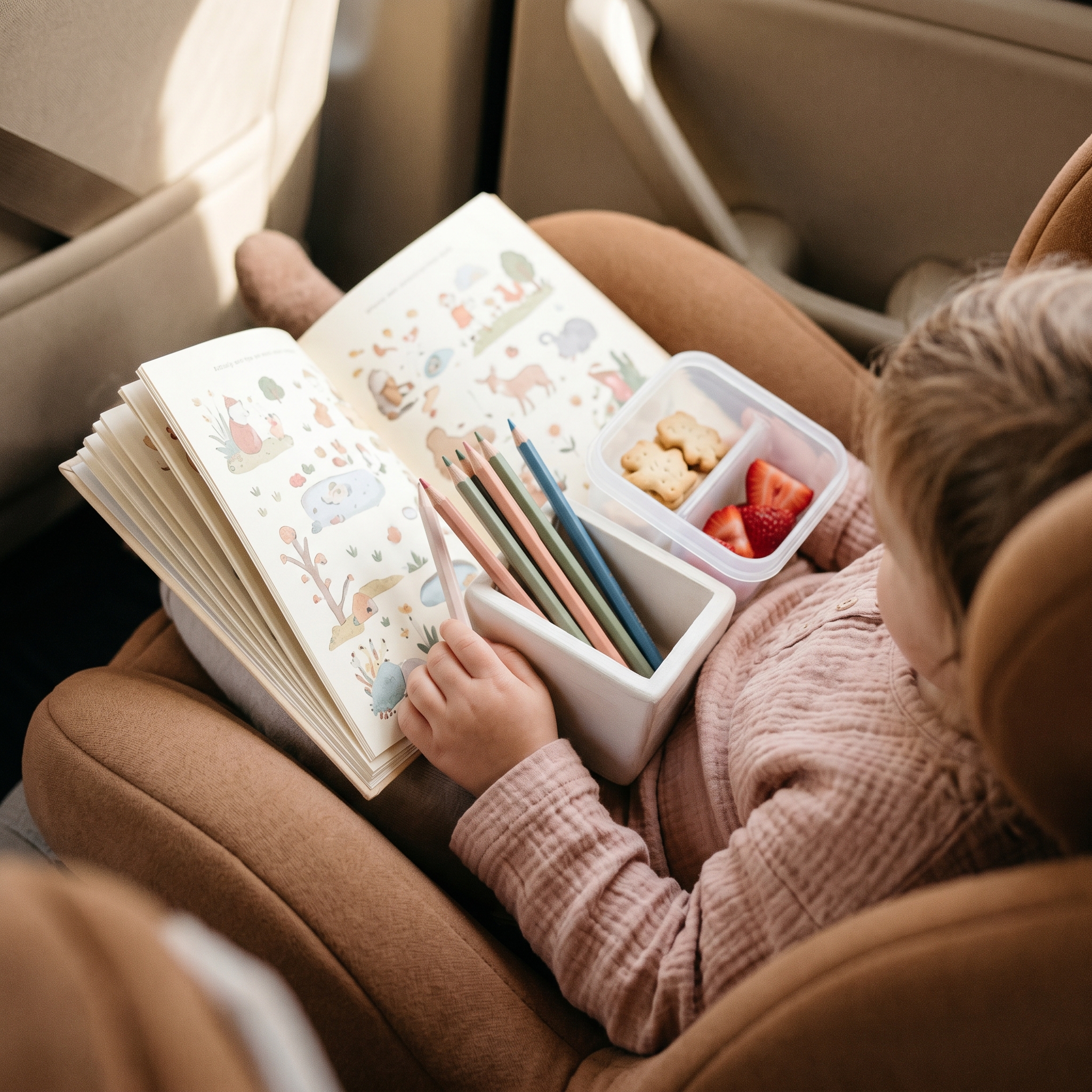
- 1 activity or coloring book: Save for the 90-minute mark, not minute one (more on that below).
- Headphones: Volume-limiting kids’ headphones cap at 85dB. Puro Sound and BuddyPhones both have solid options (check current pricing on their official sites).
- 2–3 small toys or fidget items: Magnetic drawing boards, small puzzles, sticker sheets.
- Their own water bottle: Cuts down a surprising number of your pit stop requests.
Snack Station Setup
Pre-portion all snacks into individual bags the night before. A small tackle box with compartments works better than a single snack bag everyone fights over. Keep “treat” snacks separate and hold them for strategic deployment during the second half of the drive.
The Activity Stagger Method: Don’t Hand Everything Over at Once
This is the approach that moves the needle on car trips. The timing and the why behind each phase is what makes it work. Releasing entertainment in stages rather than dumping everything in your kids’ laps at minute one is what turns a 4-hour drive into one that feels like 2.
The Phase-by-Phase Entertainment Release
- Minutes 0–30: The Observation Window. No toys, no screens. Point out things out the window, talk about the trip, play I Spy. Kids are naturally curious right after departure. Don’t spend your entertainment budget on a problem that doesn’t exist yet.
- Minutes 30–60: Music and Singing. Start with a family playlist (parent picks first, then kids rotate). Car karaoke, guess-that-song. Free, zero prep.
- Minutes 60–90: Audio Storytelling. Download Wow in the World, Circle Round, or Story Pirates podcasts before you leave. One episode runs 20–30 minutes. Queue 3–4 back to back and you’ve covered the next hour.
- Minutes 90 to first stop: Activity Books and Quiet Play. Now hand over the backpacks. Sticker books, magnetic drawing boards, travel-sized games. They’ve earned them.
- After first stop: Screens. Tablets are the reward, not the starting point. By now you’ve covered significant distance with full engagement.
Car Games That Require Zero Prep and Zero Materials
For those stretches where screens feel like overkill, good road trip activities for kids don’t require anything in your bag:
- 20 Questions: Works for ages 5 and up, surprisingly addictive for adults too.
- The License Plate Game: Track all 50 states on a longer trip. Kids get competitive about it fast.
- “Would You Rather”: Endless variations, no materials, high engagement for ages 5 and up.
- The Alphabet Game: Find A through Z on road signs in order.
- Story Chain: Each person adds one sentence to an ongoing story. Gets ridiculous quickly, which is the point.
Snacks That Road Trip Well (And a Few That Don’t)
The snack situation can make or break a long stretch of highway. For easy go-to options your kids will eat, these no-fuss kid-friendly snacks are worth building your road trip list from.
Road Trip Snack Yes-List
- String cheese: Protein, no mess, holds at room temperature for several hours without issue.
- Grapes or blueberries: Hydrating, easy to eat one-handed, lower sugar than fruit snacks. (Halve grapes for younger kids, since whole ones are a choking hazard.)
- Pretzels or low-crumb crackers: Avoid anything flaky. Buttery crackers that shed layers are a car-seat disaster.
- Peanut butter squeeze packs: Pairs with anything, no utensils, no mess.
- Dry cereal in a cup: Works especially well for toddlers who need constant grazing.
- Freeze-dried fruit: No spoilage, no stickiness, easy to portion.
Snacks to Leave at Home
- Powdered cheese snacks (Cheetos, Doritos): Orange handprints on every surface. Not worth it.
- Juice boxes with straws: Spill factor is high, and the sugar spike doesn’t help anyone.
- Hard candy for kids under 8: Choking hazard in a moving vehicle.
- Anything requiring a spoon: Yogurt in the car is an optimistic choice you’ll regret.

When the Wheels Come Off: Handling Meltdowns Mid-Drive
We’ve all been there. Mile 47, someone’s crying, someone’s kicking a seat, and you’re gripping the steering wheel like it owes you money. This is normal. Here’s what to do about it.
The 3-Step Mid-Drive Reset
- Pull over if it’s safe. No shame in it. Five minutes at a rest stop resets more than 30 minutes of negotiating from the driver’s seat. You can’t out-reason a 4-year-old in a car seat.
- Change the sensory input. Roll windows down, switch the music, hand over a new snack. A new stimulus breaks the cry loop faster than any explanation will.
- Give them a job. Ask them to be the “navigator” with the printed map, the “DJ,” or the “official snack distributor.” Boredom and powerlessness drive most meltdowns in kids ages 3–8. Giving them a role fixes both.
Proactive Moves That Prevent the Spiral
- Build in a movement stop every 2–3 hours, even if kids seem fine. Bring a kickball or jump rope. Rest stops often have grassy areas, and 10 minutes of running pays dividends for the next hour in the car.
- Don’t wait for hunger. Offer snacks proactively around the 90-minute mark. A hungry kid and a bored kid are heading to the same place.
- Stop announcing the ETA. “45 more minutes!” every 10 minutes is not reassuring to a child. It’s a countdown to chaos.
- Try a visual timer app. Something like Time Timer lets kids watch the time shrink on their own, which removes the “are we there yet” loop more effectively than any answer you can give.
A Quick Note on Screens (You Don’t Have to Earn Them)
Tablets on road trips are fine. The question isn’t whether, it’s when. Introducing screens after the first stop, rather than minute one, means you’ve already covered the hardest part of the drive with full engagement. Screens become a reward your kids look forward to, not background noise they’ve tuned out by mile 30.
- Download content before you leave. Streaming dies in rural stretches. Offline downloads are non-negotiable.
- Volume-limiting headphones: Look for 85dB max. Puro Sound and BuddyPhones both have well-reviewed options (check current pricing on their official sites).
- Set the loose rule: Screens come out after the first stop.
- Co-view when possible. Ask what they’re watching, make it a shared moment when you’re parked. It keeps screens from being a total solo retreat.
If you’re heading to a beach destination at the end of the drive, these beach hacks for kids are worth reading before you leave the house. The night-before prep tip there pairs well with everything above.
Still settling on where to point the car? If you’re in the Dallas–Fort Worth area, Epic Waters indoor waterpark in Grand Prairie makes a reliable rain-or-shine stop, and a little further south the Moody Gardens aquarium in Galveston is an easy day trip the kids will still be talking about on the drive home.
Frequently Asked Questions
What is the 3-3-3 rule for road trips?
The 3-3-3 rule means driving no more than 3 hours at a stretch, stopping every 3 hours for a movement break and snack, and aiming to arrive at your destination by 3 p.m. It’s a simple framework designed to prevent overtired kids (and parents) on long drives. The 3 p.m. arrival window in particular helps kids decompress before bedtime instead of melting down at check-in.
How do I keep kids entertained on a long road trip?
The key is staging your entertainment rather than handing everything out at once. Start with music and open-window observation, move to audio podcasts and stories, then activity books, and save screens for after the first stop. Variety plus timing produces a much calmer car than front-loading all your best material in the first 20 minutes.
What are the best road trip snacks for kids?
Stick to no-mess, protein-forward options: string cheese, pretzels, grapes (halved for little ones), peanut butter squeeze packs, freeze-dried fruit, and dry cereal in a cup for toddlers. Pre-portion everything the night before into individual bags or a compartmentalized snack tackle box. Hold the treat snacks separately and release them strategically in the second half of the drive.
How many hours should you drive per day on a road trip with kids?
It depends on age. For toddlers, aim for no more than 3–4 hours of total drive time per day. For kids ages 4–8, 5–6 hours is realistic with two solid rest stops of 20–30 minutes each. A common rule of thumb is to keep family driving days under about 400 miles (roughly 6–7 hours at highway speeds), which leaves room for the frequent stops AAA recommends, about every 100 miles or two hours.
When is the best time to leave on a road trip with young kids?
Either early in the morning (5–6 a.m., before kids are fully awake) or right after lunch (around 1–2 p.m., when toddlers naturally nap). Both windows let you cover meaningful miles before the restlessness kicks in. Whichever window you choose, fill the gas tank and do bathroom rounds before anyone gets settled in the car, especially if you expect napping.


