Toddler Learning Activities for Early Skills
Toddler learning activities are play-based experiences designed to build early cognitive, language, fine motor, and social skills in children ages 1 to 3.
Last updated: June 2026
Quick Answer: Toddler Learning Activities
Toddler learning activities don’t need to be elaborate or expensive. The best ones require minimal supplies, take 10 to 30 minutes, and feel like pure play to your child. That’s the key thing to remember: at this age, play IS learning. A muffin tin and some pom poms can build color recognition and fine motor skills just as well as any pricey toy. You’ve got everything you need.
- Age Range: 1 to 3 years (individual activities note younger/older sweet spots)
- Time: 10 to 30 minutes per activity
- Mess Level: Low to Medium
- Screen-Free: Yes
Here’s the thing about toddler activities: the word “educational” can make a mom feel like she needs a laminator and a curriculum binder. She doesn’t. If you’re standing in your kitchen at 9am wondering how to fill the next few hours without turning on the TV, this is the list for you.

Why Toddler Learning Activities Matter More Than You Think
The Window You Don’t Want to Miss
The first three years of life are a period of remarkable brain growth. According to the CDC’s developmental milestones, early experiences shape neural connections at a rate that won’t happen again. Simple, repeated play-based interactions are exactly what supports that growth.
You don’t need a curriculum. You need consistent, intentional play. That’s it. Showing up with a bin of dried oats and a few household objects counts. A lot.
The Four Skill Buckets to Target
When you’re choosing activities, it helps to think in four categories:
- Fine Motor: Small muscles in fingers and hands, which build toward pencil grip, self-feeding, and eventually scissors
- Gross Motor: Large muscle groups used for walking, jumping, climbing, and balance
- Language and Cognitive: Vocabulary building, problem-solving, and understanding cause and effect
- Sensory Processing: Exposure to textures, temperatures, and new experiences that help toddlers make sense of the world around them
A good week of toddler play touches all four. The activities below are organized by bucket so you can pick based on what your child needs that day.
8 Easy Toddler Learning Activities (Organized by Skill)
Fine Motor Activities
Activity 1: Muffin Tin Color Sort
- Skill Target: Fine motor and early color recognition
- Age Sweet Spot: 18 months to 3 years
- Time: 15 minutes
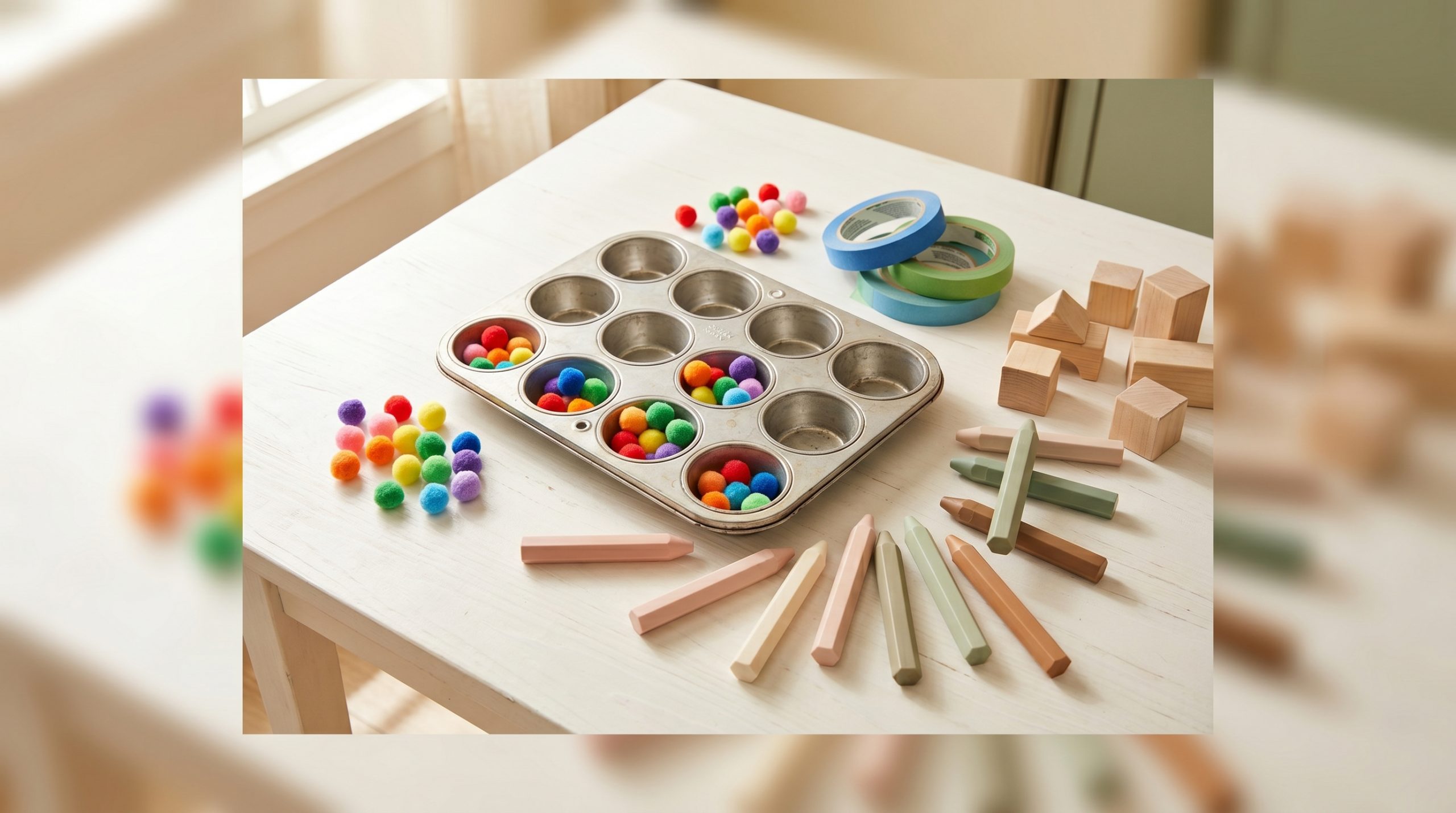
- What You Need: 12-cup muffin tin, 1-inch pom poms (avoid anything under ¾ inch for children under 2), tongs or a spoon
Place one pom pom of each color in a muffin cup as a guide, then let your toddler sort the rest by color. Color naming develops gradually: per the CDC’s developmental milestones, many children can point to at least one color by around 30 months, with color identification continuing to grow through ages 3 and 4. This activity grows with them. Add tongs once they’ve mastered fingers to bump up the challenge.
Activity 2: Sticker Peel and Place
- Skill Target: Pincer grasp and hand-eye coordination
- Age Sweet Spot: 15 to 30 months
- Time: 10 minutes
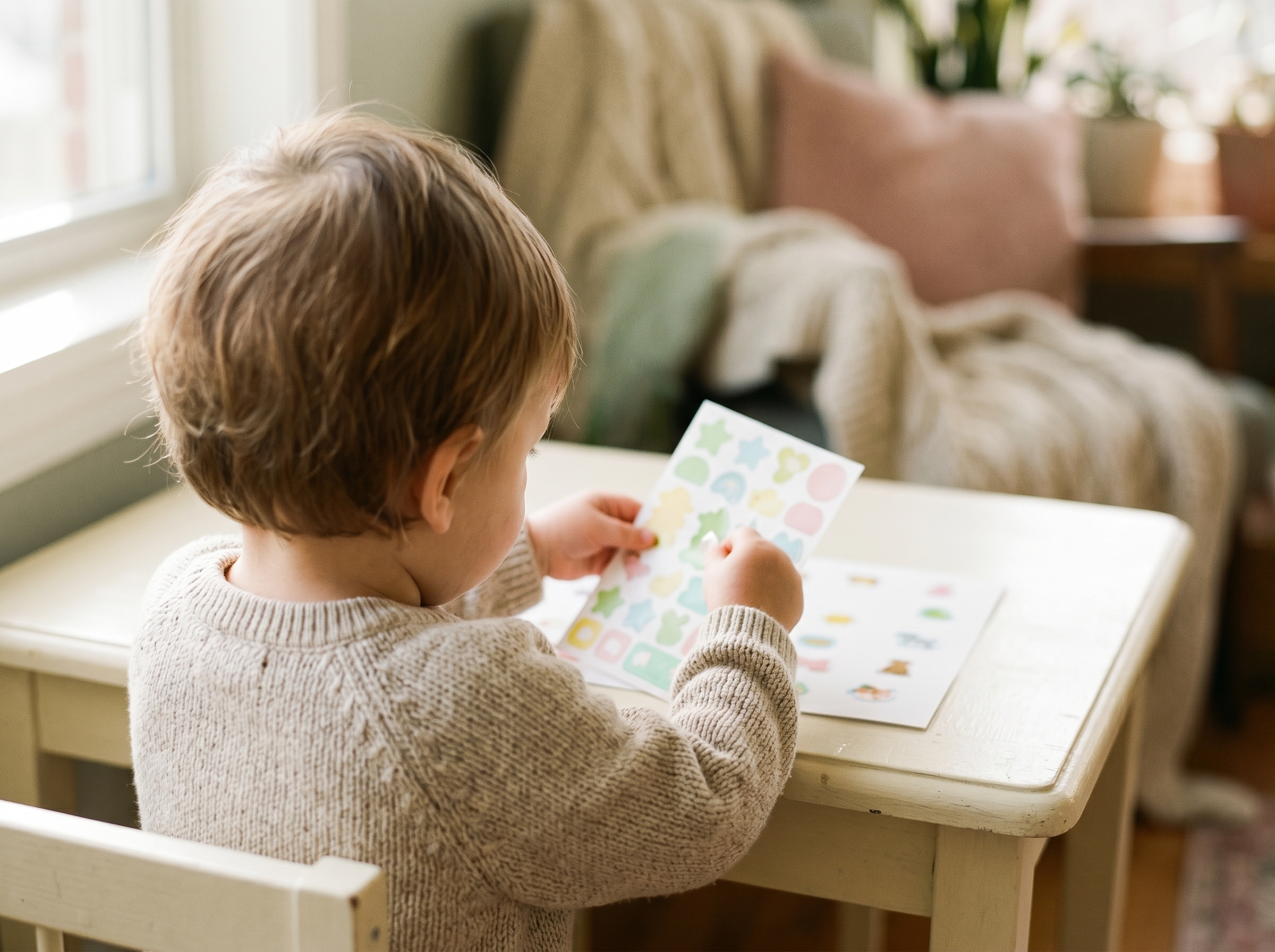
- What You Need: Large dot stickers, blank paper or construction paper
Hand your toddler a sheet of large dot stickers and a blank piece of paper. That’s the whole setup. Peeling and placing stickers is one of the best no-prep, free educational toddler activities out there. Bonus: it buys you 10 quiet minutes. You can also try a fun button heart craft once your toddler has the pincer grasp down for another great fine motor activity at home (with close supervision, since buttons are a choking hazard).
Gross Motor Activities
Activity 3: Animal Walk Obstacle Course
- Skill Target: Gross motor, body awareness, and language
- Age Sweet Spot: 18 months to 3 years
- Time: 20 minutes
- What You Need: Couch cushions, pillows, painter’s tape for “lily pads”
Set up a simple course and call out animal movements as your toddler goes through it. Try: bear crawl on all fours, frog jump with both feet together, crab walk on hands and feet facing up, snake slither on the belly, and elephant stomp with arms swinging. Naming the animals adds language exposure while burning energy. Win-win.
Activity 4: Tape Road Town
- Skill Target: Gross motor and imaginative play
- Age Sweet Spot: 2 to 3 years
- Time: 30 minutes (5 minutes setup, 25 minutes play)
- What You Need: Blue painter’s tape, toy cars, cardboard box “buildings” (optional)
Use painter’s tape to create roads, intersections, and parking spots on the living room floor. Older toddlers will push cars along the tape lines, which builds coordination and spatial awareness. Younger toddlers will mostly peel the tape back up, and that’s okay too.
Sensory Play Activities
Activity 5: The Treasure Dump Bin
- Skill Target: Sensory processing, vocabulary, and sorting
- Age Sweet Spot: 12 to 24 months
- Time: 15 to 20 minutes
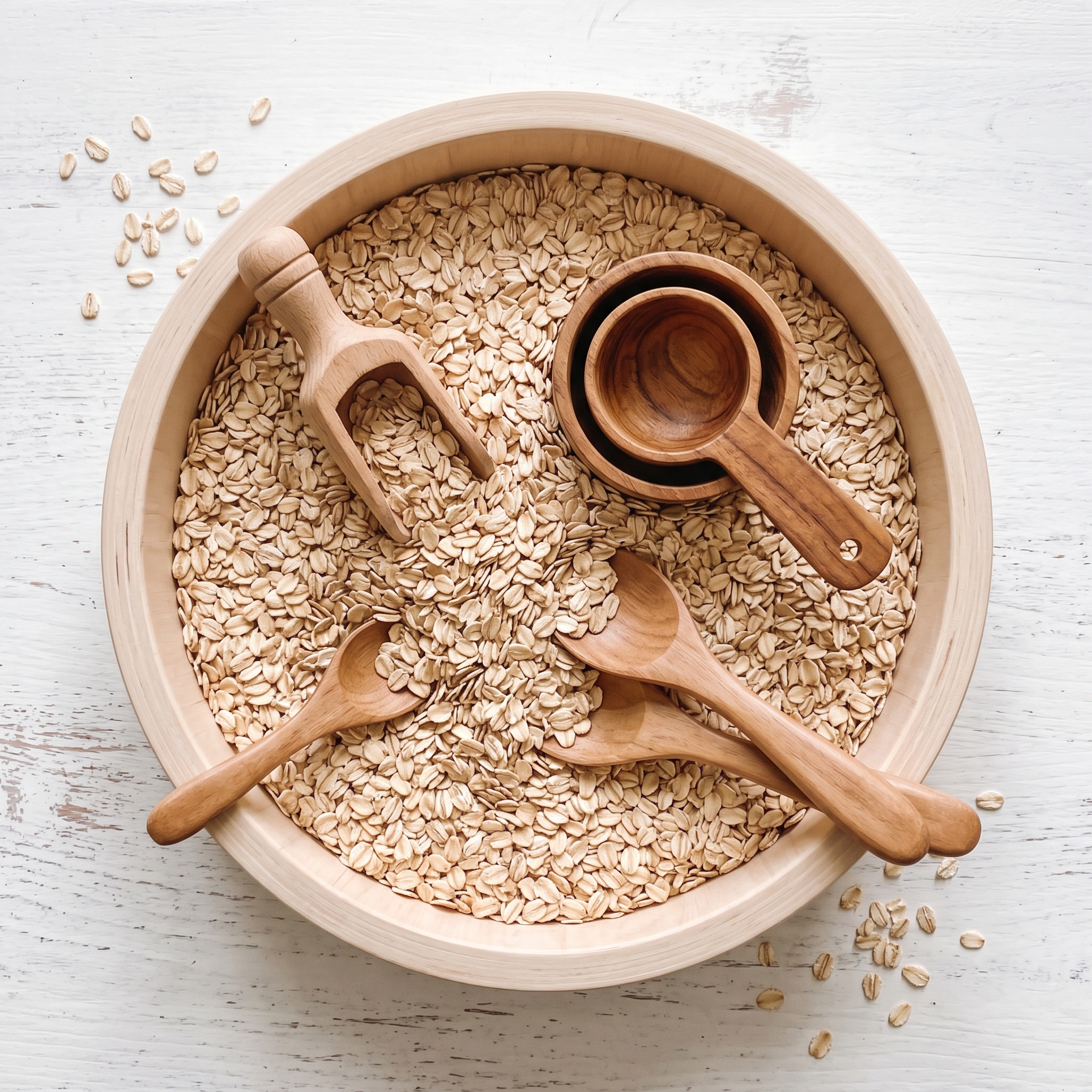
- What You Need: Plastic bin, dried rice or oats as a base, 5 to 6 household “treasures” (a spoon, rubber duck, sponge)
Bury small household objects in the bin and let your toddler dig them out. Use rice or oats for children 18 months and up. Skip water beads entirely for children under 3 due to choking and ingestion risk. As they find each item, name it out loud. That narration is doing more than you realize (more on that below).
Activity 6: Water Play Washing Station
- Skill Target: Sensory, fine motor, and early science
- Age Sweet Spot: 18 months to 3 years
- Time: 20 minutes
- What You Need: Plastic tub, small scrub brush, toy dishes or plastic fruit, one tiny drop of dish soap
Fill the tub with a few inches of water, add the toys, hand over the scrub brush, and step back. Never leave a toddler unattended around even a small amount of water. This is a toddler learning game that feels like pure fun but builds cause-and-effect reasoning (“I scrub, it gets clean”), fine motor control, and sensory tolerance for wet and soapy textures.
Two more low-prep favorites slot right into a sensory rotation: no-mess painting for contained, colorful creativity, and the baking soda and vinegar experiment for a fizzy hit of early science.
Language and Cognitive Activities
Activity 7: Board Book Treasure Hunt
- Skill Target: Language, memory, and early literacy
- Age Sweet Spot: 12 to 24 months
- Time: 10 minutes
- What You Need: 3 to 4 board books, stuffed animals tucked inside each one
Hide a stuffed animal inside each book and let your toddler find them. When they pull each one out, name the animal together, make the sound, and describe it. This kind of narrated play builds vocabulary fast. Research on early language development consistently points to the power of parent narration during shared activities, and this is a simple, repeatable way to do it.
Activity 8: Shape Matching with Sticky Notes
- Skill Target: Early math, shape recognition, and color identification
- Age Sweet Spot: 2 to 3 years
- Time: 15 minutes
- What You Need: Sticky notes in 2 to 3 colors, a marker, a flat wall surface
Draw a simple shape on each sticky note, then draw matching shapes on a “board” taped to the wall. Your toddler sticks each note to its match. This is essentially a free, homemade toddler learning activity with zero printing required.
Materials: What You’ll Need
Good news: you probably already have most of this. Here’s everything consolidated so you can gather it once.
- Already at home: Muffin tin, sticky notes, painter’s tape, board books, a plastic bin, dish soap, and couch cushions
- Grab at the dollar store: Pom poms, large dot stickers, toy cars (if needed), and plastic containers
Most of these activities cost between $0 and $5 total. Some cost nothing. You can also find more ideas for keeping toddlers engaged at home in this roundup of indoor toddler activities for rainy days, which pairs well with this list.
Steps: How to Set It Up
This general setup framework works for any activity on this list. The order matters more than you’d think.
- Pick ONE activity based on your toddler’s current mood. High energy calls for gross motor. Calm and focused calls for fine motor or sensory.
- Gather every supply before inviting your toddler over. Toddlers lose interest during setup delays, and you’ll spend the whole activity chasing them away from the cabinet.
- Set up at toddler height: the floor, a low table, or painter’s tape on the wall at their eye level.
- Introduce the activity with a single clear sentence. “We’re going to sort colors today!” is plenty. Long instructions go nowhere at this age.
- Step back for two to three minutes before jumping in. Toddlers learn more when they get to problem-solve first without a hovering adult.
- Follow their lead. If they use the muffin tin as a drum instead of a sorter, that’s still learning. Percussion counts as sensory play.
- Keep sessions short. Ten to twenty minutes is the sweet spot for sustained attention at ages 1 to 3.
What Kids Learn (And What You’re Building Without Realizing It)
Every time your toddler drops a pom pom into a cup and picks up another one, their brain is forming and strengthening neural connections through repetition. This is how early learning works. It’s not flashcards. It’s pattern, repetition, and just enough challenge to keep them reaching.
One of the simplest things you can do during any of these activities is narrate out loud what your toddler is doing. “You put the red one in! Now you’re picking up the blue one.” This is sometimes called the “sportscaster method,” and it works because it pairs vocabulary with direct, real-time experience. According to ZERO TO THREE’s research on learning through play, classic games like Ring Around the Rosie encourage toddlers to move, sing, listen, and take turns at the same time, which means familiar play patterns develop multiple skills at once.
By 24 months, most toddlers have a vocabulary of 50 or more words. Narrated play during activities is one of the most consistent ways to support that growth. The skills your toddler builds here also directly map to what pediatricians look for at 18-month and 24-month well-child visits, so you’re not just filling time.
How to Rotate Activities So Your Toddler Stays Interested
If your toddler loses interest in five minutes flat, you’re not failing. You’re dealing with a toddler. A simple rotation framework helps.
- Monday and Wednesday: Fine motor (quiet tabletop focus, good for calm mornings)
- Tuesday and Thursday: Gross motor (burn the energy before lunch)
- Friday: Sensory play (a little messier, but it’s Friday)
Novelty doesn’t require new activities. Rotate the materials inside the same activity instead. Swap pom poms for buttons in the muffin tin sort (with close supervision for younger toddlers). Use dried pasta instead of rice in the sensory bin. Pull out the activity bins you’ve stored in the closet so they feel fresh again after a week off.
Keeping three to four activity bins stocked and ready is the single biggest thing that makes these activities actually happen on a busy morning instead of just living on your Pinterest board.
Signs Your Toddler Is Ready to Level Up
Not sure if an activity is still the right fit? Watch for these cues:
- They complete it in under three minutes without frustration. Level up by adding more colors, slightly larger tongs, or tongs instead of fingers.
- They start modifying the activity on their own. That’s your green light to add complexity.
- They ask for “more” or bring the materials to you. They’re telling you they’re ready.
- They can narrate what they’re doing in two or more words. (“Red in! Blue in!”) Add a new sorting rule to keep the cognitive challenge alive.
- They lose interest before the activity is finished. Sometimes this just means they’re tired. But if it’s consistent, try the next version of the activity.
Keeping It Free and Low-Fuss
Every single activity in this post is free. No printable required, no PDF to download. The sticky note shape matching game is essentially a homemade toddler learning worksheet you build in two minutes with a marker.
If you like keeping tabs on which skills you’ve covered each week, a simple note on the fridge works just as well as any printable: one line per skill bucket (fine motor, gross motor, language, sensory) and a quick check mark when you do one. No laminator required.
Frequently Asked Questions About Toddler Learning Activities
What are the best toddler learning activities for 2-year-olds specifically?
Two-year-olds are ready for simple sorting with two to three colors, two to three step instructions, and pretend play. The Muffin Tin Sort, Tape Road Town, and Water Washing Station are all strong fits for the 24-month mark. They’re hands-on, short enough to hold attention, and easy to reset when things inevitably go sideways.
How long should a toddler’s learning activity last?
Ten to twenty minutes is the realistic sweet spot. Toddlers ages 1 to 2 typically sustain attention on a single task for three to six minutes. Two to three year olds can stretch to ten to fifteen minutes on a high-interest activity. Short and successful beats long and frustrated every time.
Are there toddler learning activities for 1-year-olds, or is this list for older toddlers?
Several activities here work well for 12 to 18 month olds, specifically the Sticker Peel and Place, Treasure Dump Bin, and Water Washing Station. Check the age sweet spot noted in each activity card and always supervise closely at this age, especially with any small materials.
Do toddler learning activities need to be “educational” to count?
Not at all, and this is one of the most freeing things to understand. The American Academy of Pediatrics emphasizes that play is essential to healthy development: play is, in effect, the work of childhood. Any activity that engages your toddler’s senses, requires them to problem-solve, or introduces new vocabulary counts as an educational toddler activity. You don’t need to label it or schedule it like a class.
Where can I find toddler learning activities near me?
Most public libraries offer free toddler story times and play groups. Search your local library’s events calendar, or look for Kindermusik classes, mommy-and-me programs, and community rec center toddler sessions. That said, the most effective learning activities for toddlers are often the ones happening right at your kitchen table with a muffin tin and a handful of pom poms.


