
Roasted Brussels Sprouts and Butternut Squash
Roasted Brussels sprouts and butternut squash is a one-pan fall side dish where halved sprouts and 1-inch squash cubes are tossed in olive oil, roasted at 425°F for 35 to 40 minutes, and caramelized into tender, golden-edged perfection.
Last updated: July 2026
Quick Answer: Roasted Brussels Sprouts and Butternut Squash
This is a seven-ingredient sheet-pan side that takes about 10 minutes of hands-on prep and comes out of the oven looking like you tried way harder than you did. Both vegetables roast at the same temperature in the same time window, so there’s no juggling. It works equally well on a random Tuesday night or anchoring your Thanksgiving spread.
It’s mid-November, you’ve got three dishes going, the kids are underfoot, and you’re frantically searching for one more side that doesn’t require a béchamel or a prayer. This is that dish. I’ve made roasted Brussels sprouts and butternut squash more times than I can count, and it earns a spot on the table every single fall.
According to the team at EatingWell, this roasted vegetable combination works beautifully served warm or at room temperature, making it an ideal choice for holiday spreads and potlucks where oven timing is tight. That flexibility alone makes it worth keeping in your rotation alongside easy weeknight dinner ideas the whole family will eat.
Do Brussels Sprouts and Butternut Squash Go Together?
Short answer: yes, and they’re one of the best fall pairings you’ll find. Both are dense, starchy vegetables that roast at the same oven temperature (400 to 425°F) in roughly the same time window (35 to 40 minutes), so they finish together without any guesswork. Flavor-wise, they balance each other out: Brussels sprouts bring a slightly bitter, savory edge, while butternut squash is sweet and creamy. The contrast is what makes the whole pan so satisfying. Both are naturally gluten-free, and the base recipe is easy to customize with whatever flavors your family leans toward.
Ingredients
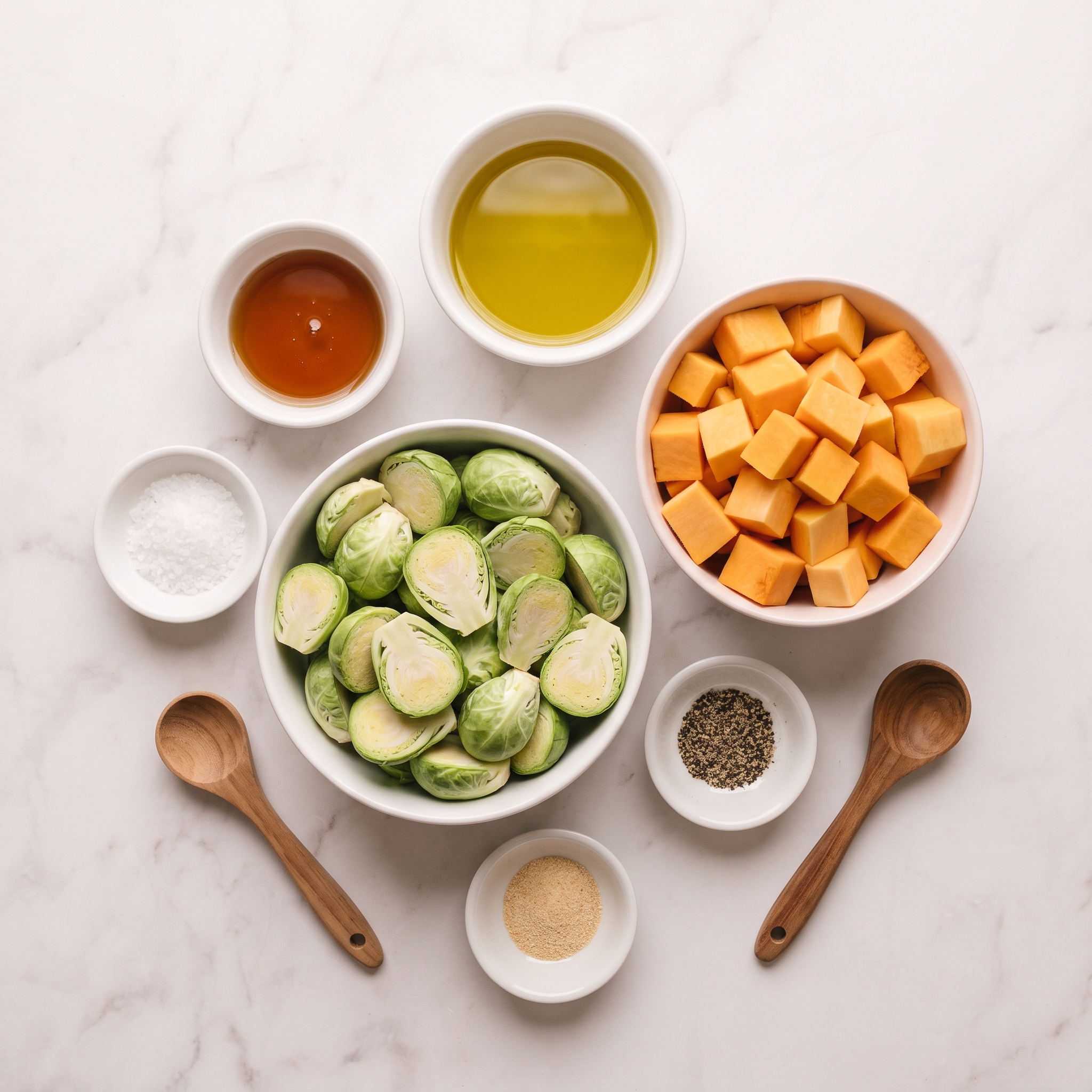
Here’s what you’ll pull together. Most of it is probably already in your pantry, and the produce section of most grocery stores now carries pre-cubed butternut squash, which is a completely valid shortcut on a busy week. The base recipe stays under seven ingredients.
- 1 lb fresh Brussels sprouts, stems trimmed, halved
- 3 cups butternut squash, peeled and cut into 1-inch cubes (about ½ a medium squash)
- 3 tablespoons olive oil
- 1 tablespoon maple syrup (optional, but recommended)
- ¾ teaspoon kosher salt
- ¼ teaspoon black pepper
- ¼ teaspoon garlic powder
If you’re cutting your own squash, keep those cubes to 1 inch. Go bigger and they won’t caramelize properly by the time the sprouts are done. Go smaller and they turn mushy. One inch is the sweet spot. Pre-cut squash from the store usually runs a little uneven, so just do a quick trim to bring the pieces to a similar size before roasting. This is also a great sheet-pan pairing to keep in mind when you’re building out a spread alongside something like a simple sheet-pan vegetable side that takes about the same oven time.
Why 425°F Is the Sweet Spot
Most recipes just say “roast at 425°F” without explaining why, so here’s the short version. Caramelization of natural sugars starts around 320°F, but to get that deep, golden-brown crust on the outside while the inside finishes cooking through, you need the higher heat of 400 to 425°F. At 350°F, the moisture coming off the vegetables has nowhere to go fast enough, and they essentially steam on the pan instead of roasting. You get pale, soft, soggy vegetables instead of crispy, caramelized ones. Nobody wants that.
The other non-negotiable: a single layer on the pan. Crowding drops the surface temperature and traps steam, which kills the browning. If you’ve doubled the recipe, use two pans. And place the sprouts cut side down directly on the pan surface. That flat face gets maximum contact with the hot metal and develops the crispiest, most caramelized edge of the whole batch.
Instructions
This comes together in about 10 minutes of hands-on time. The oven does the rest.
- Preheat your oven to 425°F and position the rack in the upper-middle slot.
- Line a large rimmed baking sheet with parchment paper for easier cleanup.
- Add the halved Brussels sprouts and butternut squash cubes to the pan.
- Drizzle with olive oil and maple syrup; sprinkle with salt, pepper, and garlic powder.
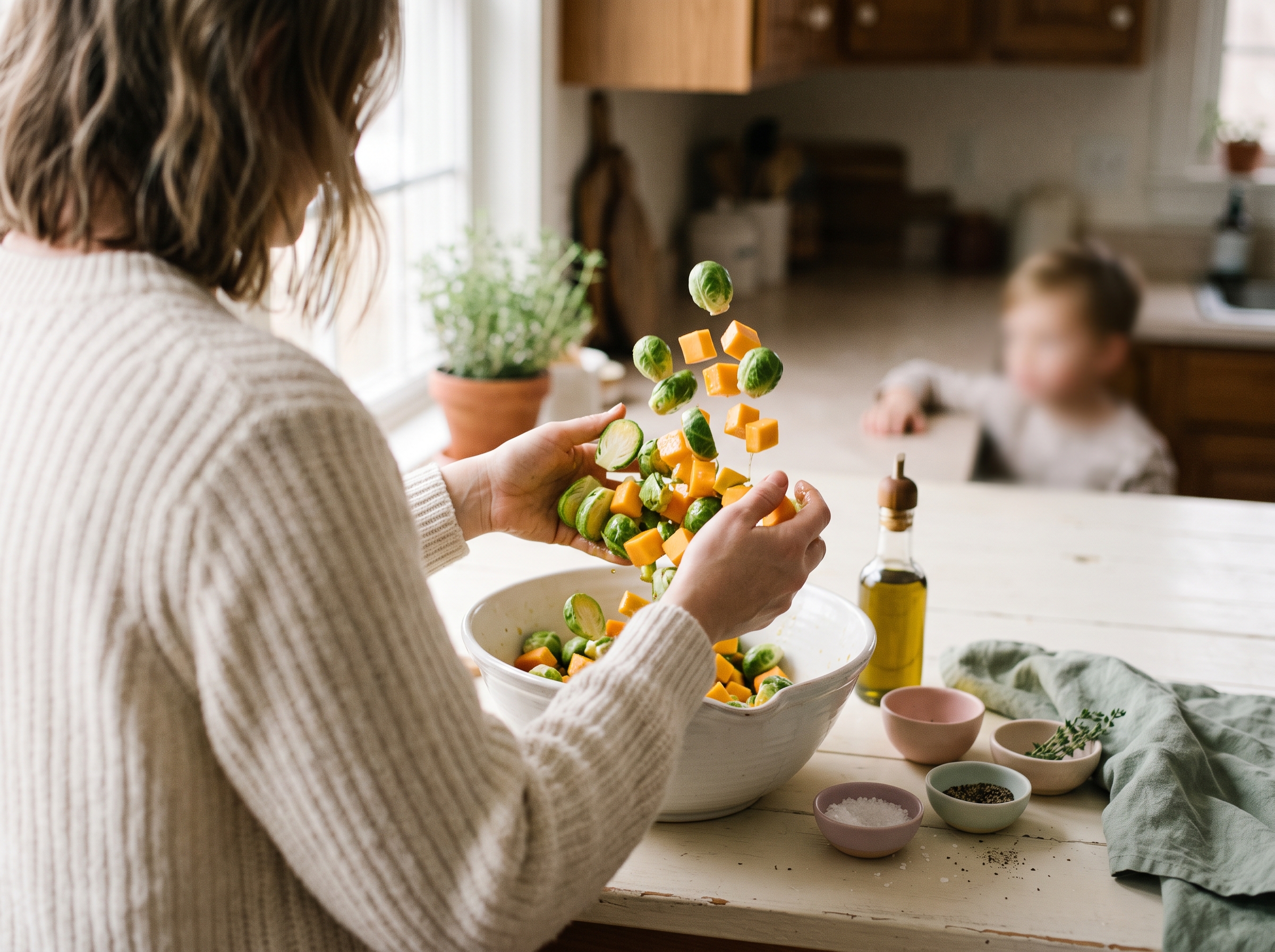
- Toss well until every piece is coated, then spread into a single layer with the cut side of the sprouts facing down.
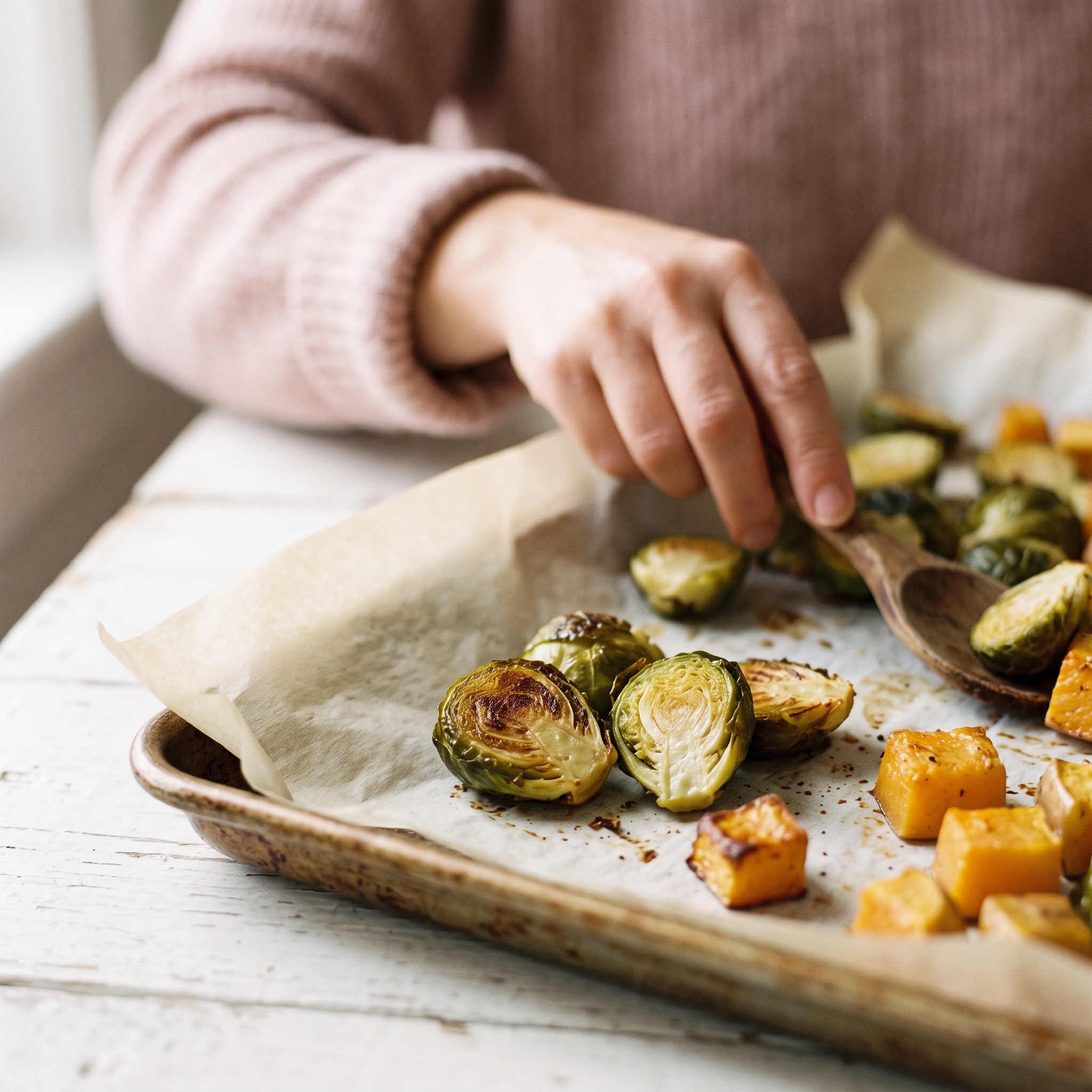
- Roast for 20 minutes, then stir and flip, and roast another 15 to 20 minutes until golden brown and fork-tender.
- Taste and adjust salt. Serve immediately.
Don’t skip the halfway stir. It helps the squash caramelize on more than one side and keeps anything on the edges from over-browning. Oven temperatures vary, so pull the pan when the edges are visibly caramelized and a fork slides into the squash with no resistance, not by the clock alone.
Flavor Variations
Once you’ve got the base down, here’s how to dress it up depending on the occasion. Every variation starts from the same recipe above.
- Balsamic: Drizzle 1 tablespoon of balsamic glaze over the pan in the last 5 minutes of roasting. It thickens beautifully and adds a tangy-sweet finish.
- Maple Dijon: Whisk together 1 tablespoon maple syrup and 1 teaspoon Dijon mustard, then toss with the vegetables after roasting. Sharp, sweet, and a little unexpected in the best way.
- With Bacon: Scatter 4 strips of crumbled cooked bacon over the top right before serving. The salty crunch against the sweet squash is a crowd-pleaser every time.
- With Feta: Crumble 2 oz of feta over the hot vegetables the moment they come out of the oven. It softens just slightly from the heat and adds a creamy, salty contrast.
- With Cranberries and Pecans: Toss in ¼ cup dried cranberries and ¼ cup roughly chopped pecans after roasting. This is the holiday version, and it looks as good as it tastes on a Thanksgiving table.
Tips, Substitutions and Make-Ahead Notes
A few things I’ve learned after making this more times than I can count.
- Make-ahead: Chop and toss everything with oil and seasoning up to 24 hours ahead, cover the pan or transfer to a container, and store in the fridge. Roast right before serving. Let the finished dish cool completely before covering if you’re storing leftovers, so the sprouts don’t steam themselves soft overnight.
- No butternut squash? Delicata squash or sweet potato cubes work at the same temperature and time. Both have a similar density and roast beautifully alongside the sprouts.
- Oil swap: Avocado oil works in place of olive oil and has a higher smoke point, which is helpful at 425°F.
- No maple syrup: Substitute 1 teaspoon of brown sugar. It adds the same touch of sweetness that helps the caramelization along.
- Sizing matters: Keep your squash cubes and sprout halves roughly the same size. That’s how they finish cooking at the same time without one vegetable waiting on the other.
- Reheating: Reheat leftovers at 400°F for 8 to 10 minutes to bring the crispiness back. The microwave makes them soggy.
What to Do With Leftovers
This is where roasted Brussels sprouts and butternut squash pull double duty. Leftovers keep in an airtight container in the fridge for up to 4 days, and they’re useful for a second dinner with almost zero extra effort.
- Grain bowl: Toss the leftovers over farro or quinoa and top with a fried egg. Dinner is done in under 10 minutes.
- Fall frittata: Fold the vegetables into a 6-egg frittata with a little goat cheese. Works for breakfast or dinner.
- Quick pasta: Toss with your favorite pasta shape, a drizzle of olive oil, and a handful of Parmesan. It’s a 15-minute meal that feels more intentional than it is.
- Salad topper: Serve cold over arugula with a lemon vinaigrette. The bitter greens and the sweet squash are a natural match.
Recipe Card
| Recipe | Roasted Brussels Sprouts and Butternut Squash |
|---|---|
| Prep Time | 10 minutes |
| Cook Time | 35 to 40 minutes |
| Total Time | 45 to 50 minutes |
| Yield | 4 servings (as a side dish) |
| Oven Temp | 425°F |
| Best For | Weeknight sides, Thanksgiving, Christmas dinner |
Store leftovers in an airtight container in the refrigerator for up to 4 days. Reheat in a 400°F oven for 8 to 10 minutes to restore crispiness.
Frequently Asked Questions
Do butternut squash and Brussels sprouts go together?
They do, and the pairing works better than you might expect. The slight bitterness of Brussels sprouts balances against the natural sweetness of butternut squash, and both vegetables roast at the same temperature (400 to 425°F) in the same 35 to 40 minute window. You don’t need to stagger them or use separate pans as long as you keep the pieces similar in size.
Why are my roasted Brussels sprouts and butternut squash soggy?
The most common reason is an overcrowded pan. When vegetables are piled on top of each other, trapped moisture steams them instead of roasting them, and you lose all that caramelization. The fix is to spread everything in a true single layer, using two pans if needed. A too-low oven temperature (anything under 400°F) has the same effect. Also, make sure your vegetables are dry before tossing them in oil. Pat them with a paper towel if they’re fresh from a rinse.
Can I roast Brussels sprouts and butternut squash ahead of time?
You can prep everything up to 24 hours in advance. Toss the vegetables in oil and seasoning, store them covered in the fridge, and roast right before serving. If you’ve already roasted them and need to reheat, a 400°F oven for 8 to 10 minutes brings the texture back. Skip the microwave, which turns crispy edges into mush.
What temperature and how long should I roast Brussels sprouts and butternut squash?
Roast at 425°F for 35 to 40 minutes total, flipping once at the 20-minute mark. Position the rack in the upper-middle slot for the best browning. Pull the pan when the edges are visibly golden and caramelized and a fork slides into the squash without resistance. Oven temperatures vary, so use those visual cues over the timer.
What protein pairs well with this dish?
Roast chicken is the most natural match (cook it to an internal temperature of 165°F/74°C per USDA guidelines), but pork tenderloin, Italian sausage, and salmon all work beautifully. Cook whole-cut pork like tenderloin to an internal temperature of 145°F/63°C, then let it rest for 3 minutes before slicing. The sweetness of the squash pairs especially well with pork, and the savory sprouts hold up against the richness of salmon. If you want to keep the whole meal on one pan, you can nestle bone-in chicken thighs around the vegetables for the last 20 minutes of roasting, making sure the chicken reaches 165°F/74°C at the thickest part before serving. For more inspiration on building out a complete weeknight meal, the kid-friendly dinner ideas roundup has easy protein options the whole family will actually eat.


