
Muffin Tin Meals for Kids
Muffin tin meals for kids are single-serving savory or sweet recipes made in a standard muffin pan, with each cup holding one perfectly sized portion.
Last updated: July 2026
Quick Answer: What Are Muffin Tin Meals for Kids?
Muffin tin meals for kids are individual-portion recipes, savory or sweet, made in a standard 12-cup muffin pan. The single-serving format makes them fun for kids to eat, easy for parents to prep, and simple to customize for different tastes at the same table. You can use a muffin tin for everything from baked egg cups at breakfast to mini pizza cups at dinner, and even as a no-cook snack tray.
Here’s the thing about getting kids to actually eat a meal: some days it feels like you need a negotiation strategy, a backup plan, and a whole lot of patience. If you’ve ever made two different dinners because one child wanted cheese and one wanted “no cheese touching anything,” muffin tin meals are about to make your life so much easier. This article covers breakfast, lunch, dinner, and snack ideas, plus a full step-by-step hero recipe for Mini Muffin Tin Pizza Cups that my family goes through fast. If you’re looking for more easy kid-friendly dinner ideas for busy weeknights, that’s a great place to start building your weeknight rotation.
Why Muffin Tin Meals Work So Well
This is the part where I tell you to go dig your muffin pan out of the back of the cabinet right now. Seriously, once you start using it this way, you’ll wonder why you ever made a casserole for a table of tiny humans with completely different opinions about toppings.
- Built-in portion control: A standard muffin cup holds about half a cup (4 oz), which is close to the right serving size for toddlers through school-age kids without any guesswork on your end.
- No sharing fights: Every child gets their own identical set of cups. No one is stealing anyone else’s pepperoni.
- Invisible customization: Fill cup 1 with pepperoni, cup 2 with plain cheese. Same pan, zero drama, zero extra dishes.
- Easy cleanup: A muffin tin is far simpler to clean than a sheet pan full of baked-on casserole, especially if you use liners or a silicone pan.
- Freezer-friendly by default: Individual portions freeze flat in about 30 minutes, so you’re always one bake session away from a full week of grab-and-go meals.
What You Need to Get Started
You don’t need any specialty equipment. Most US kitchens already have at least one muffin tin, and that’s all it takes to get started.
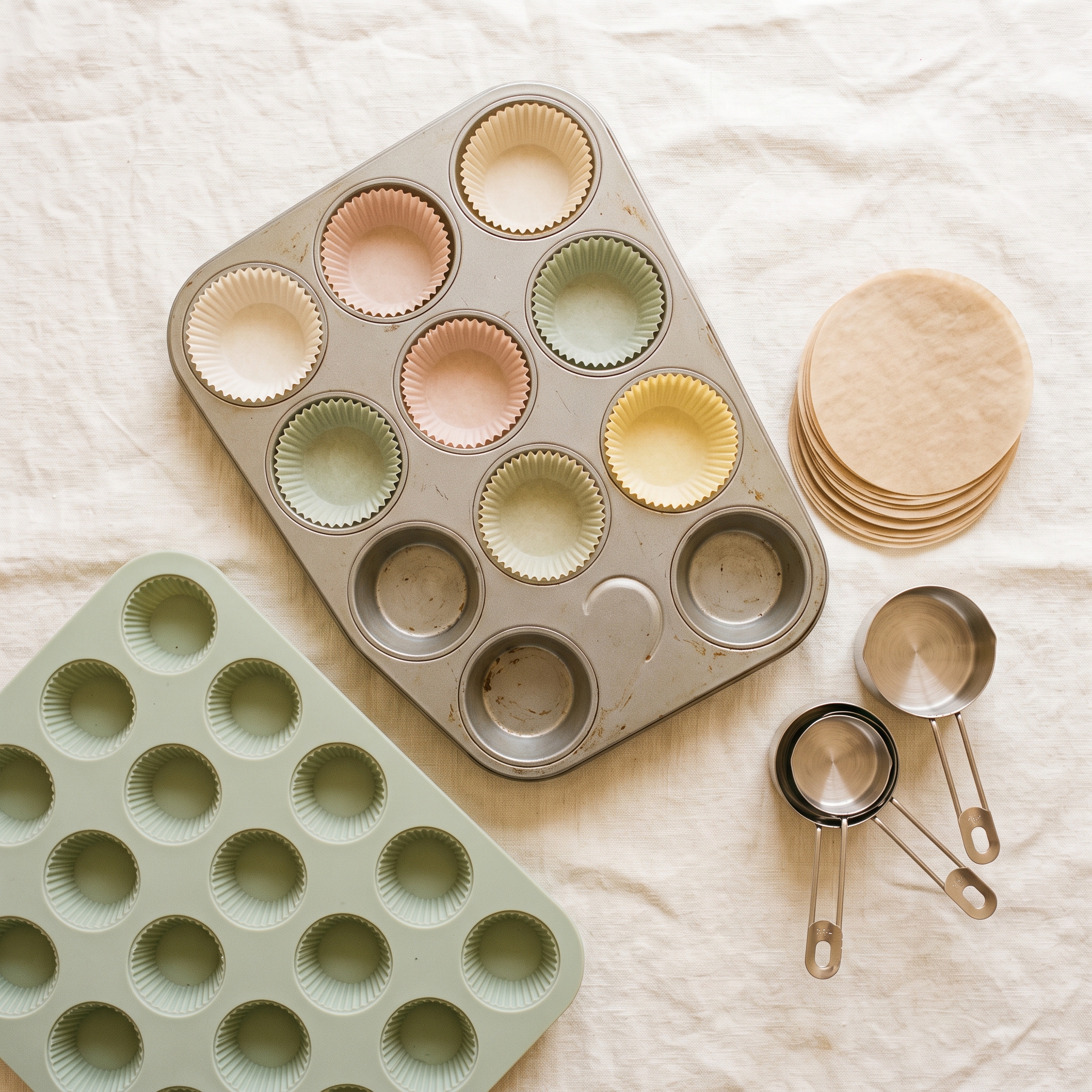
- Standard 12-cup muffin tin: Each cup is roughly 2¾ inches wide and 1½ inches deep, holding about half a cup of filling. This is your workhorse pan for most muffin tin recipes for kids.
- Mini 24-cup muffin tin: Each cup holds about 2 tablespoons. Best for toddlers, babies doing baby-led weaning, and party appetizers.
- Silicone vs. metal: Silicone pans release egg-based cups without sticking, which is a real win for breakfast recipes. Metal pans brown the edges better, making them the right call for pizza cups, meatloaf muffins, and anything with a dough base.
- Parchment rounds or liners: Worth using for stickier recipes if you’re working with a metal pan and no silicone.
Muffin Tin Breakfast Ideas Kids Actually Eat
Breakfast is the best use case for muffin tin meals, and here’s why: make a full pan on Sunday, and you’re set for the whole week. Most baked breakfast cups reheat in the microwave in 20 to 30 seconds, which means school mornings get a lot less frantic.
- Scrambled egg cups: Whisked eggs poured over cheese and whatever vegetables they’ll tolerate, baked until set and cooked through to 160°F (71°C). I always check with a thermometer.
- Mini pancake bites: Standard pancake batter baked at 350°F for 12 to 14 minutes. Add blueberries or mini chocolate chips to each cup before baking.
- French toast cups: Cubed bread soaked in an egg custard with cinnamon, baked until golden and the center reaches 160°F (71°C).
- Overnight oat cups: No oven needed. Mix oats, milk, chia seeds, and a little honey, spoon into cups, and refrigerate overnight. I skip the honey for any baby under 12 months, since honey isn’t safe for them.
- Mini quiche cups: Press crescent roll dough into each cup as the base, fill with egg and cheese, and bake until puffed and the center reaches 160°F (71°C).
- Peanut butter banana bites: Three ingredients, no baking, and they freeze beautifully.
- Yogurt parfait cups: No baking at all. Layer yogurt, granola, and berries directly into the cups for a snack-tray-style breakfast.
- Blueberry baked oatmeal cups: Baked and stored in the fridge for up to four days. Freeze a few extras to cover the rest of the week.
Muffin Tin Lunch and Dinner Ideas
Savory muffin tin recipes are excellent for dinner because individual portions cool down faster than a full casserole, which means you’re not waiting forever for food to reach a kid-safe temperature. They come out of the oven all at the same time, and each child’s plate is already portioned before it hits the table.
- Mini meatloaf muffins: Baked at 375°F for 18 to 20 minutes, with a ketchup glaze on top. Always use a meat thermometer to confirm the internal temperature reaches 160°F (71°C) before serving.
- Mac and cheese cups: Creamy pasta baked until the tops turn golden and slightly crispy at the edges.
- Mini chicken pot pie cups: Crescent dough pressed into cups, filled with a simple creamy chicken and vegetable mixture. Make sure any chicken used reaches an internal temperature of 165°F (74°C).
- Taco cups: Wonton wrappers as the shell, seasoned ground beef inside (cook to an internal temperature of 160°F/71°C), with a toppings bar on the side so kids can customize.
- Mini pizza cups: The hero recipe below. These are the most requested in this house.
- Cheeseburger slider cups: Biscuit dough base with ground beef and cheese filling, baked until golden. Use a meat thermometer to confirm the ground beef reaches 160°F (71°C) throughout.
- Spaghetti pie cups: Leftover pasta mixed with an egg binder and baked until set. Great for using up what’s already in the fridge.
- Mini shepherd’s pie cups: Meat and vegetable filling topped with a small scoop of mashed potatoes, baked until the edges crisp up.
One tip worth remembering: savory muffin tin recipes that use biscuit or crescent dough as the cup need no greasing and pop out cleanly every time. Skip the spray when you’re using dough as the base.
Muffin Tin Snack Trays: The No-Recipe Hack
This one requires zero cooking. Grab a 12-cup muffin tin and fill each cup with a different food. The visual separation makes kids far more likely to try new items (no “foods touching” complaints), and it turns snack time into something that feels special without any extra effort on your part.
Safety note: Always supervise young children during snack tray time. Some common fillings, including whole grapes, large chunks of raw vegetables, and whole nuts, are choking hazards for children under 4. Cut grapes in half lengthwise, slice carrots into thin coins or sticks, and keep portions small and age-appropriate.
A balanced snack tray formula that fills all 12 cups: 2 cups protein + 3 cups produce + 2 cups carb or crunch + 1 cup dip + 2 cups fruit + 2 cups fun extras.
Some easy fills: cheese cubes, turkey roll-ups, halved grapes, apple slices, baby carrots, cucumber coins, pretzels, goldfish crackers, hummus, ranch dressing, raisins, and mini chocolate chips. You can find more ideas in this list of healthy snacks for kids they’ll actually eat. This format works for after-school snacks, movie nights, and even fussy toddler lunches when nothing else sounds appealing.
Ingredients
Hero Recipe: Mini Muffin Tin Pizza Cups
- 1 can (13.8 oz) refrigerated pizza dough
- ½ cup pizza sauce
- 1½ cups shredded mozzarella cheese, divided
- ¼ cup mini pepperoni (or topping of choice)
- 1 teaspoon Italian seasoning
- Non-stick cooking spray
Swap the pepperoni for diced bell pepper, cooked sausage, or skip it entirely for plain cheese cups. Whole wheat pizza dough works 1:1 if you want to sneak in extra fiber. For a mini muffin tin version, cut the dough into smaller rounds and reduce the bake time to 8 to 10 minutes.
Instructions
- Preheat oven to 400°F. Lightly spray a standard 12-cup muffin tin with non-stick cooking spray.
- Unroll pizza dough on a lightly floured surface. Cut into 12 equal squares, roughly 3×3 inches each.
- Press one dough square into each muffin cup, pressing up the sides to form a small cup shape.
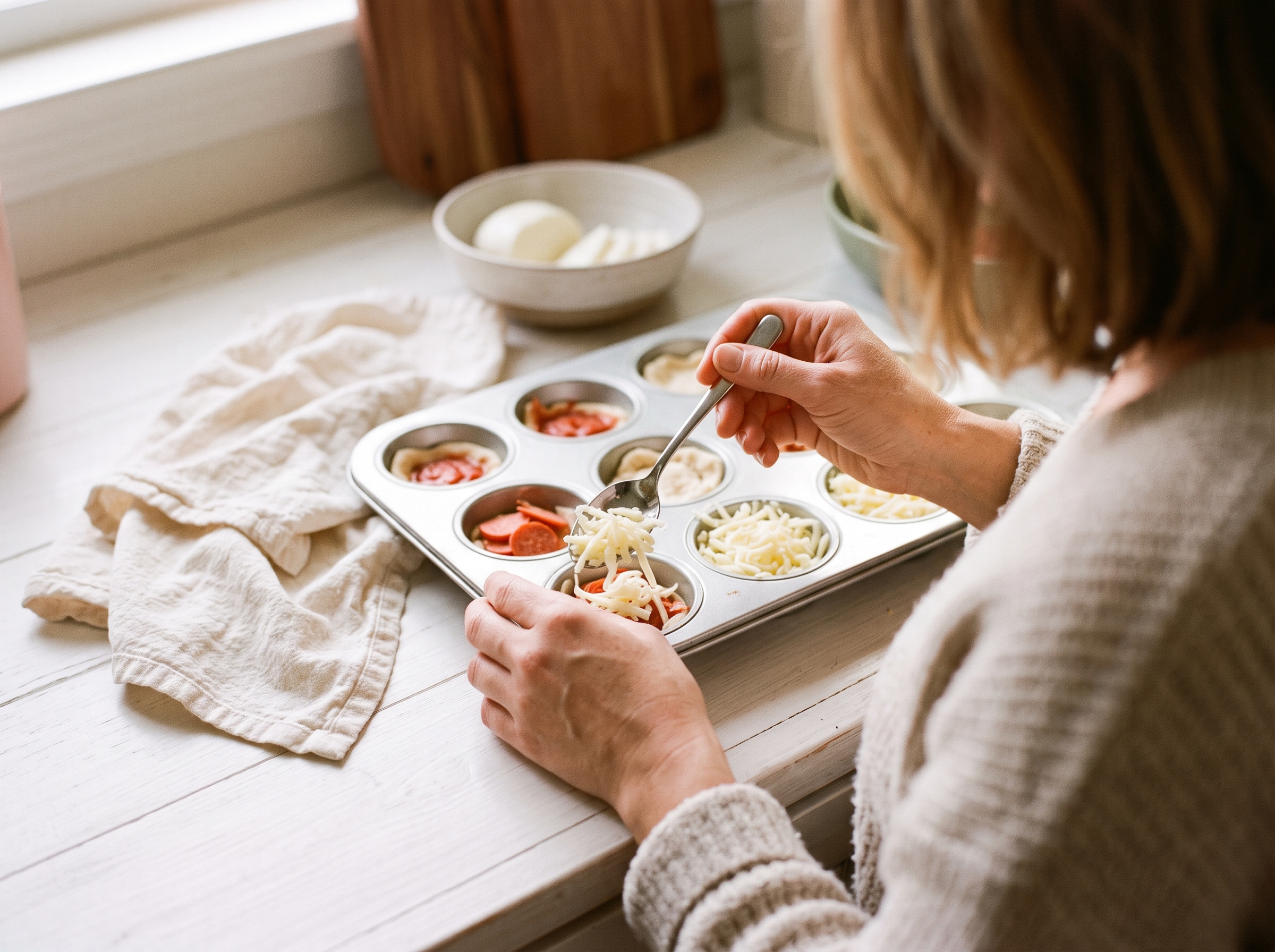
- Spoon 1 to 2 teaspoons of pizza sauce into each dough cup.
- Add 1 tablespoon of shredded mozzarella into each cup.
- Top with pepperoni or your chosen toppings. Sprinkle Italian seasoning over all cups.
- Add a pinch of the remaining mozzarella on top of the toppings.
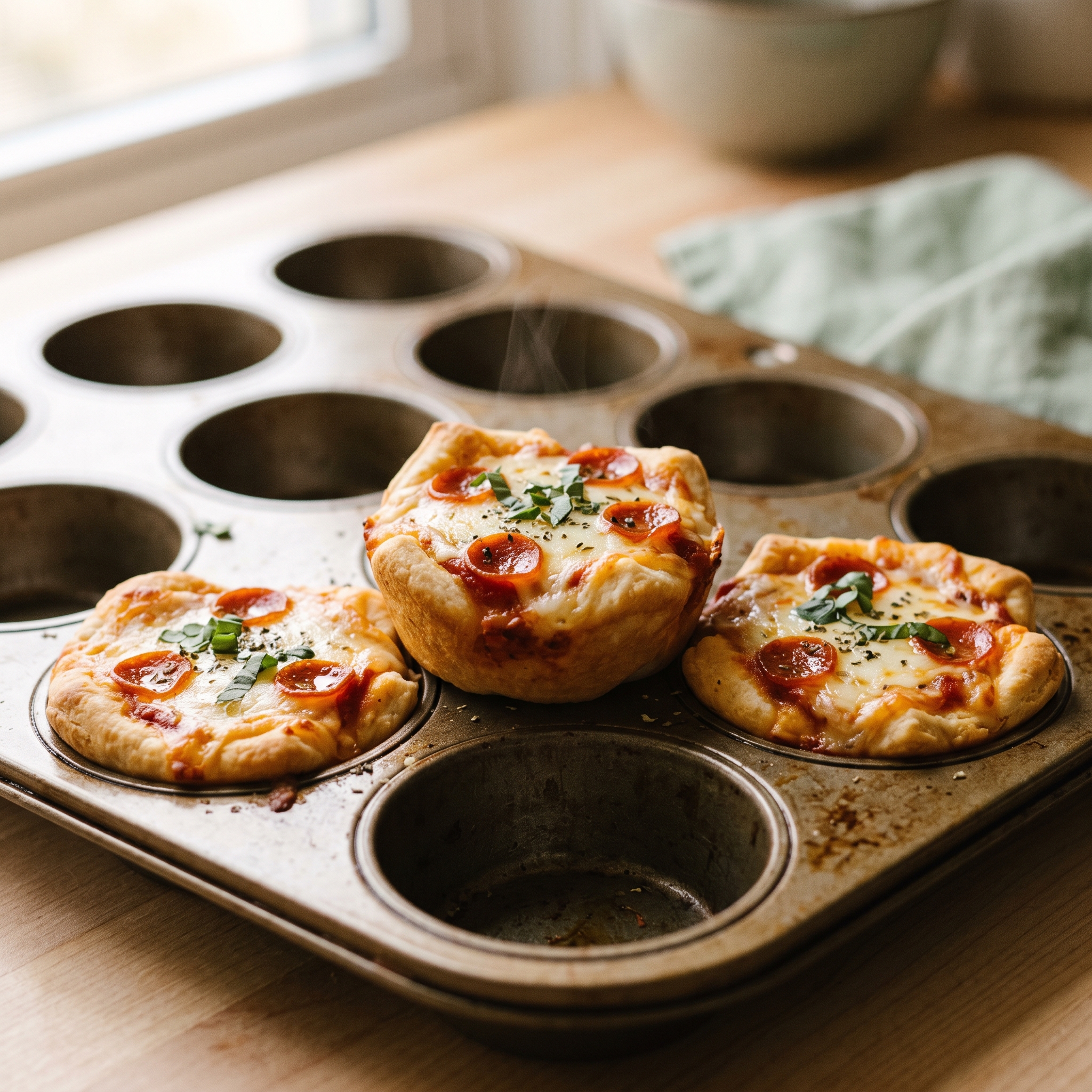
- Bake for 12 to 15 minutes, until edges are golden and cheese is bubbling.
- Let cool in the pan for 3 to 4 minutes before removing. They release cleanly with a spoon or butter knife.
Recipe Card
| Prep Time | 10 minutes |
|---|---|
| Cook Time | 12 to 15 minutes |
| Total Time | 25 minutes |
| Yield | 12 pizza cups (serves 4 to 6 kids) |
Make-Ahead Tips, Storage and Substitutions
Make-Ahead
Assemble the cups up to 24 hours ahead, cover the pan with plastic wrap, and refrigerate unbaked. When you’re ready, bake straight from the fridge and add 2 to 3 extra minutes to the bake time.
Freezing and Storage
Bake fully, cool completely, then freeze the cups on a sheet pan for 30 minutes before transferring to a zip-lock bag. To reheat from frozen: microwave for 45 to 60 seconds, or warm in a 350°F oven for about 8 minutes. Baked cups kept in an airtight container in the fridge stay good for up to 4 days.
Substitutions
- Gluten-free: Use gluten-free pizza dough at the same pan temperature and timing.
- Dairy-free: Dairy-free shredded mozzarella works 1:1 in this recipe.
- Lower-sodium: Swap in a homemade or low-sodium pizza sauce.
- Veggie-packed: Stir 2 tablespoons of finely diced spinach or zucchini into the sauce before spooning it in. Kids won’t notice, and I mean that sincerely.
- Scaling up: Double the batch and use two pans side by side on the same oven rack. Both will bake evenly at the same time.
The Picky Eater Strategy Hidden Inside a Muffin Tin
The “same pan, different cups” approach is the quietest parenting win I know. Every child at the table gets their own set of cups with their own fillings, and you haven’t made two separate meals. It’s customization that requires exactly zero extra effort once you get the hang of it.
This lines up with a feeding philosophy called the Division of Responsibility, developed by dietitian Ellyn Satter. The core idea, as explained at the Ellyn Satter Institute, is that parents decide what food is offered, and children decide what and how much they eat from what’s on the table. A muffin tin naturally supports that: you’ve set up the options, they pick which cups to eat from, and there’s no power struggle over the plate.
The small size helps, too. A 2-inch pizza cup is a lot less intimidating than a full slice when a child is already feeling uncertain about a new topping. Many families find that children are more willing to try a new food when the portion feels small and self-selected rather than served to them. The trick is to always include at least one cup of something the child definitely likes. Don’t make the whole tray unfamiliar. One safe cup gives them a foothold, and they tend to be braver about trying the rest.
Muffin Tin Meals by Age: What Works When
The muffin tin is one of those rare kitchen tools that scales up with your kids. What you fill the cups with just changes as they grow.
- 6 to 12 months (baby-led weaning): Soft baked egg cups and sweet potato bites are ideal. Keep them mashable, skip honey and added salt, and avoid any toppings that pose a choking risk. Always supervise babies and young toddlers closely during meals. The diameter of a mini muffin cup is a natural right-size hand grab for babies at this stage. The American Academy of Pediatrics has guidance on starting solids that’s worth bookmarking for this phase.
- Toddlers 1 to 3: Snack trays are a perfect fit here. Soft baked oatmeal cups and mini pancake bites are easy wins. Steam raw vegetables before adding them to any cup for this age group to reduce choking risk. Supervise toddlers throughout snack and mealtime.
- Preschool 3 to 5: Pizza cups land well, and this is a great age to let kids help press the dough into the pan. It’s a solid fine motor activity that also makes them more interested in eating what they made. For toddlers and preschoolers who learn through hands-on play, you might also enjoy this collection of easy toddler sensory activities that use similar hands-on approaches.
- School-age 6 to 12: This is when variety really opens up. Kids at this age can start building their own cups independently, which makes meatloaf muffins, pasta cups, and taco cups all fair game. Let them run the toppings station.
Frequently Asked Questions
What is the best muffin tin to use for kids’ meals?
A standard 12-cup metal muffin tin works for most savory muffin tin recipes for kids. A silicone pan is better for egg-based cups because it releases without sticking. For toddlers and babies, a 24-cup mini muffin tin gives smaller, more manageable portions that are easier for little hands to pick up.
Can I make muffin tin meals ahead of time?
Yes, and that’s one of the best reasons to make them. Most baked muffin tin recipes for kids refrigerate well for up to 4 days and freeze for up to 3 months. Reheat individual cups in the microwave in under 60 seconds. It’s one of the most practical make-ahead formats for busy families.
What are the easiest muffin tin breakfast ideas for busy mornings?
Baked egg cups and overnight oatmeal cups are the two most practical muffin tin breakfast ideas for school weeks because both can be prepped on Sunday and reheated in 30 seconds on busy mornings. Neither requires much skill or active cooking time, which makes them sustainable as a weekly habit.
Are muffin tin meals healthy for kids?
The format itself is neutral, it’s all about what goes into the cups. Healthy muffin tin meals for kids use whole-grain doughs, eggs, vegetables, and lean proteins. The individual-cup size also makes it simple to control portions naturally without measuring anything out at the table. According to the USDA’s MyPlate guidelines, aiming for a mix of protein, whole grains, and produce in each meal is the core target, and a muffin tin makes that easy to build in.
Can kids help make muffin tin meals?
That’s one of the best parts of this whole format. Kids as young as 3 can help press dough into cups, spoon in sauce, and choose their own toppings. Involving children in meal prep is a commonly recommended way to help picky eaters try new foods. When they helped build it, they’re almost always more willing to eat it.


