
Toddler Sensory Activities (Easy Setups)
Toddler sensory activities are play experiences that engage a child’s senses to support brain development, fine motor growth, and early learning.
Last updated: June 2026
Quick Answer: What Are Toddler Sensory Activities?
Toddler sensory activities are hands-on play setups that let kids touch, pour, squish, and explore different textures and materials. They work because young children learn primarily through their senses, and open-ended play gives their brains exactly the input they need. Most setups take under 10 minutes, cost next to nothing, and can keep a toddler engaged for 20 to 45 minutes. That’s a win on every front.
If you’ve ever stared at a bag of dry rice and thought can this really entertain a two-year-old for more than five minutes? The answer is yes. Absolutely yes.
Age Range: 12 months to 5 years (age-specific notes throughout)
Setup Time: 5 to 10 minutes | Play Time: 20 to 45 minutes
Why Sensory Play Matters (The Short Version)
You don’t need a lecture here, but a little validation goes a long way. According to ZERO TO THREE, sensory play experiences like sand, water, and finger-painting are some of the most effective ways to engage toddlers and support development through tactile exploration. The American Academy of Pediatrics also consistently points to hands-on, open-ended play as one of the most powerful drivers of early childhood development.
When your toddler is digging through a rice bin or squishing cloud dough, they’re building skills across six real areas:
- Fine motor skills: scooping, pinching, pouring, and squeezing strengthen the small hand muscles needed for writing later
- Math concepts: capacity, volume, and measurement happen naturally when kids fill and dump cups
- Language development: describing textures and temperatures (“scratchy,” “cold,” “slimy”) builds vocabulary fast
- Self-regulation and focus: open-ended play extends attention spans and teaches kids to stay in one activity
- Imaginative play: a bin of pasta becomes a kitchen; a nature bin becomes a forest
- Tactile tolerance: gradual exposure to different textures helps kids who are sensitive to touch, which I’ll cover more below
For more ideas that build these same skills through everyday play, toddler learning activities using household items are worth bookmarking alongside this one.
Materials: What You’ll Need for Sensory Bins
Most of this is already in your home or costs a few dollars at most. Here’s how to think about it.
The Base Container
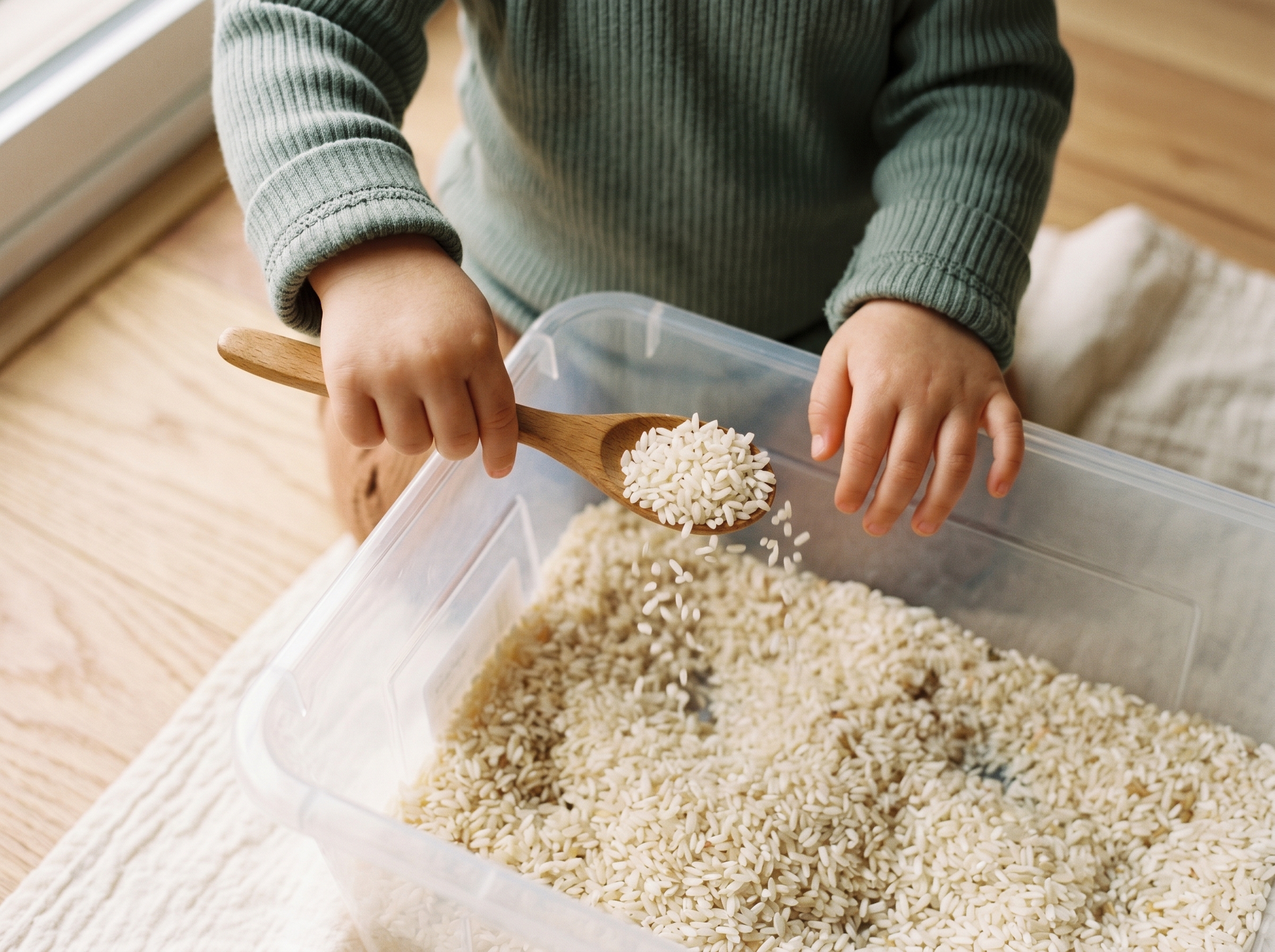
A clear plastic storage bin works best so kids can see what’s inside. For ages 1 to 3, a bin around 41 quarts (roughly 15″ x 11″) gives enough room without being overwhelming. For ages 3 to 5, bump up to a 66-quart bin so they can actually dig and sort without feeling cramped. Storage bins at Target or Walmart run about $6 to $12, which is pretty hard to beat.
A plastic tablecloth or shower curtain underneath isn’t optional in my house. It defines the physical play zone before you say a single word about boundaries, and it turns a 15-minute cleanup into a 60-second one.
Sensory Fillers by Type
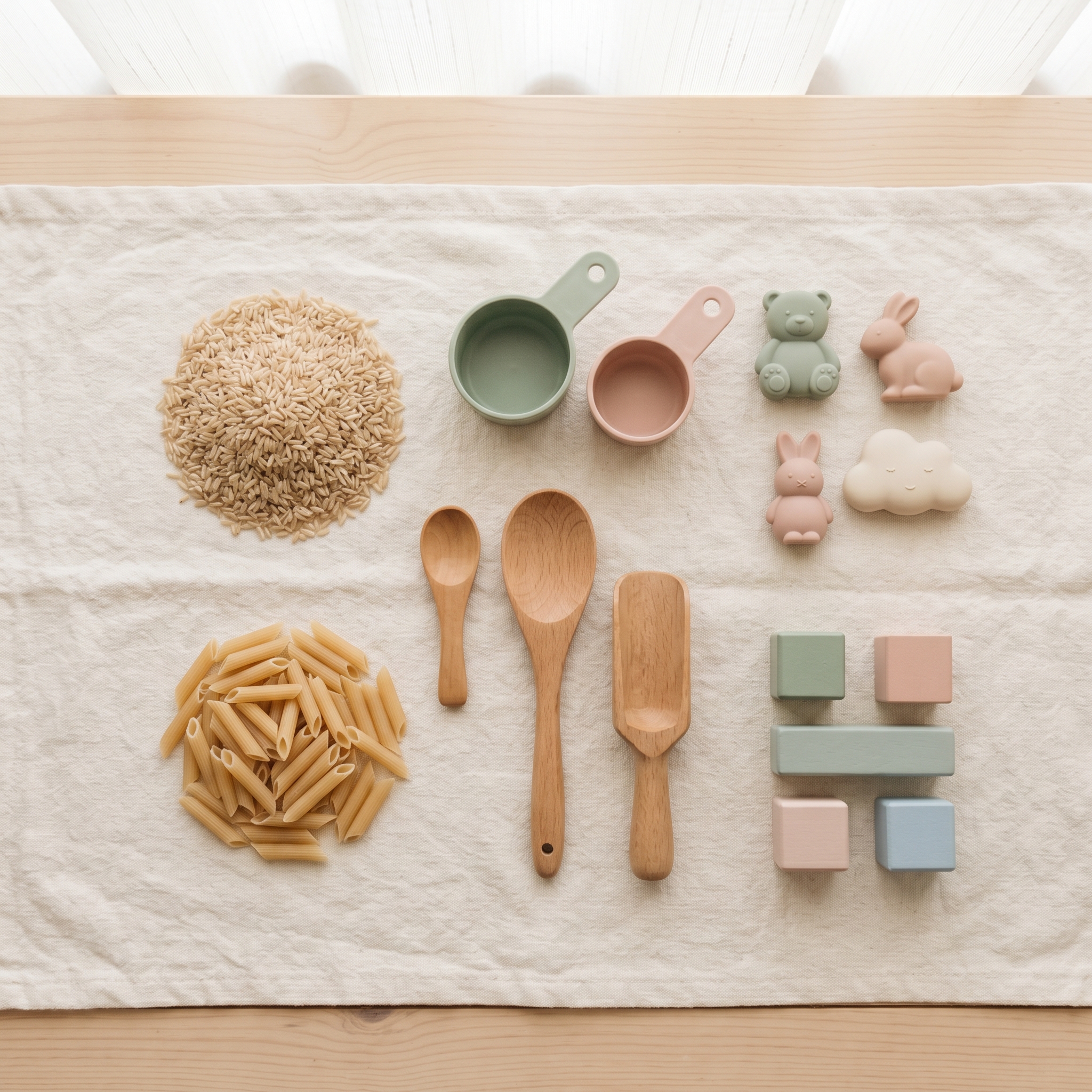
- Dry fillers: uncooked rice, dried pasta, dried beans, cornmeal, oats, kinetic sand
- Wet fillers: plain water, shaving cream, cooked spaghetti, water beads (not recommended for young children who mouth objects — the CPSC documented nearly 7,000 ER injuries from water bead ingestion between 2018 and 2022 and issued a federal safety standard effective March 2026; if you use them, choose CPSC-compliant low-expansion products and supervise constantly)
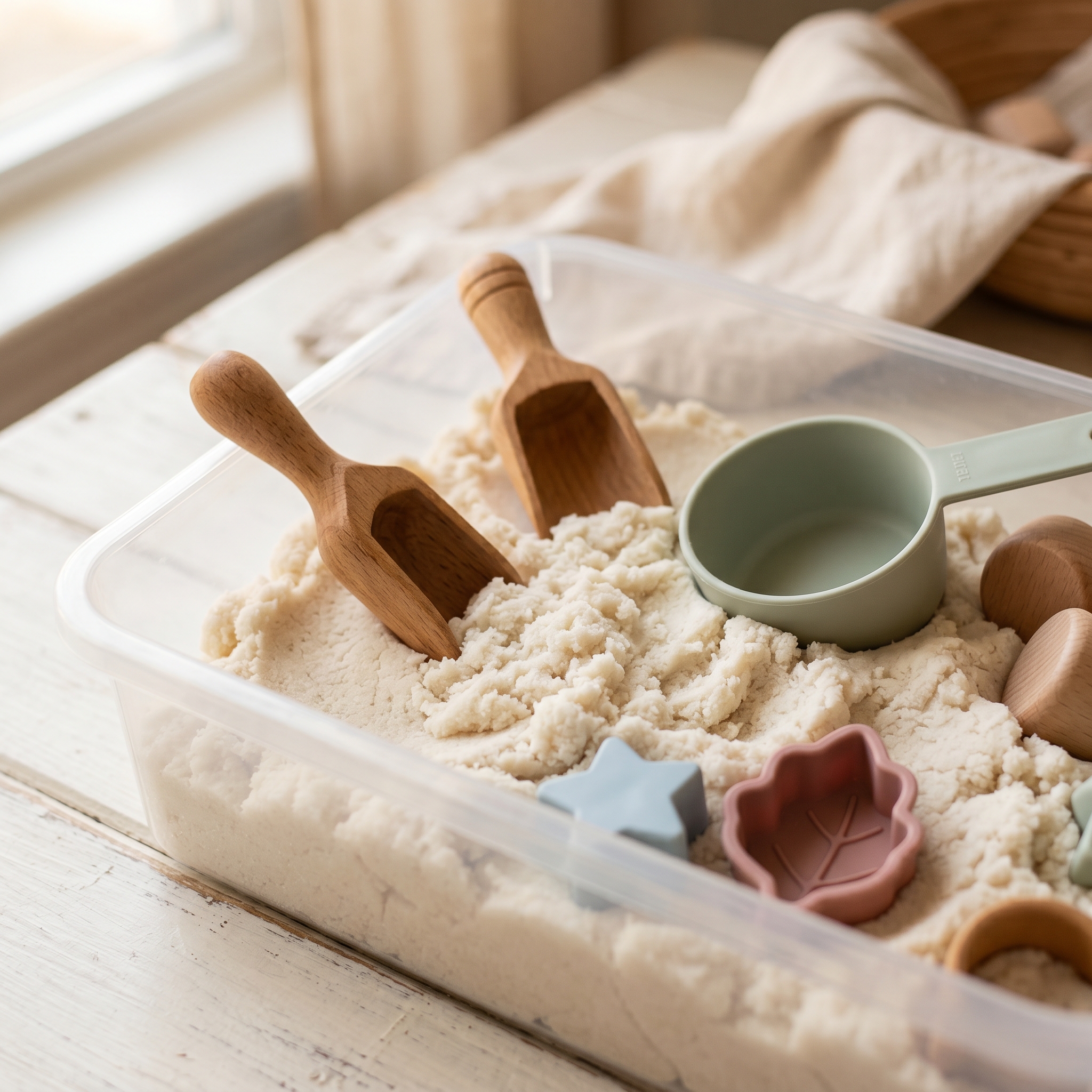
- Moldable fillers: cloud dough, moon sand, kinetic foam
A basic rice bin costs under $2 to fill. That’s the budget reality check that helps every mom actually start.
Tools and Extras
- Scoops and measuring cups: the core toolkit for every age
- Tongs and tweezers: for ages 3 and up as a fine motor challenge
- Funnels and empty spice jars: great for pouring practice
- Hidden objects: small figurines, plastic animals, magnetic letters buried in the filler
- Muffin tins: sorting trays that double as “baking” props
Steps: How to Set Up a Sensory Bin
- Choose your base filler and check it against your child’s age. Edible fillers for under-2s, dry non-sticky options for new sensory explorers, and wet or moldable fillers as they grow more confident.
- Lay a plastic tablecloth or shower curtain flat on the floor to define the play zone physically before you define it verbally.
- Fill the bin no more than halfway, about 3 to 4 inches deep. This keeps tools working properly and lets little arms reach the bottom without tipping the bin.
- Add 3 to 5 tools and 2 to 3 hidden objects. Less is more for ages 1 to 2. An overwhelming bin leads to a frustrated toddler, not a focused one.
- State one rule out loud before play starts: “Everything stays in the bin.” Say it calmly, say it every time, and repeat it during play without raising your voice. Consistency here does all the work.
7 Easy Toddler Sensory Activities by Age
1. Classic Rice Sensory Bin
Age: 18 months and up | Mess Level: 2/3 | Setup: 3 minutes
Fill with 4 cups of uncooked white rice. Add small measuring cups, scoops, and a few buried plastic animals for a hide-and-find element. For colored rice without sticky hands, mix rice with a small amount of rubbing alcohol and food coloring in a zip bag, then spread on a baking sheet to dry overnight. The bin stores well with a lid for 3 to 4 weeks.
What they learn: pouring, volume, fine motor pinch grip
2. Water Sensory Bin
Age: 12 months and up | Mess Level: 3/3 | Setup: 2 minutes
Add a drop of dish soap for bubbles or a few drops of food coloring for visual excitement. Tools are the highlight here: cups, funnels, and sponges teach squeeze-and-pour in a satisfying loop. For a zero-mess outdoor version, give your toddler a bucket of water and a large paintbrush to “paint” the driveway or patio. It evaporates, the fun is real, and you never touch a mop.
What they learn: cause and effect, volume, early physics
3. Cloud Dough Bin
Age: 18 months to 5 years | Mess Level: 1/3 | Setup: 5 minutes
Mix 8 cups of flour with 1 cup of baby oil until crumbly and moldable. It packs when you squeeze it and falls apart when you let go, which is endlessly satisfying. One heads-up: raw flour can carry bacteria like E. coli, so if your toddler is still in the mouthing stage, heat-treat the flour first — spread it on a baking sheet and bake at 350°F for about 5 minutes, then cool completely before mixing. Or jump straight to Activity 4 below; the Edible Oat Dough is built to be mouthable from the start. This one’s in my regular rotation because the mess is minimal and the focus time is long.
What they learn: cause and effect, fine motor strength, creative play
4. Edible Oat Play Dough
Age: 12 to 24 months | Mess Level: 1/3 | Setup: 5 minutes
Combine 1 cup oats, ½ cup flour, and enough water to form a soft dough. Three ingredients — with heat-treated flour (see Activity 3), this is as mouthable as sensory dough gets, and even with untreated flour the oat-heavy ratio makes it the lowest-risk option on this list. The texture is interesting without being overwhelming, which makes it a great first sensory experience.
What they learn: texture exploration, hand strength, sensory tolerance
5. Shaving Cream Sensory Tray
Age: 2.5 years and up | Mess Level: 2/3 | Setup: 1 minute
Spray shaving cream onto a baking sheet instead of a bin. The flat surface is perfect for drawing letters, shapes, and swirls. Add a drop of two different food colors and let them discover mixing on their own. It’s contained, it smells great, and older toddlers can practice pre-writing patterns without realizing that’s what they’re doing.
What they learn: pre-writing patterns, color mixing, tactile tolerance
If you love the shaving cream angle, shaving cream art for kids takes the same material in a totally different direction — and the marbled prints are keepsakes worth saving.
6. Dried Pasta Discovery Bin
Age: 18 months to 4 years | Mess Level: 2/3 | Setup: 3 minutes
Use a mix of pasta shapes, like rotini, rigatoni, and penne, so kids can sort by shape. For ages 3 and up, add tongs as the main tool instead of scoops. It takes more concentration and builds the hand strength needed for writing. Muffin tins work as sorting trays.
What they learn: shape recognition, sorting, early math foundations
7. Nature Sensory Bin
Age: 2 to 5 years | Mess Level: 1/3 | Setup: 10 minutes (including collection time)
Head outside with a small bucket and gather whatever’s in season: acorns and dried leaves in fall, smooth rocks and flower petals in spring, pinecones and dirt year-round. Bring it all inside and let them sort, bury, pour, and explore. This is the “sensory activity near me” answer that costs nothing and teaches seasonal science vocabulary without any worksheets.
What they learn: science vocabulary, texture comparison, seasonal awareness
If your little one loves digging in dirt, making mud pies is the perfect outdoor companion to this one — pure earth and water sensory play, no bin required.
Sensory Activities by Age: Quick Reference Guide
Sensory Activities for 1 to 2 Year Olds
At this age, everything goes in the mouth, so edible or taste-safe fillers are non-negotiable. Stick to the Edible Oat Dough, Water Bin, or a supervised rice bin. Keep sessions to 10 to 15 minutes since attention spans are short and that’s completely normal. Two tools maximum, nothing smaller than a 35mm film canister (the standard small-parts safety benchmark), and an adult within arm’s reach the whole time.
Sensory Activities for 2 to 3 Year Olds
This is the sweet spot for sensory bins. Toddlers this age can handle simple tools like scoops and measuring cups, enjoy hide-and-find games, and start to show genuine focus. Sessions can extend to 20 to 30 minutes. Best picks from the list above: Cloud Dough, the Pasta Bin, and the Nature Bin. Adding one “job” (like filling a muffin tin) gives the play a purpose that keeps them going longer.
Sensory Activities for 3 to 5 Year Olds
Now you can add tongs, tweezers, magnetic letters, and real measuring concepts. Theme the bins: space exploration (black beans, silver figurines, glow stars), ocean (blue-tinted water, shells, toy fish), or construction (kinetic sand, trucks, small rocks). Sessions can run 30 to 45 minutes with minimal input from you, which is the kind of independent play every parent is quietly hoping for. If you need more structured ideas to pair with this age group, indoor toddler activities designed for rainy days work perfectly alongside a sensory bin rotation.
What Helps Toddlers with Sensory Issues? (A Gentle Note)
Sensory play is one of the tools occupational therapists recommend for toddlers who struggle with tactile sensitivity. If your toddler recoils from certain textures, that doesn’t mean sensory bins aren’t for them. It means you start slower and let them lead.
Begin with dry, non-sticky fillers like rice or oats before you introduce anything wet or moldable. Offer tools first, always. A scoop or spoon puts a buffer between the texture and their hands, and that buffer can make all the difference. Never press their hands into a bin or push the texture toward them. Trust the gradual exposure process.
The STAR Institute for Sensory Processing notes that roughly 1 in 6 children experiences sensory processing challenges significant enough to affect daily function. So if your toddler consistently avoids textures or shuts down quickly during sensory play, talking to your pediatrician about a referral to a pediatric occupational therapist is a confident next step, not an overreaction.
Keeping It (Mostly) Clean: A System That Works
Mess management isn’t one tip, it’s a short system. Here’s the version that’s worked consistently in my experience:
- The tablecloth perimeter: lay it before the bin goes down. It physically defines the play zone and makes you the one who set the boundary, not the one reacting to a mess
- The one-rule script: “Everything stays in the bin.” Say it before play starts, every single session. Repeat it calmly if something goes over the edge, then redirect without a big reaction
- The halfway-fill rule: 3 to 4 inches of filler is the sweet spot. More than halfway and the overflow is guaranteed
- Cleanup as part of play: give your toddler a scoop and three minutes to help “put the bin to sleep” before snack time. They love having a job, and it teaches them that cleanup is part of the activity
- The lid system: keep a lid on the bin between uses. Rice and dried pasta bins stay fresh for 3 to 4 weeks when stored dry
If you love the low-mess angle, no-mess painting for toddlers uses the same containment logic and makes a great pairing activity on days when the sensory bin needs a break.
Frequently Asked Questions
What are the best toddler sensory activities for a 2-year-old at home?
For a 2-year-old at home, rice bins, cloud dough, a simple water tray, and the edible oat dough are your best starting points. Keep the tool selection to one or two scoops, fill the bin no more than 3 to 4 inches deep, and aim for 15 to 20 minutes of play. Short, successful sessions build the habit better than long, overwhelming ones.
What helps toddlers with sensory issues?
Starting with dry, non-sticky textures like rice and oats is usually the gentlest entry point for sensory-sensitive toddlers. Always offer a tool first so they’re not forced into direct contact with the material. Never force their hands in, and keep initial sessions short. If your toddler consistently avoids or becomes distressed by textures in daily life, a pediatric occupational therapist can give you a personalized plan.
How long should a toddler sensory activity last?
Age makes a real difference here. Toddlers between 12 and 18 months typically stay engaged for 10 to 15 minutes. Two-to-three-year-olds can often go 20 to 30 minutes. Kids ages 3 to 5 may play independently for up to 45 minutes with a well-stocked themed bin. If they walk away sooner, that’s fine too. Following their cues matters more than hitting a time target.
Are sensory bins safe for 1-year-olds?
Yes, with the right modifications. Use edible or taste-safe fillers only: cooked pasta, water, oat dough, or plain oats. Remove any objects smaller than a 35mm film canister, which is the standard small-parts choking hazard benchmark. Stay within arm’s reach for the entire session. Dry rice and beans are not recommended for under-18-month-olds without very close supervision because of the choking risk.
How do I make a sensory bin without a huge mess?
Lay a plastic tablecloth or shower curtain under the bin before you start. Fill the bin only halfway (about 3 to 4 inches of filler). State one rule before play begins: “Everything stays in the bin.” Use a bin with a snap-on lid so cleanup means scooping the filler back in, snapping the lid, and sliding it under a shelf. That’s a two-minute reset at most.


