
How to Stay Organized at Home (Realistic Mom Systems)
Staying organized at home means building simple, repeatable daily systems that reduce decision fatigue and keep your household running smoothly, even on chaotic days.
Last updated: June 2026
Quick Answer: How to Stay Organized at Home
The key to staying organized at home isn’t a perfect closet or a color-coded binder, it’s a handful of small, consistent habits that your whole family can actually follow. Think of it as building infrastructure, not staging a photo shoot. You need a home for incoming paper, a daily reset window, and a few labeled spots for the things everyone touches constantly. That’s the foundation. Everything else builds from there.
This article is about practical, maintenance-focused systems, not a one-weekend overhaul that falls apart by Tuesday. If you’ve tried the “take everything out and start fresh” approach and found yourself standing in a bigger mess than you started with, you’re in the right place.
Why Staying Organized Feels So Hard When You’re a Mom (And It’s Not Your Fault)
If you’ve ever felt like you’re the only person in the house who knows where anything is, you’re not imagining things. The mental load of managing a household is heavy, and it compounds throughout the day.
Your brain is doing too much at once
There’s a concept called decision fatigue: the more choices you make before noon, the harder it becomes to sustain any system after that. When you’re tracking school lunches, permission slips, dentist appointments, and what’s for dinner simultaneously, your brain doesn’t have bandwidth left to wonder where the scissors go.
The practical fix is to automate a few of those daily decisions so they stop using up mental space. Pick three to start: where backpacks live the moment kids walk in, what breakfast looks like on school mornings, and where incoming mail lands. Those three alone can take a surprising amount of noise out of your morning.
Generic organization advice wasn’t built for your life
Most organization content assumes you have a free Saturday, an empty house, and a Costco membership for matching bins. The “take everything out of the space” method works beautifully in theory. In practice, it works on a child-free afternoon, not after school pickup on a Wednesday.
How to be organized at home looks completely different when kids are actively dismantling your systems in real time. The goal isn’t a one-time transformation. It’s a maintenance routine you can return to even after a chaotic week breaks everything down.
Before You Touch a Single Drawer, Start Here
One of the biggest reasons organization projects stall is that people start in the wrong place. Before you buy a single bin or rearrange one shelf, do these two things first.
Do a 10-minute paper audit first
Paper is one of the biggest sources of the “where is it?” stress in most homes. Bills, school forms, takeout menus, and random coupons pile up on every flat surface and create visual noise that makes the whole house feel out of control.
Grab one box or bin and sweep every flat surface in your home. Sort into three piles: trash, action needed within seven days, and file. That’s it. Don’t file anything yet, just sort. In my experience, this single step makes the house feel more manageable before you’ve moved a single piece of furniture.
Pick ONE zone, not the whole house
Choose one area and write it on a sticky note. That’s your only job this week. Organizing experts consistently recommend starting with a small area, one drawer, one counter, one six-square-foot zone, because small wins build the momentum you need to keep going.
For most moms, the entryway or mudroom is the best starting zone. It’s the highest-traffic area in the house and the source of the most daily chaos. Getting that one zone under control creates a ripple effect through the rest of the morning routine. When you do have the bandwidth for a bigger seasonal push, our spring cleaning tips tackle the deep-clean side without turning it into an all-or-nothing overhaul.

The 5 Systems That Actually Stick for Busy Moms
These aren’t aspirational systems that require a full weekend to set up. Each one can be built in under an hour and maintained in minutes.
The Launch Pad (Entryway System)
Everything the family touches on the way in and out of the house gets one designated spot. That means hooks at kid height (standard range for elementary-age kids is around 42 to 48 inches), one bin per child for shoes, and a single tray for keys, sunglasses, and whatever else you’re always hunting for.
Label everything, even for adults. Labeling removes the need to remember, which removes the “where does this go?” question entirely. A basic over-door hook system runs $15 to $25 at most big-box stores. It doesn’t need to be a built-in mudroom to work. This launch pad earns its keep most in the fall, so pair it with our back-to-school tips to get ahead of the first-week morning rush.
The Paper Command Center
Pick one wall-mounted spot, a $12 magnetic board, a section of the fridge, or a simple folder system on the wall, and make it the only place where household information lives. This week’s schedule, the grocery list, permission slips, and the family calendar all go here and nowhere else.
The rule that makes this work is touching paper only once. When something comes in, it either gets trashed, acted on immediately (under two minutes), or goes into one “to-do” folder. Nothing stays on the counter for more than 24 hours. How to be more organized at home usually starts with paper, not bins, and this system is why.
According to HealthyChildren.org, written checklists and daily task lists help the whole family stay on track, and this applies to kids as much as parents. Posting your weekly schedule where everyone can see it reduces the number of times you’ll be asked what’s happening on Thursday.
The 15-Minute Reset Window
This is the system that most other organization guides skip, and it’s the one that makes everything else work.
Set a daily 15-minute reset at the same time every day. Right after school pickup or right after dinner both work well. During the reset: dishes go in the sink or dishwasher, toys go to their zone, tomorrow’s school bags get packed, and the kitchen counters get one quick wipe. That’s the whole list.
Research from University College London habit researcher Phillippa Lally found that habits took anywhere from 18 to 254 days to become automatic, with the average landing around 66 days. A daily reset builds faster than a weekly overhaul because it repeats every single day. Set a phone alarm labeled “RESET” and, if possible, don’t call it “cleaning” in front of your kids.
The Rotating Hot Spot Rule
Every home has three to five spots where clutter magnetically appears: the kitchen counter corner, the chair in the bedroom, the bottom stair. This isn’t a character flaw. It’s physics.
The goal isn’t to eliminate the hot spot, it’s to contain it. Give each one a tray, a basket, or a bowl that “earns” the clutter, and empty it during the reset window. Identify your three hot spots by name this week and give each one a container. That’s a realistic win.
The Weekly Planning 10 (Sunday or Monday Morning)
Ten minutes, not an hour-long planning session. The agenda is simple: check the calendar for the week, write three non-negotiable household tasks on a sticky note, and plan two dinners you know will actually happen.
Use whatever tool you’re already touching every day, a paper planner, the Notes app on your phone, or a whiteboard on the fridge. The best system is the one that requires zero extra effort to access. If you’re already meal prepping for the week, having a handful of grab-and-go snack options built into your plan takes one more daily decision off the table.
How to Get Kids Involved Without a Battle
The most common reason mom-organized systems fall apart isn’t the system itself, it’s that nobody else in the house uses it. Getting kids on board isn’t about enforcement. It’s about designing systems that make sense for how kids actually function.
Age-appropriate organization jobs (with specific ages)
- Ages 2 to 4: put toys in one labeled bin, carry their plate to the sink
- Ages 5 to 7: pack their own backpack using a visual checklist posted inside the closet door, sort laundry by color
- Ages 8 to 12: manage their own homework folder, unload the dishwasher, wipe their own bathroom counter
The American Academy of Pediatrics supports age-appropriate chores as a tool for building responsibility and self-regulation in kids, not just as a strategy for getting help around the house. Worth keeping in mind when the pushback is real.
Make the system work FOR kids, not around them
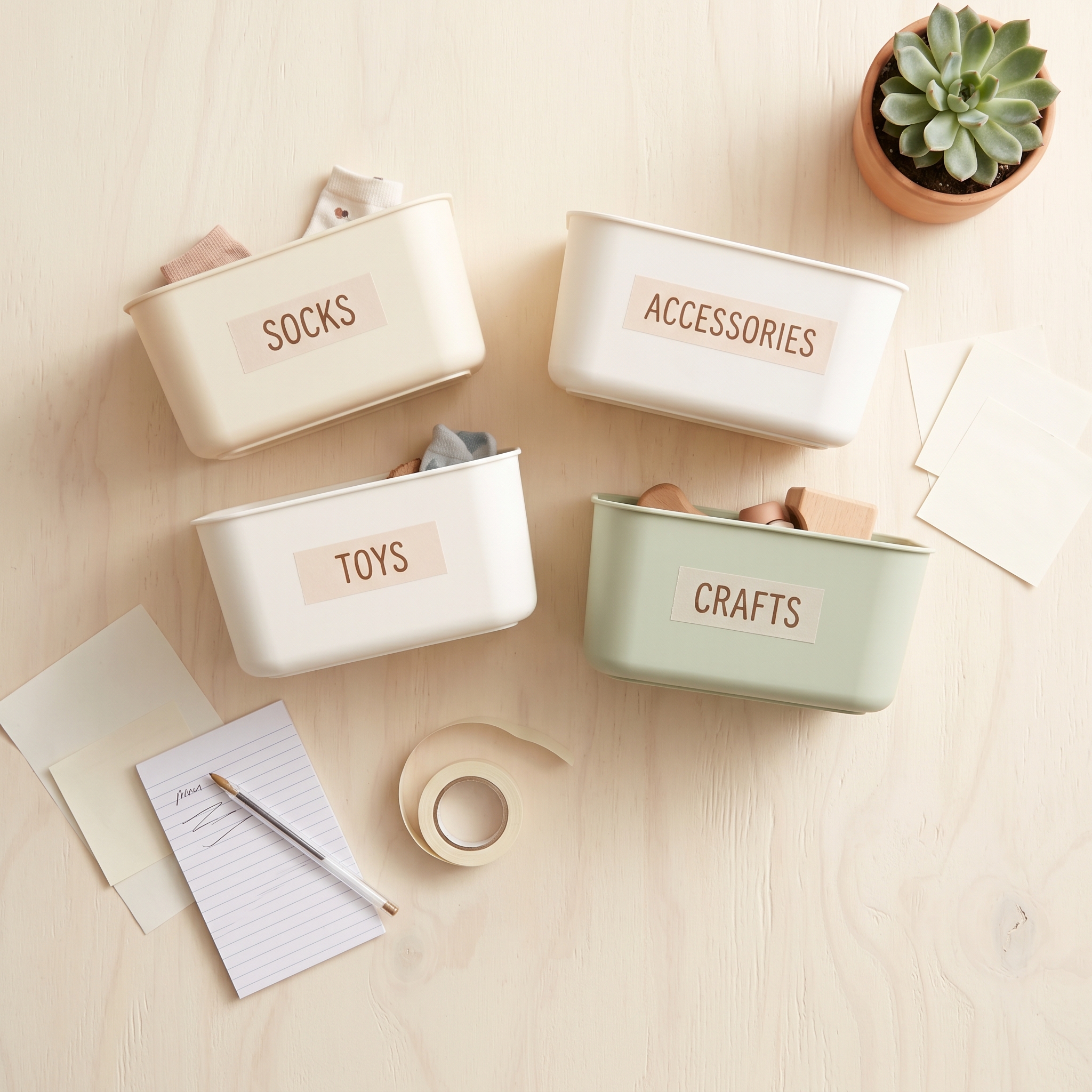
For kids under five, use picture labels alongside words. Open bins beat lidded bins every time, if putting something away requires more than one motion, it won’t happen. A closed bin with a lid is a surface for more clutter, not a storage solution.
One move that works surprisingly well: let each kid own one organizational decision in their space. Which bin goes where, what color label they want, where the art supplies live. Buy-in goes up dramatically when they have a say in the setup. If you’re looking for rainy-day ideas to keep littles busy while you tackle a zone, indoor toddler activities that rotate every 30 to 45 minutes can buy you a solid stretch of focus time.
Inexpensive Ways to Set Up Your Systems (No $300 Closet Overhaul Required)
Organization doesn’t have to be expensive. In my experience, the homes that stay most functional aren’t the ones with the prettiest matching bins, they’re the ones where the systems are simple enough to actually maintain.
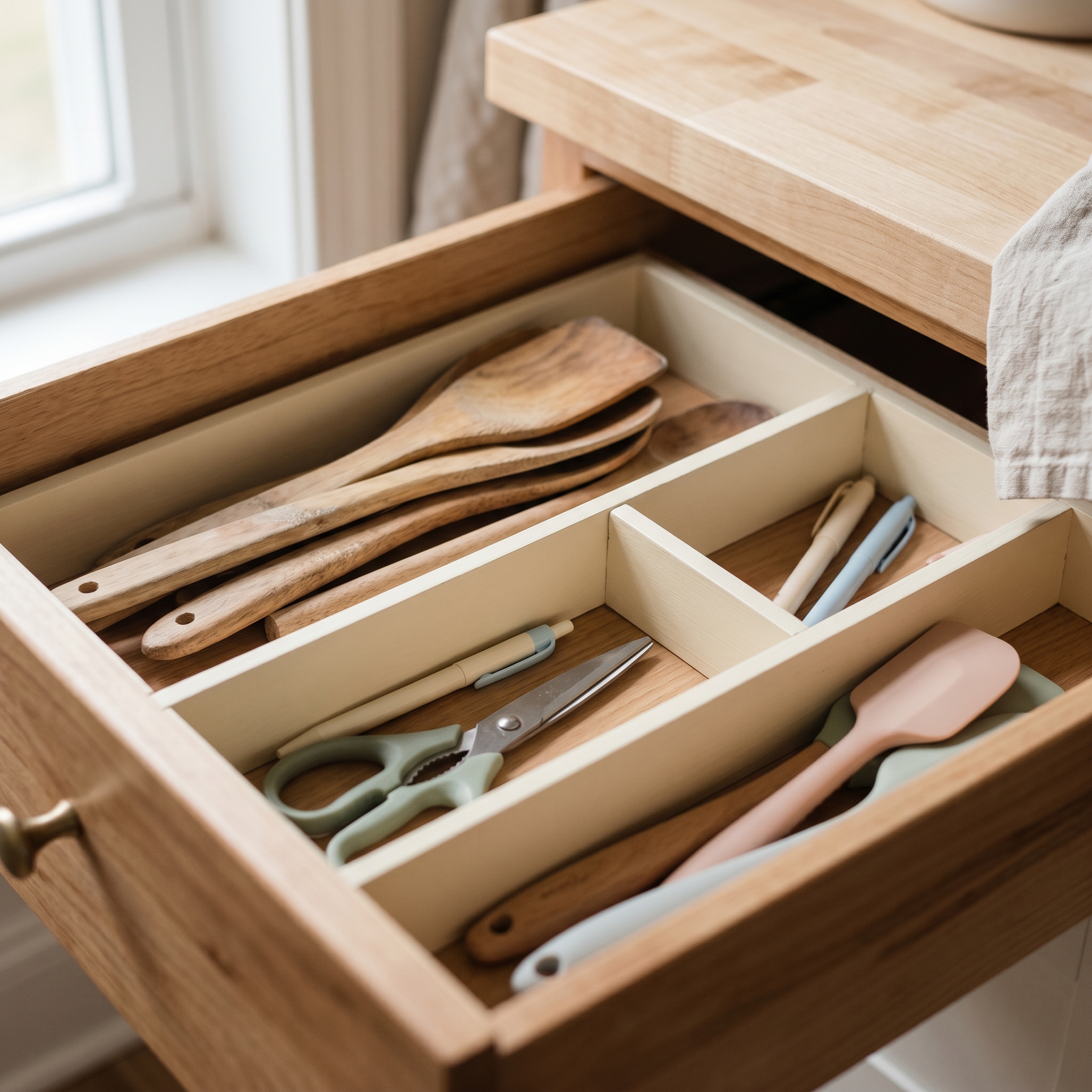
The IKEA KALLAX 4-cube unit (around $49) is one of the most versatile organization purchases for families. Pair it with fabric bins and it works in a playroom, a bedroom, a mudroom, or a living room. Before you buy anything, though, look at what you already have. Cereal boxes covered in contact paper make solid drawer dividers. Mason jars corral counter clutter. A strip of masking tape and a Sharpie works as well as any label maker.
Professional organizers often suggest spending roughly 10 to 15% of what the contents of a space are worth on organization products for that space. That’s a useful gut check before buying a $60 closet system for a drawer full of batteries and rubber bands.
One place it’s worth spending a little more: the one system you touch ten or more times a day. The entryway, the kitchen counter zone, the Paper Command Center. Invest there, save everywhere else.
When Your System Falls Apart (Because It Will)
Even the best systems break down during school breaks, illness, travel, or just a hard week. This isn’t failure, it’s what happens when real life shows up.
The re-entry move is not to restart the whole system at once. Just do the one smallest piece, the 15-minute reset, for three days in a row before adding anything back. Organizational researchers describe this as a “minimum viable routine”: the smallest version of your system that keeps the household functional, something you can always return to even after chaos.
Write your minimum viable routine on an index card and tape it inside a cabinet door. When things fall apart, you don’t have to remember what to do first. The card tells you.
Frequently Asked Questions About Staying Organized at Home
Why do I struggle to stay organized at home even when I try?
Usually it’s a systems problem, not a willpower problem. If the system requires too many steps, too much time, or relies only on you to maintain it, it will fall apart under pressure. Start with the smallest possible habit, a 15-minute daily reset, before building anything bigger. Once that’s automatic, everything else gets easier to layer in.
How do I start organizing a messy house when I’m completely overwhelmed?
Start with a 10-minute paper sweep of every flat surface in the house. Then pick one small zone, one drawer, one counter, one six-square-foot area, and work only on that. Don’t start with a full room. Small wins are what build the momentum to keep going, and trying to do everything at once is what stalls most people.
How do I get my family to help keep the house organized?
The system has to make sense for every person using it. Open bins, picture labels for young kids, and giving each family member ownership over at least one decision in their own space all increase participation significantly. If the system only makes sense to you, it will only be maintained by you.
What’s the most important habit for staying organized at home long-term?
A daily reset window, the same 15 minutes every day, at the same time, outperforms any weekend overhaul because it happens often enough to become automatic. It also means the house never gets far enough out of control to require a major recovery effort.
How long does it take to get organized at home?
A single zone like one drawer or one counter takes about 20 to 45 minutes to set up properly. A full room takes two to four focused hours. But maintaining your organization, which is the real goal, happens in about 15 minutes a day once your systems are in place. The initial setup is a one-time investment. The daily reset is what keeps it working.


