
Back to School Tips for Parents
Back to school tips for parents are practical strategies covering sleep schedules, morning routines, and safety reviews that help the whole family transition from summer to school with less stress.
Last updated: June 2026
Quick Answer: Back to School Tips for Parents
The most effective back to school tips for parents come down to one thing: starting earlier than you think you need to. Shifting sleep schedules at least two weeks out, building morning routines with your kids (not just for them), reviewing safety basics, and having a plan for first-day nerves will make that first week dramatically calmer. This guide covers everything from preschool drop-off anxiety to middle school logistics, so you’ve got one place to work from.
Here’s the thing about back-to-school season. Whether you’re counting down the days or quietly dreading the chaos, it has a way of sneaking up fast. One minute it’s July and the kids are staying up until 9:30, and the next you’re staring at a supply list wondering who needs a two-inch binder. The good news is that a little prep goes a long way, and none of it needs to feel overwhelming.

Sleep Is the First Domino and It Falls Earlier Than You Think
Of all the back to school tips floating around every August, this one gets skipped the most. Sleep is the foundation everything else runs on, and a sudden schedule flip on the first Sunday night is rough on kids (and honestly, on parents too).
The 5-to-10-Minute Nightly Shift
Sleep experts widely recommend shifting bedtime and wake time gradually, by 5 to 10 minutes each night, starting 10 to 14 days before school begins, so kids ease into the new schedule without hitting a wall. PBS Parents has a helpful collection of back-to-school routines along these lines. It’s gradual enough that it doesn’t feel like a big deal, but consistent enough that by the first day, they’re waking up at the right time naturally.
One thing I love doing: letting the kids help set the new alarm. When they feel like they’re in on the decision, there’s a lot less resistance at bedtime. A visual clock on the nightstand helps younger kids understand what “time for sleep” looks like.
Also, dim screens at least 60 minutes before the new bedtime. Not just at lights-out. That buffer window matters more than most people realize.
How Much Sleep Does Your Child Actually Need?
The American Academy of Pediatrics recommends the following sleep ranges by age:
- Preschool (3 to 5 years): 10 to 13 hours, including naps
- School-age (6 to 12 years): 9 to 12 hours
- Teens (13 to 18 years): 8 to 10 hours
The CDC also notes that insufficient sleep in school-age children is linked to lower academic performance, higher absenteeism, and increased behavior issues. That’s a lot riding on an earlier bedtime.
The Morning Routine Won’t Run Itself, So Build It Now
A chaotic morning doesn’t usually happen because kids are difficult. It happens because nobody decided in advance who’s doing what and in what order. Building the routine before school starts (not during the first week) is the move.
Let Your Kid Co-Design the Routine
Kids as young as 4 can meaningfully participate in planning their morning. Sit down together and ask: “What’s the first thing you want to do when you wake up?” It sounds simple, but it creates ownership. And a kid who helped design the routine is much less likely to fight it.
Age-appropriate responsibilities can look like this:
- PreK to Kindergarten: get dressed, put on shoes, place backpack by the door
- Grades 1 to 3: pack lunch with a parent nearby, make the bed
- Grades 4 and up: set their own alarm, prep the backpack the night before
Make It a Checklist, Not a Lecture
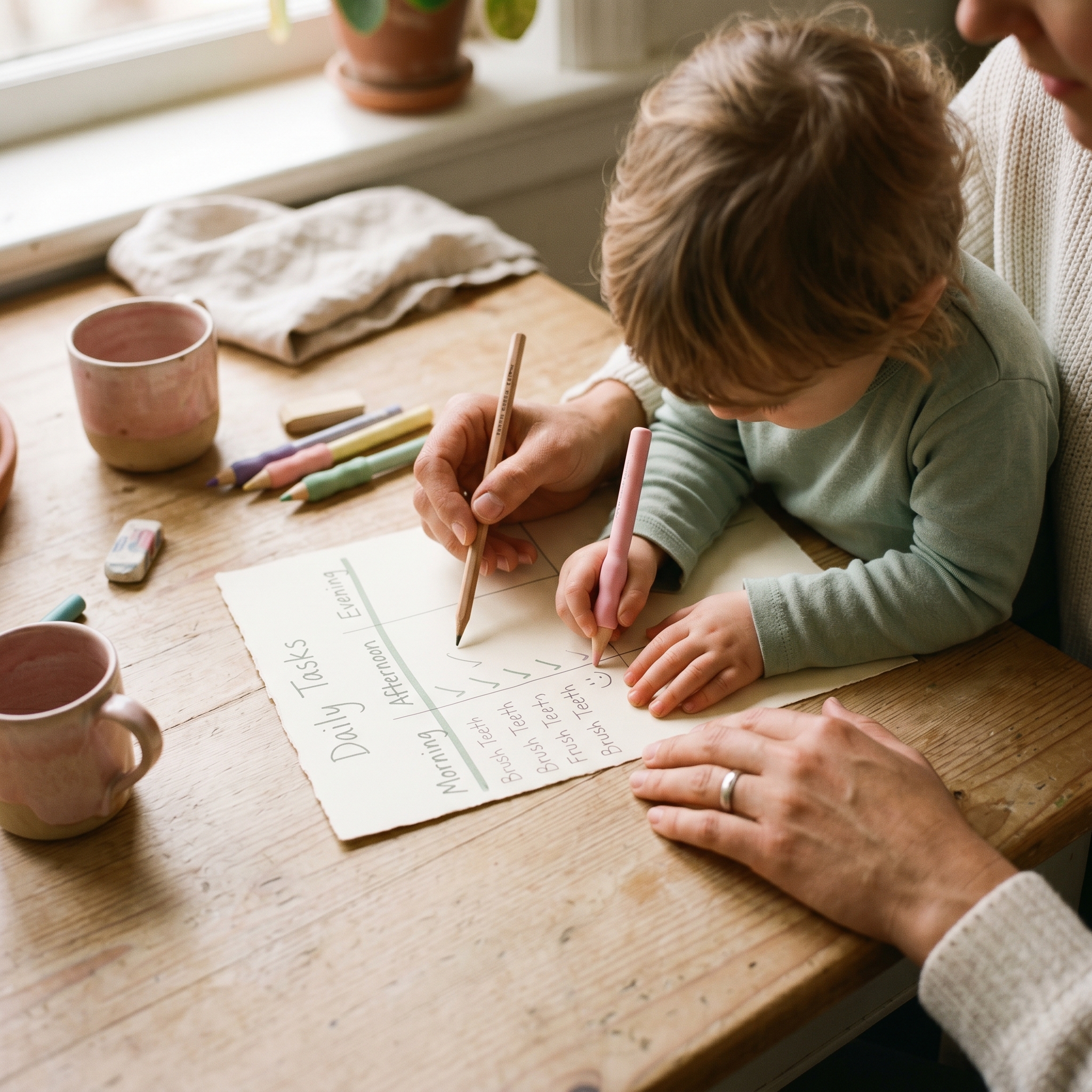
Post a visual checklist somewhere your kids will actually see it. The refrigerator door or the back of their bedroom door both work. Keep it simple: wake up, bathroom, breakfast, backpack check, shoes, out the door.
The same checklist-and-zones thinking that powers a calm morning is the backbone of staying organized around the house year-round, so the routine you build now does double duty.
While you’re doing the backpack audit, check the weight. The AAP recommends that backpacks weigh no more than 10 to 15 percent of a child’s body weight. It’s easy to overload those bags without realizing it.
Back to School Safety Tips You Don’t Want to Skip
Safety logistics tend to feel like paperwork until something goes wrong. Knocking these out in the two weeks before school starts means you’re not scrambling on day one.
Getting To and From School Safely
- Walking: Walk the route with your child before the first day. Point out crossing guards, identify safe spots to pause, and talk about what to do if something feels off.
- Bus: Review the bus number and stop location together. Practice out loud what your child would do if they missed the bus.
- Carpool: Confirm the pickup and drop-off protocol with the school directly. Many schools updated their procedures in recent years, and what you remember from last year may have changed.
Emergency Information Your School Actually Needs
Don’t assume last year’s emergency contacts are still accurate in the school system. Log in and verify them, especially if you’ve changed phone numbers or your family situation has shifted.
Make sure your child can tell someone their full name, your phone number, and their teacher’s name. For younger kids, a card in the backpack pocket works as a backup.
Also, find out which communication platform your school uses, whether that’s Remind, ClassDojo, ParentSquare, or something else. If your school offers an orientation or open house, go: touring the school and meeting the teacher before the first day gives kids (and parents) a confidence boost that’s hard to replicate otherwise. Set up your app notifications before school starts, not after you’ve missed the first three messages.
If Your Little One Is Nervous, Here’s How to Ease Into It
First-day nerves are completely normal. For preschoolers and kindergarteners especially, walking into a new environment full of strangers is a big ask. These back to school tips for easing preschool anxiety are worth doing even if your child seems fine beforehand.
Visit the Classroom Before the First Day
Most schools offer a meet-the-teacher night or open house. Go. Seeing the classroom, finding the cubbies, and meeting the teacher in a low-stakes setting makes the first day feel far less unknown. If that’s not an option, even driving past the school and pointing out the playground can help.
Exposure to a new environment before a stressful event is a well-established anxiety-reduction technique in child psychology, and it doesn’t have to be elaborate to work.
Role-Play the First Day at Home
Practice the drop-off goodbye at home. It sounds a little silly, but it helps. Keep goodbyes short and confident when the real day comes. A long, drawn-out goodbye signals to the child that there’s something to worry about, even when you don’t mean it that way.
Validate the nervousness without amplifying it. Something like: “It’s okay to feel nervous. Your teacher knows some kids feel that way and they’re good at helping.” That’s enough. You don’t need to fix it, just acknowledge it.
If your child tends to worry about being away from you, slipping a short love note into their lunchbox gives them a little piece of home to look forward to at midday.
Give Them Something to Look Forward To
Plan something small for after school during the first week. A favorite snack, a stop at the park, a movie pick on Friday. Building anticipation is a simple, effective transition tool, and it works across ages, not just for little ones.
Lunches, Snacks, and the Homework Spot, Logistics That Save Your Sanity
Meal prep and homework setup aren’t glamorous, but they’re what keeps the wheels on during week one when everything is already a lot.
Sit down with your kids on Sunday before school starts and pick five lunches for the week. Let them choose. You’ll reduce morning decision fatigue and they’ll actually eat what’s in that box. Rather than reinventing the wheel daily, rotating three or four go-to lunches is plenty. For snack packing, knowing a few quick, no-fuss snack combinations that kids will reliably eat makes lunchbox packing much faster on a Tuesday morning.
The USDA’s MyPlate guidance suggests aiming for a protein, whole grain, fruit or vegetable, and dairy or dairy alternative per meal. That’s a helpful mental checklist when you’re packing fast.
For homework, designate one spot before school starts, whether that’s a desk, a kitchen table corner, or a portable homework caddy with pencils, scissors, and highlighters inside. Restock it before the first day. And let your child weigh in on timing. Some kids need to jump straight into homework after school; others need a 30-minute decompression snack first. Asking which they prefer goes a long way toward getting consistent buy-in.
And keep a plan for the inevitable first cold of the year. These mom-tested remedies for sick kids are worth bookmarking before back-to-school germs make their first rounds through the classroom.
What Teachers Wish You’d Do Before School Starts
This one comes straight from teachers, so consider it a pass-along from the people in the room with your kids all year.
- Label everything: Not just the backpack. Individual folders, water bottles, lunch boxes. Teachers spend the first week reuniting items with owners.
- Read the welcome email or packet all the way through: The answer to most first-week questions is already in there.
- Attend orientation: Even 20 minutes in the classroom before day one gives your child real confidence on the actual first day.
- Keep your introduction brief: A quick “Hi, I’m [child]’s parent, looking forward to the year” at pickup is warm and welcome. A 10-minute conversation on day one is harder for a teacher to manage gracefully.
- Download the class communication app before school starts: Ask which platform the teacher uses and turn on notifications ahead of time.
Building that early rapport with the teacher matters more than it might seem. If you want to make a warm impression a few weeks in, a thoughtful teacher gift that’s actually useful goes much further than anything elaborate.
And Mama, Don’t Forget to Check In on Yourself
Back-to-school stress isn’t just a kid thing. Parents carry the invisible logistics load: school forms, supply lists, schedule juggling, permission slips that arrive the night before the field trip. It adds up.
It’s okay if you feel relief when school starts. It’s also okay if you feel a little sad that summer is ending. Both things can be true at the same time, and neither one makes you a bad mom.
A few practical resets that actually help:
- One Sunday meal prep session: Even just prepping dinners for Monday and Tuesday takes enormous pressure off the first week.
- 15 minutes a day just for you: No forms, no errands. Even sitting with coffee before the kids wake up counts.
- One school parent connection: Find your “did you get that email too?” person early. Having someone to commiserate with during the first week is grounding.
If the mental load feels overwhelming in a way that doesn’t ease up after the first few weeks, it’s worth naming that, whether to a friend, a partner, or a doctor. You can’t pour from an empty cup, and that’s not just a bumper sticker.
Quick Adjustments by Grade Level
Not all back to school tips apply equally across every age. Here’s where to focus your energy depending on where your kids are.
Preschool and Kindergarten
Separation is the number one challenge at this stage. Lead with the anxiety tips above. Keep the routine ultra-predictable for the first two to three weeks, because novelty is overwhelming when everything is already new. Resist the urge to keep changing things up “to keep it fun.” Consistency is what feels safe right now.
Elementary School (Grades 1 to 5)
This is the sweet spot for building independence. Can they pack their own bag? Help choose and prep their own lunch? These small tasks build confidence and reduce your morning workload over time. Introduce a consistent homework routine and stick to it for at least three weeks before adjusting, even if it feels imperfect at first.
Middle School (Grades 6 to 8)
Shift from managing to coaching. Ask questions rather than giving directives. “How are you planning to handle that?” lands better than “Here’s what you need to do.” Respect their need for privacy around friendships while staying closely connected on logistics and mental health check-ins.
Sleep is especially critical at this age and often the first thing to erode. The AAP recommends 8 to 10 hours for teens, but many middle schoolers are running on far less. That’s worth a direct conversation, not just a lights-out rule.
FAQ, Your Back to School Questions, Answered
When should I start preparing for back to school?
Start at least two weeks before the first day. Use that window to shift sleep schedules gradually, build out routines, prep supplies, and talk through any concerns your kids have. One week is manageable, but two weeks is noticeably less stressful for everyone involved.
How do I help my preschooler with back to school anxiety?
Visit the classroom before day one if your school offers it, and role-play the drop-off goodbye at home so it’s not a surprise. Keep the actual goodbye short and confident when the day comes, and give your child something small to look forward to after school. These back to school tips for easing preschool anxiety don’t have to be elaborate to work well.
What are the most important back to school safety tips?
Walk or drive the school route with your child before day one, confirm emergency contacts are current in the school’s system, review the bus number and stop location, and get set up on the school’s communication platform before the first day. Those four things cover the most common gaps families run into.
What do teachers wish parents would do at the start of the school year?
Label all supplies (not just the backpack), read the welcome packet fully, attend orientation if at all possible, and download the class communication app before school starts. A brief, warm introduction to the teacher goes a long way. Just keep it short on the first day, they have a lot going on too.
How do I make the morning routine less chaotic?
Build the routine with your child, not just for them, then put it on a checklist posted at their eye level. The real shift happens the night before: backpack packed, clothes laid out, lunch ingredients already out. The calmer the evening, the smoother the morning every single time.


