
Swimmer’s Ear in Kids: Prevention and Relief
A swimmers ear home remedy is a DIY mixture of equal parts white vinegar and rubbing alcohol, applied as ear drops to dry the canal and restore its natural acidic pH after water exposure.
Last updated: June 2026
Quick Answer: Swimmers Ear Home Remedy for Kids
For mild swimmer’s ear, the most well-supported home treatment is a simple DIY ear drop solution: equal parts white vinegar and rubbing alcohol (about 70% isopropyl), applied twice daily. The vinegar restores the ear canal’s natural acidic environment, and the alcohol helps evaporate trapped moisture. HealthyChildren.org (American Academy of Pediatrics) recommends this combination to help prevent swimmer’s ear, and it’s also widely supported for treating mild active cases. Most kids see clear improvement within 48 to 72 hours.
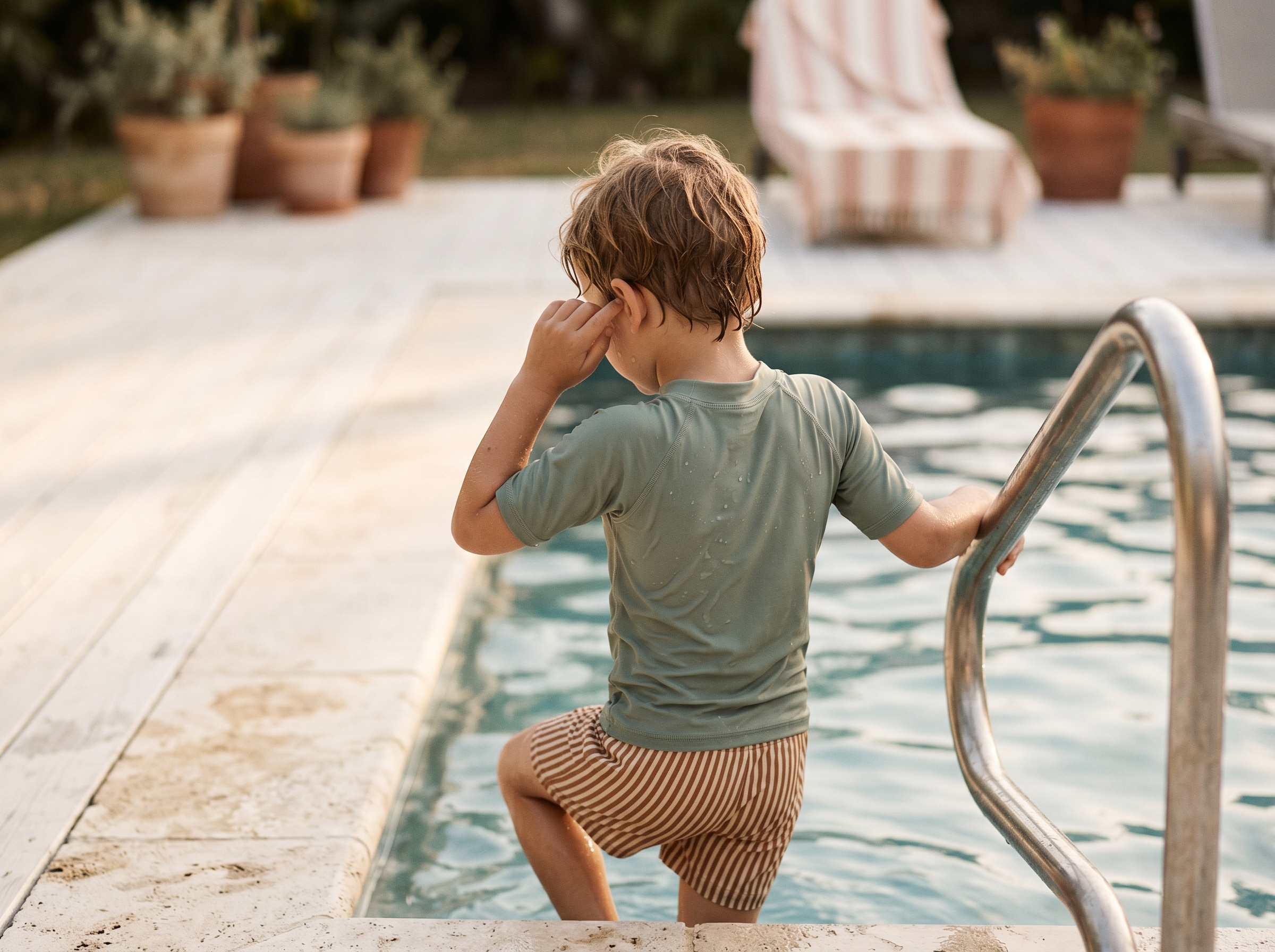
It’s a warm afternoon and your kid climbs out of the pool tugging on their ear. You’re squinting at the medicine cabinet, wondering if this is a “wait and see” situation or an urgent care run at 7 PM. That specific panic is real, and this guide is here to help you sort it out fast.
Wait, Is This Swimmer’s Ear? Here’s How to Tell
The most common mistake parents make is treating swimmer’s ear when it’s a middle ear infection, or the other way around. They’re different problems in different places, and they need different treatments. Getting this wrong delays relief and can make things worse.
Here’s a quick three-point field test you can do right now:
- Pull the earlobe or press the tragus: Gently tug the earlobe downward, or press the small flap of cartilage at the front of the ear canal opening. According to Dr. Felicity Lenes-Voit at Children’s Health, pain that worsens when you pull or press on the outer ear is a strong signal of an external ear infection like swimmer’s ear.
- Check for recent cold symptoms: Middle ear infections almost always follow a cold or upper respiratory illness. Swimmer’s ear usually appears in isolation, after swimming or bathing.
- Notice where the pain lives: Swimmer’s ear pain is right at the ear opening and outer canal. Middle ear pain feels deeper, behind the eardrum, and often shows up alongside a fever.
Symptom Checklist: Swimmer’s Ear vs. Middle Ear Infection
Use this as a starting point, not a diagnosis. When in doubt, your pediatrician is always the right call.
- Swimmer’s ear signs: itchy ear canal, sharp pain when the ear is touched or moved, feeling of fullness or plugged ear, possible clear or yellow drainage, usually no fever
- Middle ear infection signs: deep aching pain, fever, recent upper respiratory illness, no pain when you pull the earlobe
If the symptoms are pointing toward a middle ear infection, skip the home ear drops and call your pediatrician. Home remedies for swimmer’s ear won’t help a middle ear infection, and some drops can actively harm an eardrum that’s already compromised.
Why Your Kid Keeps Getting It (It’s Not Just About Swimming)
Here’s something most articles skip: your kid doesn’t need to be a competitive swimmer to get swimmer’s ear. Baths, hair washing, water parks, sprinklers, and even living in a humid climate can create the same problem. The common factor is water that sits in the ear canal longer than it should.
Earwax is your kid’s first line of defense, and it’s worth understanding why. Earwax is naturally acidic (with a pH around 6.1), acts as a physical barrier, and contains antibacterial enzymes, according to Children’s Health. When water or cotton swabs strip it away, the canal loses its natural protection and becomes vulnerable fast.
Some kids are more prone than others. Children with eczema have a compromised skin barrier throughout the body, including inside the ear canal. Immunocompromised kids face higher risk too. And kids who regularly use cotton swabs? The AAP is clear that nothing smaller than your elbow should go in a child’s ear. Q-tips don’t clean the canal; they push wax deeper and scratch the delicate skin lining.
Lake and ocean water carry higher bacterial loads than a chlorinated pool, though pool chlorine brings its own problem: it dries out canal skin and makes it more susceptible to infection. The ear canal was designed to be dry, and our job is to help it get back there quickly.
The Swimmers Ear Home Remedy That Works
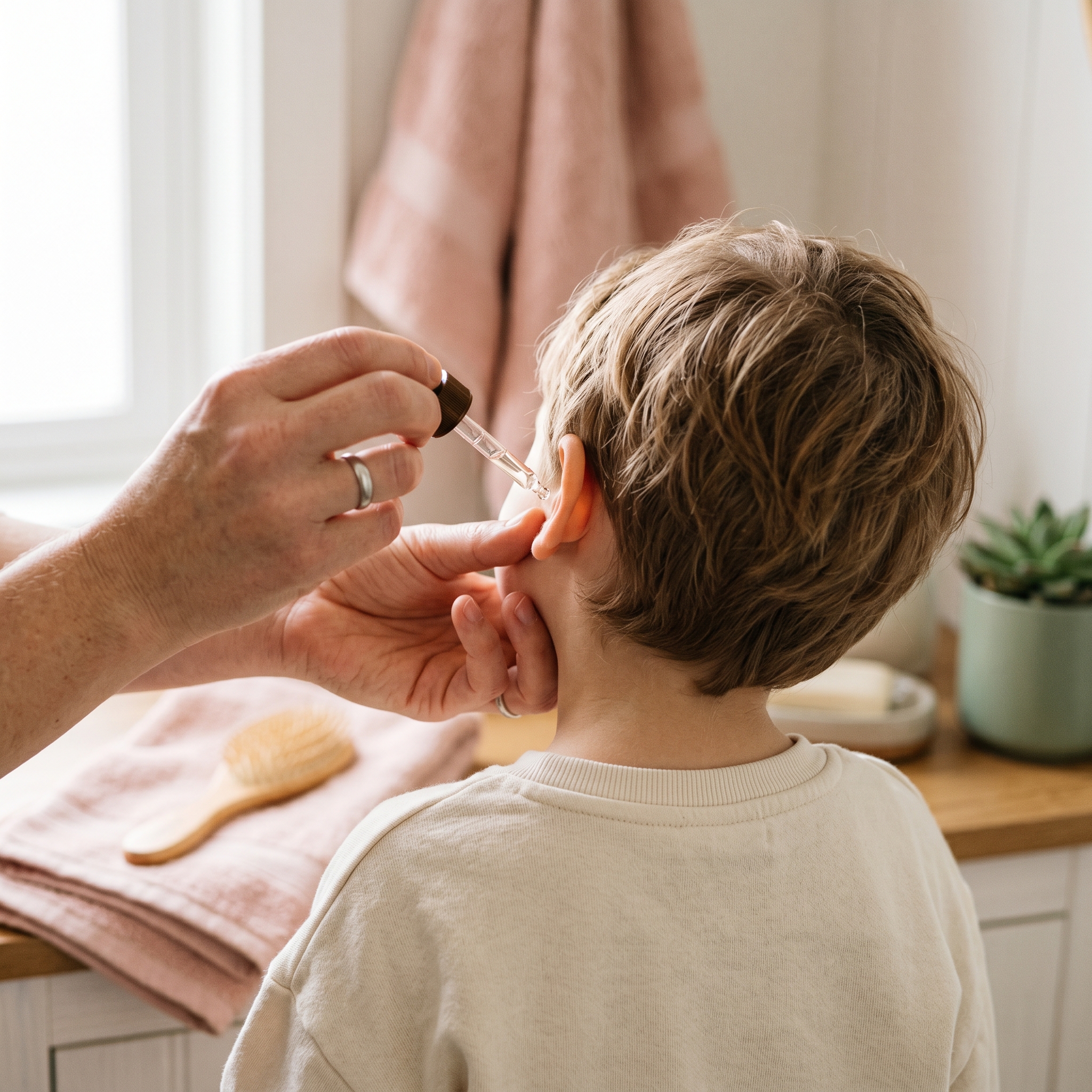
Mild swimmer’s ear can often be managed at home, and the remedy you need is probably already in your cabinet. The Mayo Clinic and Green Hills Pediatric Associates both support the same DIY approach: equal parts white distilled vinegar and about 70% isopropyl rubbing alcohol, mixed and used as ear drops.
The vinegar restores the ear canal’s natural acidic pH, creating an environment where bacteria and fungi can’t thrive. The alcohol promotes evaporation of trapped water. Together, they address both the symptom and the cause.
One safety note before you start: Do not use this remedy if your child has ear tubes, a known perforated eardrum, or active drainage coming from the ear. Check with your doctor first in those situations.
Step-by-Step: How to Do the Vinegar-Alcohol Rinse
- Warm the dropper bottle between your palms for 30 to 60 seconds. Cold drops cause a dizzy sensation that makes kids recoil immediately.
- Have your child lie down with the affected ear facing up.
- Gently pull the earlobe back and down (for younger kids) to straighten the canal and help the drops reach deeper.
- Add approximately 4 to 5 drops of the solution into the canal.
- Have them stay still for 5 full minutes. This is when you put on the first episode of whatever their current favorite show is.
- Tilt the head to let the solution drain out, then gently blot the outer ear with a soft cloth.
- Repeat twice daily. Per Green Hills Pediatric Associates, symptoms should improve within 3 days and fully resolve within 7 days with consistent treatment.
Other At-Home Options Worth Knowing
- Vinegar and hydrogen peroxide mix: Children’s Health suggests a 50/50 dilution of white vinegar and hydrogen peroxide as an alternative option for mild or preventive cases. Skip this if there’s any drainage present.
- Diluted hydrogen peroxide alone: If you’re out of rubbing alcohol, roughly 3% pharmacy-grade hydrogen peroxide diluted 50/50 with water can help dry the canal. It may bubble and feel strange inside the ear, so warn your kid ahead of time so they’re not startled.
- Warm compress: A heating pad on the lowest setting, or a warm (not hot) water bottle held against the outer ear for about 20 minutes, can ease pain and encourage drainage. Never apply direct heat. Green Hills Pediatric Associates recommends this for moderate to severe pain.
- OTC pain relief: Children’s acetaminophen or ibuprofen at age-appropriate and weight-appropriate doses, per AAP guidelines, can take the edge off while the drops do their work.
If your child is generally under the weather alongside the ear pain, the tips in this guide on helping a sick kid feel better cover comfort strategies that pair well with any at-home treatment.
How to Get Ear Drops Into a Kid Who Won’t Cooperate
Every swimmer’s ear article tells you what drops to use. None of them tell you how to get them into a squirming four-year-old’s ear without a meltdown. Here’s what works.
- Temperature first: Warm the bottle between your palms before anything else. Cold drops cause an instant dizzy, cold sensation in the inner ear, and kids will flinch and refuse every time after that. Thirty seconds of palm-warming makes a bigger difference than anything else on this list.
- Positioning by age: For younger kids, lay them across your lap with the affected ear up and rest your arm gently across their body to keep them still. For older kids, the couch works great with a show already playing on the TV.
- Distraction timing: Start the drops during the first 30 seconds of a new episode or their favorite song. The novelty of something starting buys you the still-time you need before they get restless.
- Canal direction by age: For children under 3, pull the earlobe gently down and back to straighten the canal. For older kids and adults, pull it up and back. This small difference changes how well the drops reach the affected area.
- Give them a finish line: Count out loud to 30. Kids handle almost anything when they know exactly when it ends.
- After the drops: Place a cotton ball loosely (not stuffed) at the outer ear opening to catch any drainage and keep the pillow dry during rest.
Swimmer’s Ear Drops From the Store: What to Grab
It’s 9 PM, symptoms started this afternoon, and you’re standing in the drugstore aisle. Here’s what to look for.
- Isopropyl alcohol and anhydrous glycerin drops: Products like Swim-EAR are designed to dry the ear canal after water exposure. These work well for mild cases and prevention.
- Acetic acid (roughly 2%) drops: These are essentially a stabilized vinegar solution in a convenient bottle. Same mechanism as the DIY remedy, just more consistent and easier to dose.
- What OTC drops won’t do: Most over-the-counter swimmer’s ear drops are prevention and maintenance tools. If symptoms have been present for more than 2 to 3 days, or the pain is getting worse instead of better, OTC drops won’t be enough.
When home treatment isn’t cutting it, the prescription route is typically an antibiotic ear drop, sometimes combined with a steroid to reduce swelling. Options like ofloxacin or ciprofloxacin with dexamethasone are common choices your pediatrician or ENT will determine based on your child’s situation. These are not available over the counter, and that’s fine. Sometimes you just need the prescription, and there’s no shame in that.
Stop It Before It Starts: Prevention Habits Worth Building This Summer
The easiest swimmer’s ear home remedy is the one you don’t have to use because your kid never got it. A simple post-swim routine takes less than two minutes and makes a real difference, especially for kids who swim frequently or have had swimmer’s ear before.
The three-step post-swim ear routine:
- Tilt and shake: Head to each side, a gentle little hop. Gravity costs nothing.
- Blow dry on low: Per the Mayo Clinic, hold a hair dryer at least 12 inches from the ear on the lowest warm or cool setting for about 30 seconds. Never use high heat near the ear.
- Preventive drops: If your child is a frequent swimmer or has had swimmer’s ear before, use the vinegar-alcohol solution or an OTC preventive drop after every swim session. It takes 10 seconds.
If your family spends a lot of time at the beach or in open water, pairing these ear habits with other smart beach prep strategies makes for an easier summer all around.
Gear That Helps
- Silicone moldable earplugs: Brands like Mack’s Pillow Soft run about $5 to $7 and work well for school-age kids. They don’t need a perfect seal to be useful; reducing water entry is the goal.
- Swim caps: Not foolproof, but helpful for reducing overall water exposure around the canal during recreational swimming.
- Custom-fitted earplugs: For kids with repeated swimmer’s ear, audiologist-fitted plugs cost roughly $50 to $100 but last for years. Worth considering if you’re dealing with this multiple times per season.
Habits That Make It Worse (Stop Doing These)
- Cotton swabs in the canal: The AAP position is clear. Nothing smaller than your elbow goes in a child’s ear.
- Scratching the canal: An itchy ear canal is miserable, but scratching with a finger or hairpin breaks the skin and opens the door to infection.
- Swimming through active symptoms: It doesn’t cause serious harm, but per Green Hills Pediatric Associates, it significantly slows recovery. A few days out of the water is worth it.
- Waiting too long: Untreated swimmer’s ear can progress from a mild itch to severe swelling and significant pain within days. Starting home treatment at the first sign of itching is always the better move.
When Home Remedies Aren’t Enough: Call the Doctor If…
Home treatment works well for mild cases, but some situations need a prescription. Here’s when to pick up the phone without second-guessing yourself:
- Pain is severe from the start, or it’s getting worse after 48 to 72 hours of consistent home treatment
- Thick yellow or green discharge is coming from the ear
- The ear canal looks visibly swollen shut
- Fever develops alongside ear pain
- Your child has ear tubes, a known perforated eardrum, or is immunocompromised (do not use any home drops without physician guidance in these cases)
- Symptoms haven’t resolved after 7 days
- Pain is spreading to the jaw, face, or neck (rare, but it signals a possible spreading infection that needs prompt attention)
Your gut is a pretty reliable instrument here. If something feels off, call.
FAQ: Swimmer’s Ear in Kids
How do I get rid of swimmer’s ear fast?
The fastest at-home approach combines the vinegar-alcohol drops applied twice daily with an OTC pain reliever and a warm compress for comfort. Most mild cases show clear improvement within 48 to 72 hours of consistent treatment. If the pain is severe from the start, a visit to the pediatrician for prescription antibiotic drops will work faster than any home remedy.
Can I use hydrogen peroxide for swimmer’s ear?
A 50/50 mix of about 3% hydrogen peroxide and water can help dry the ear canal in mild or preventive cases, and Children’s Health notes that a vinegar-hydrogen peroxide blend is a reasonable alternative to the classic vinegar-alcohol mix. It’s not the strongest first choice, but it’s a solid option if rubbing alcohol isn’t on hand. Never use it if your child has ear tubes or a perforated eardrum.
How long does swimmer’s ear last in kids?
With consistent home treatment, per Green Hills Pediatric Associates, symptoms should noticeably improve within 3 days and fully resolve within 7 days. Prescription antibiotic drops typically bring improvement within 24 to 48 hours. Continuing to swim during treatment slows recovery but doesn’t cause lasting harm, so a short break from the water is the smarter call.
Is swimmer’s ear contagious?
No, swimmer’s ear is not contagious. It’s a localized infection of the outer ear canal caused by bacteria or fungi entering through compromised or water-softened skin, not something that passes from person to person. Your other kids are safe to swim right alongside a sibling who has it.
What’s the difference between swimmer’s ear and a regular ear infection?
Swimmer’s ear (otitis externa) is an infection of the outer ear canal, the part between the ear opening and the eardrum. The pain is right at the ear opening and gets sharply worse when you pull or touch the outer ear. A middle ear infection (otitis media) sits behind the eardrum, feels deeper, and almost always comes with fever and recent cold symptoms. They require different treatments, so it’s worth taking a moment to distinguish between them before reaching for any remedy.


