
Picky Eater Tips That Actually Work
Picky eater tips work best when they reduce mealtime pressure, repeat food exposure consistently, and give children age-appropriate control over what they eat.
Last updated: July 2026
Quick Answer: Picky Eater Tips That Actually Work
The picky eater tips that move the needle aren’t about tricks or hiding vegetables in brownies. They’re about understanding what’s driving the refusal in the first place, keeping meals low-pressure, and giving kids just enough control that they stop feeling like every dinner is a battle of wills. Predictable structure, repeated exposure, and one safe food on the plate, that’s the core of what works, backed by both the AAP and CDC.
Here’s the thing about dinner with a picky eater: you can put together a completely reasonable meal and get a reaction like you’ve committed a crime. That low-key guilt, that exhaustion, the internal debate about whether to just make another batch of plain pasta, I know that loop well.
The good news is that most of what actually helps at the table isn’t complicated. It’s just not what most of us instinctively do when a kid is refusing food. Let’s get into it.
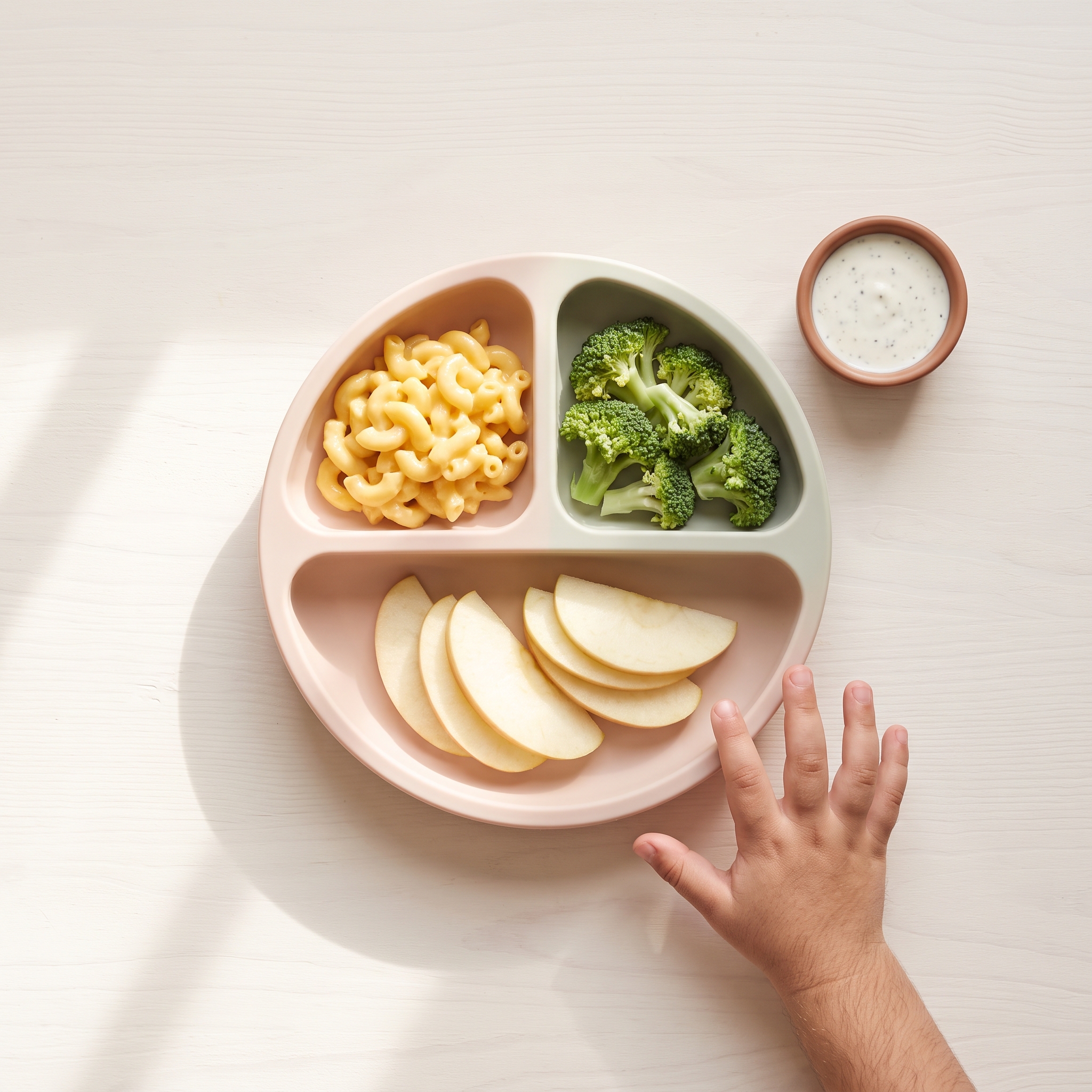
Picky Eating at This Age Is Actually Developmentally Normal (That’s Not Just Something People Say)
Why Toddlers Slow Down on Eating in the First Place
According to the American Academy of Pediatrics at HealthyChildren.org, after the rapid growth of infancy (when babies typically triple their birth weight), a toddler’s growth rate slows significantly and their appetite mirrors that change. Less growth equals less hunger. This is a biology issue, not a food issue, and that reframe alone takes a lot of pressure off.
The AAP also notes that a toddler’s food preferences are unstable. A beloved food one week gets thrown on the floor the next. That’s not defiance; that’s developmental. The CDC confirms that behaviors like favoring only two or three foods or refusing to let foods touch on the plate are common and typically resolve by around age 5.
If you have a toddler picky eater at home, the most helpful thing you can know right now is: this is a phase, not a failure. Your kid is not broken, and you’re not doing it wrong.
Stop the Mealtime Power Struggle Before It Even Starts
You Decide What and When, They Decide Whether and How Much
The single most effective framework for feeding picky eaters is one most parents have never heard of: Ellyn Satter’s Division of Responsibility in Feeding. It’s evidence-based, pediatrician-endorsed, and remarkably simple once you understand it.
- Parent’s job: What food is served, when meals happen, and where eating takes place.
- Child’s job: Whether to eat it and how much.
That’s it. You’re not a short-order cook, and you’re not a drill sergeant. You put the meal on the table; they decide what goes in their mouth.
Why it works: when kids feel pressured, they dig in harder. When they feel some control, resistance drops. The AAP backs this up directly, noting that pressuring kids to eat, or punishing them for refusing, can create active aversions to foods they might otherwise accept over time.
One meal for the family, not a separate kid meal every night. Just make sure at least one thing on the plate is something they reliably eat.
Here’s How Many Times a Kid Actually Needs to See a Food Before Trying It
The number that changes everything: it can take 8 to 10 exposures to a new food before a young child is willing to try it, according to CDC nutrition guidance. Most parents give up after two or three rejections and conclude their kid simply hates that food. They’re not even halfway there.
Here’s what “exposure” actually means, because it doesn’t have to mean eating. Seeing the food on the plate counts. Smelling it counts. Touching it, watching you eat it, helping rinse it before dinner, all of those are legitimate exposures. The bar is a lot lower than you think.
Keep a loose mental tally. If broccoli has appeared on the plate twice and been ignored twice, it’s not a food your kid hates. It’s a food in progress. The best picky eater tips account for the long game, and this one requires real patience.

Small Table Moves That Make a Real Difference Over Time
Serve New Foods Alongside a “Safe” Familiar Food
Never send a plate to the table that’s entirely unfamiliar. Always anchor it with one thing they reliably eat. This keeps the stakes low and prevents the meal from becoming a standoff before anyone’s even sat down.
The formula is simple: new food plus a safe anchor. New food is roasted broccoli. Safe anchor is buttered noodles or a roll they love. That combination changes the entire energy at the table.
Give Them a Real Choice (Just Keep It Small)
Offer two options, not an open menu. “Do you want peas or corn tonight?” keeps them engaged without handing over full control. Even a small choice reduces resistance because toddlers are developmentally wired to assert autonomy. You’re not giving in; you’re channeling it.
Make It a Little Fun Without Making It a Production
The CDC recommends eating the food yourself first and letting your child see you enjoy it. No performance needed, just genuine modeling. Kids this age are watching everything.
A simple smiley face arrangement on the plate or a sandwich cut with a cookie cutter can shift the whole mood for a 2-to-5-year-old. Low effort, decent payoff.
Keep mealtimes screen-free and low-pressure. The AAP’s guidance on family-style meals is consistent on this: no TV, no phones, just conversation. Even brief and pleasant table talk changes the tone, and that tone matters more than the food itself on hard nights. If you’re looking for weeknight meals that work for the whole family without a second round of cooking, kid-friendly dinner ideas built around picky-eater flexibility are worth keeping in rotation.
Build a Picky Eater Food List You Can Actually Plan Around
What Goes on the List
Most advice tells parents to “offer variety” without explaining how to get there from where you’re standing. Here’s a more useful starting point: identify your child’s safe foods first. These are the 8 to 15 foods they consistently accept. That’s not a problem; that’s a foundation.
Common safe foods tend to fall into a few categories:
- Protein: chicken nuggets, scrambled eggs, peanut butter
- Carbs: pasta, toast, rice
- Fruit: apple slices, bananas, grapes (halved lengthwise for kids under 4, they’re a real choking hazard whole)
- Vegetables: corn, raw cucumber, edamame
Once you have your list, you can start building what I’d call bridge foods. A bridge food shares at least one trait with a safe food (color, texture, flavor, shape) and acts as a low-pressure step toward something new.
- Kid likes apple slices? Bridge to pear slices, then to peach.
- Kid likes plain pasta? Bridge to pasta with butter and mild cheese, then to pasta with a simple tomato sauce.
Your picky eater food list becomes a real planning tool when you think of it this way, not just a record of what they’ll currently tolerate.
Using Your List to Plan the Week
Pick one or two nights per week to introduce a bridge food. Not every meal. The rest of the week, lean on safe-food anchors with small additions. That pace is sustainable for both you and your kid, and it leaves room for progress without making every dinner feel like a science experiment. For snack time, pairing from those same safe categories keeps things consistent, easy snacks built around a carb and a protein follow the same logic.
Picky Eater Dinner Ideas That Actually Land on Busy Weeknights
The Deconstructed Meal Format
Taco bars, DIY mini pizzas, build-your-own grain bowls, this format works because the components are separated, the child gets to choose what goes on their plate, and nothing is mixed together (which is often the bigger complaint than the food itself).
- Taco night: Tortilla, shredded cheese, plain ground beef, corn, and lettuce each in their own bowl. Everyone builds their own.
- Mini pizza: English muffins, plain tomato sauce, shredded mozzarella, and a few optional toppings on the side.
- Grain bowl: Plain rice, rotisserie chicken, edamame, and cucumber slices. Simple, familiar, zero cross-contamination complaints.
These are some of my go-to picky eater dinner ideas on nights when I don’t have the bandwidth for a negotiation. Everyone eats from the same ingredients; the control lives with the kid.
“Safe Food Adjacent” Plating
Put one new or unfamiliar food on the plate but not mixed in with anything. Give it a small, non-threatening portion: a tablespoon, not a full serving. Then apply the no-comment rule. Don’t say “just try one bite.” Don’t mention the new food at all. Let curiosity do the work, because it will, eventually.
These picky eater recipes and formats aren’t magic, but they consistently reduce the nightly friction in most households.

When the Problem Is Texture, Not Taste
If your child eats the flavor but spits out the texture, that’s a separate challenge from general food refusal, and it needs a different approach. You’re not working on “trying new things”; you’re working on sensory tolerance.
Don’t rush it.
Some practical texture swaps that help:
- Mushy vegetables: Try roasting them until slightly crispy, some kids tolerate crunch far better than soft.
- Mixed casseroles: Deconstruct them. Keep each component separate and dry on the plate.
- Chunky soups: Blend the same recipe into a smooth version first, then gradually leave more texture in over time.
- Ground meat in sauces: Serve the same protein plain and separate before mixing it into anything.
If texture aversion feels extreme, gagging, refusing entire food groups, or significant distress at the sight of certain foods, that’s worth a conversation with your pediatrician. It can sometimes signal something that benefits from a feeding therapist or occupational therapist’s support.
When Should You Actually Worry About Picky Eating?
The reassurance first: most picky eating is a phase. The majority of kids cycle through it and come out the other side with a broader palate than their parents expected. But there are real signs that warrant a call to your child’s pediatrician, and knowing them helps.
Watch for these red flags:
- The accepted food list drops below approximately 15 to 20 foods total and continues to shrink over time
- Gagging, retching, or vomiting at the sight or smell of food (not just at the table during a refused meal)
- Significant weight loss or failure to grow along their established growth curve
- Extreme distress around mealtimes that goes beyond typical whining, into genuine panic
- Eating behaviors that significantly impact the family’s ability to eat outside the home
These can be signs of ARFID (Avoidant/Restrictive Food Intake Disorder) or a sensory processing issue that benefits from evaluation. Neither of those things means you failed. They mean your kid needs a different kind of support, and asking for it is exactly the right call.
Trust your gut. You know your kid’s baseline better than anyone.
Frequently Asked Questions About Picky Eating
What are the most effective picky eater tips for toddlers specifically?
Predictable meal routines, repeated low-pressure exposure (aim for 8 to 10 times per food before calling it a refusal), one safe food on the plate at every meal, and small choices that give toddlers age-appropriate control. Keep mealtimes screen-free and calm. Pressure and bribes tend to backfire at this age.
What foods should be on a picky eater food list?
Start with what your child already accepts across protein, carb, fruit, and vegetable categories. That’s your baseline. From there, use bridge foods, items that share at least one trait (texture, color, flavor, or shape) with a safe food, to slowly expand the list without turning dinner into a negotiation every night.
How do I plan picky eater dinner ideas without cooking two separate meals every night?
Deconstructed meal formats are your best tool here. Taco bars, build-your-own bowls, and DIY mini pizzas let everyone eat from the same ingredients while the child controls what lands on their plate. Always include at least one safe food anchor so the meal isn’t entirely unfamiliar territory for a picky eater.
When does picky eating become a real concern?
When the accepted food list consistently shrinks below roughly 15 to 20 foods, when there’s extreme mealtime distress beyond typical refusals, or when eating patterns are affecting growth. Any of those situations warrants a conversation with your child’s pediatrician. You’re not overreacting, you’re paying attention.
Is it normal for a picky eater to suddenly refuse a food they used to love?
Yes, and it’s one of the most disorienting parts of this stage. Food preferences in toddlers and preschoolers are unstable from week to week. The AAP describes this as a normal part of how young children develop preferences. Keep offering the food without pressure and don’t pull it from your rotation permanently after one or two rejections.


