
Car Sickness in Kids: What Actually Helps
Car sickness in kids is a form of motion sickness triggered when the brain receives conflicting signals from the inner ears, eyes, and body’s nerves, causing nausea, dizziness, and vomiting.
Last updated: June 2026
Quick Answer: Car Sickness in Kids
Car sickness in kids is one of those things that turns a perfectly good road trip into a parking-lot emergency. The fastest thing you can do when a child starts turning green is crack the window, point them toward the horizon, and kill the screens immediately. According to Mayo Clinic, carefully planned pre-trip meals, fresh air, and smart distractions are the front-line moves that prevent most episodes before they start.
If your family has ever pulled into a random parking lot with wet wipes and a silent, pale child, you know exactly what we’re talking about. We’ve all been there. The good news is that most of this is manageable once you know what’s actually going on and what to do about it.
Why Do Kids Get Car Sick? (The 30-Second Science)
The Brain Conflict Explained Simply
Here’s what’s happening: your child’s inner ear detects movement, but their eyes, fixed on a tablet screen or a coloring book, don’t see any movement happening. The brain gets two completely different stories at the same time, and its response to that confusion is nausea.
The backseat makes this worse. Kids sitting low can’t see out the windshield or spot the horizon, which deepens the sensory mismatch. That’s why the middle seat in the back row, where a child can actually see forward, tends to help.
The vestibular system (the part of the inner ear that processes motion) matures gradually through childhood. Most kids outgrow motion sickness by their early teens as sensory processing stabilizes, which is encouraging when you’re cleaning up a car seat at a rest stop.
Who’s Most at Risk?
Children ages 2 to 12 are the most susceptible group, according to Mayo Clinic. Peak susceptibility sits roughly in the 6 to 12 window, per HealthyChildren.org. Infants and toddlers under 2 are rarely affected, so if you have a baby in the car, motion sickness probably isn’t the culprit if they seem off.
There’s also a possible genetic link: if you or your partner got car sick as a kid, your children have a higher chance of dealing with it too. HealthyChildren.org also notes an emerging connection between childhood motion sickness and a later tendency toward migraines, which is worth mentioning to your pediatrician if your child is a frequent sufferer.
Signs Your Kid Is About to Get Car Sick (Catch It Early)
The earlier you catch it, the better your odds of avoiding a full incident. Older kids can usually tell you when they feel off. Toddlers cannot, so you need to know what to watch for.
General symptoms in kids of all ages:
- Stomach upset or queasiness
- Cold sweat
- Sudden fatigue or quietness
- Loss of interest in food, even a favorite snack
- Dizziness
- Vomiting
Toddler-specific cues (since they can’t say “I feel queasy”):
- Going pale or looking “off”
- Excessive yawning
- Restlessness, fussing, or crying without an obvious cause
- Suddenly losing interest in a toy or snack they were just enjoying
If your toddler goes quiet and glassy-eyed mid-trip, that’s your signal. Pull over before vomiting starts, it gives everyone a better outcome. A few minutes of fresh air and a chance to look at a fixed point on the ground can reset things fast.
What Actually Helps: Prevention Tips That Work
Seat Placement and Body Position
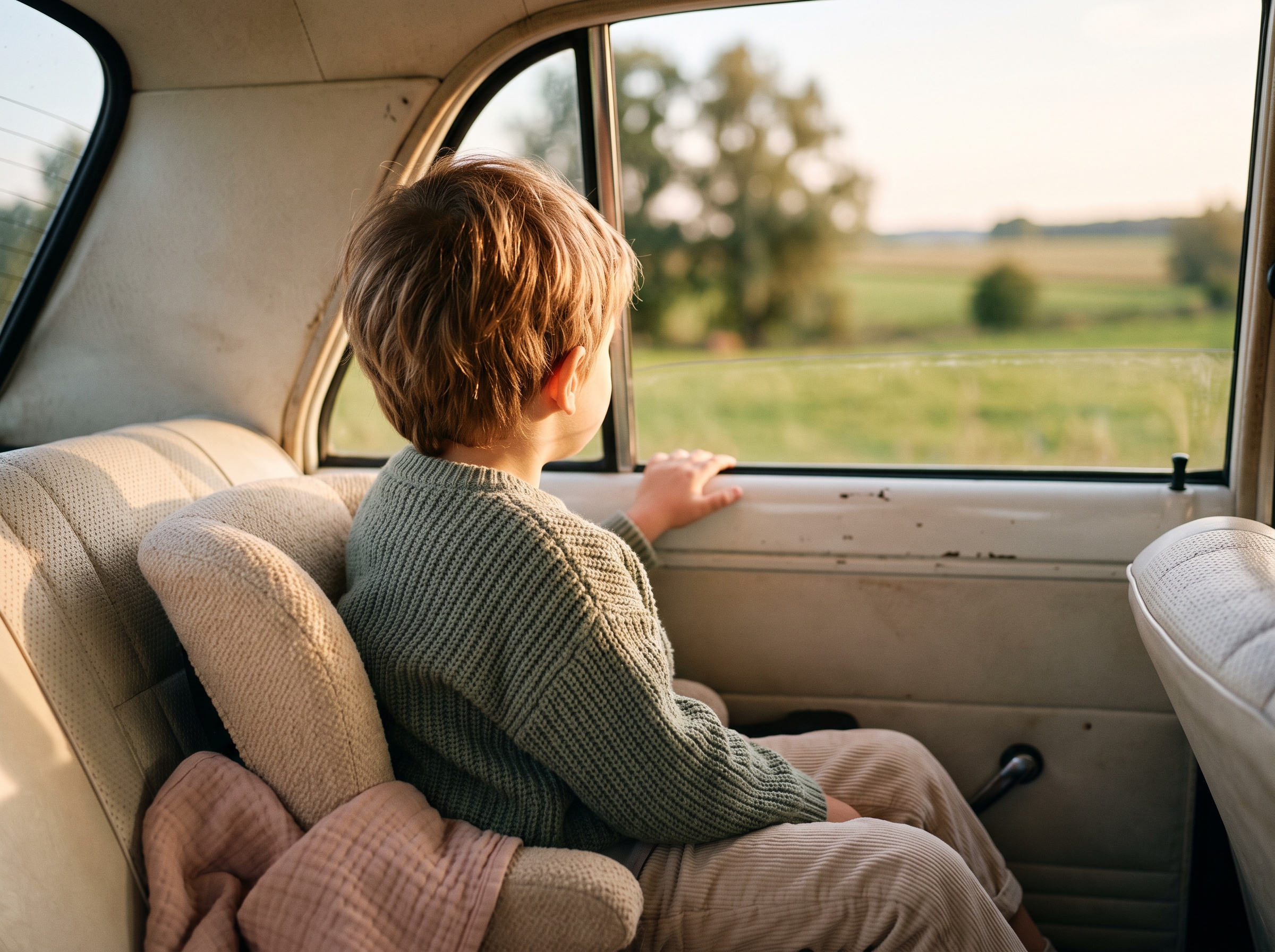
Where your child sits matters more than most parents realize. The middle seat in the back row gives them the clearest view of the road ahead, which helps the brain reconcile what it’s feeling with what it’s seeing.
- Forward-facing car seats: For toddlers recently transitioned from rear-facing, forward-facing reduces the visual mismatch significantly
- Middle back seat: Best position for seeing out the front windshield
- Slight recline: If your seat allows it, reclining slightly can reduce the sensation of movement
- Raise the seat height: A booster pad or cushion can lift smaller kids so they can actually see out the windows
- Avoid rear-facing third-row seats: This is the worst position for a child prone to motion sickness, traveling backward with no visible horizon is a perfect recipe for a bad trip
What to Look at (and NOT Look at)
Eyes on the horizon or a distant fixed object, that’s the goal. When a child stares at the horizon line or the highway divider stretching ahead, it gives their brain consistent visual confirmation of the motion their inner ear is feeling.
- No screens for the first 30 minutes: This is when susceptibility is highest, and a tablet is the fastest way to trigger an episode
- Audiobooks and podcasts: These are your best friends on a long drive, ears-only entertainment keeps kids engaged without the visual mismatch
- Skip the coloring books and handheld games: Any close-focus visual activity during motion is a problem
Food and Drink Strategy
What goes in matters. An overfull stomach and a completely empty stomach can both trigger nausea, so you’re aiming for the middle ground.
- Skip large meals within 1 to 2 hours of departure
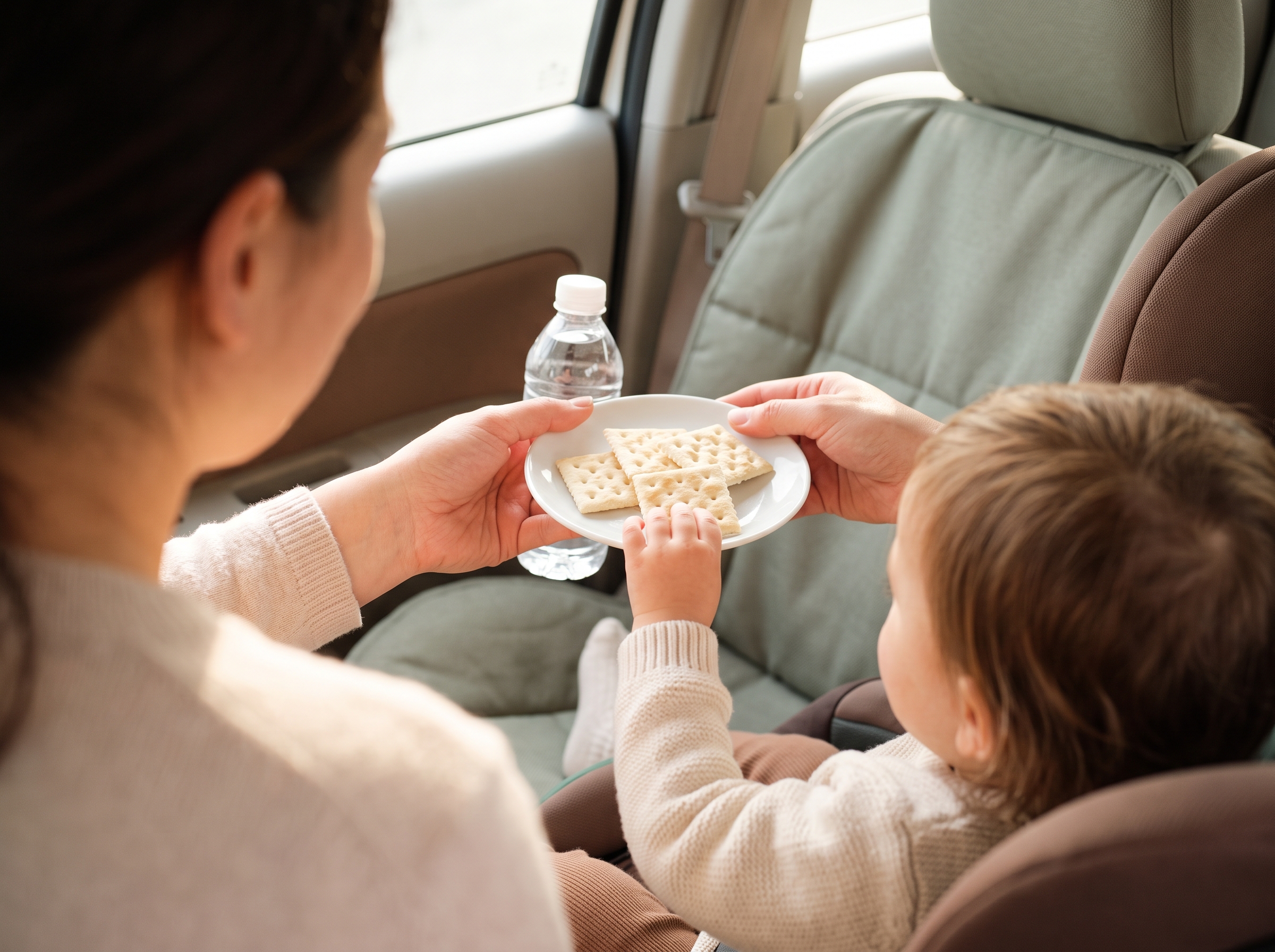
- Offer a small, bland snack 30 to 45 minutes before you leave: dry crackers, plain pretzels, or a piece of toast
- Keep small sips of cold water available throughout the drive
- Avoid greasy, spicy, or strong-smelling foods on travel days entirely
- Skip citrus juice and dairy on driving days, both can worsen nausea in a moving vehicle
- Don’t skip food altogether: an empty stomach can be just as triggering as an overfull one
Fresh Air and Temperature
Cool, moving air is one of the fastest nausea relievers there is. Crack a window even slightly, or point the A/C vents toward your child’s face on a low setting.
Also watch for hidden smell triggers: strong car air fresheners, fast food bags sitting in the footwell, and sunscreen applied inside the car can all make things worse. Keep the car smelling as neutral as possible on driving days.
Distractions That Actually Work
- Audiobooks: Audible Kids and Spotify Kids playlists are great for long stretches
- Car games: 20 Questions, the alphabet game, and license plate bingo keep attention off the stomach
- Conversation: Talking with your child is one of the most underrated tools, it’s engaging and keeps their focus outward
- Nap-time driving: Schedule long drives around nap time when you can. Sleeping kids don’t get car sick.
Car Sick Medicine for Kids: What You Can Give Them
OTC Options (With Dosing Notes)
For kids getting car sick on a longer trip, over-the-counter medication is a practical and safe option when used correctly.
- Dimenhydrinate (Dramamine for Kids): Approved for children 2 and older; give about 1 hour before travel; follow the package label for weight-based dosing
- Diphenhydramine (Benadryl): Sometimes used off-label for motion sickness, but it’s not typically recommended before age 6 unless your pediatrician says otherwise; when it’s used, the same 1-hour-before rule applies, and the drowsiness it causes can actually be a bonus on a long drive
- Important note: Non-drowsy antihistamines like Claritin and Zyrtec do NOT work for motion sickness. Only the drowsy-formula antihistamines are effective for this.
- Always check with your child’s pediatrician before the first use, especially for kids under 6
Prescription Options (If OTC Isn’t Cutting It)
If over-the-counter options aren’t doing the job on longer trips, talk to your pediatrician, but go in with realistic expectations: the scopolamine patch (Transderm Scop) isn’t FDA-approved for use in children, and the FDA has warned it can cause serious heat-related complications, including hospitalization and, rarely, death, with most reports involving patients 17 and younger. Any use in kids would be off-label and only under close medical supervision, reserved for the most severe cases, not a routine next step.
Natural and Supplemental Options
These work best for mild cases and are great to try first, especially for toddlers or for parents who prefer to start with a non-medication approach.
- Ginger: Ginger chews (Gin Gin’s are a popular pick) or ginger ale made with real ginger have small-scale study support for reducing nausea (mostly from adult research; evidence in kids is more anecdotal) and are generally considered safe
- Acupressure wristbands (Sea-Bands): No sedation risk, safe for all ages, mixed evidence, but zero downside and many parents find them helpful for mild cases
- Peppermint: A peppermint hard candy or a drop of peppermint essential oil on a tissue can help some kids over age 2
Honest caveat: natural remedies are worth trying, but don’t rely on them alone for a long road trip with a child who gets sick consistently. If you’re heading somewhere like a winding mountain road, bring the backup.
For longer family drives, pairing these prevention strategies with the tips in our road trip with kids guide can help you plan the whole day around your child’s needs.
Breaking the Anxiety Loop: When Car Sickness Becomes a Fear
Here’s something almost no one talks about: after a few bad car trips, kids can start feeling nauseated before the car even moves. The brain has essentially learned that car equals sick, and it starts the nausea response before there’s any motion at all. This is called anticipatory nausea, and it’s especially common in kids ages 4 to 8.
The anxiety makes the next trip harder, which creates another bad experience, which deepens the fear. It’s a cycle, and it’s worth actively breaking.
How to interrupt the pattern:
- Short practice drives: 10 to 15 minutes, low pressure, no destination pressure, just positive car time
- Give the child a small amount of control: Let them choose the playlist or hold the snack bag; it shifts focus from dread to ownership
- Stop asking “are you feeling sick?”: It directs attention straight to their stomach. Ask about something else entirely instead.
- Celebrate completed trips: Acknowledge it when a drive goes well, even a short one
- If the dread is severe or affecting how much your family can travel, a pediatrician can help with behavioral strategies
And if your child does end up sick, knowing how to make a sick kid feel better quickly can take some of the stress out of recovery stops.
Your Car Sick Kid Travel Kit: Pack This Every Time
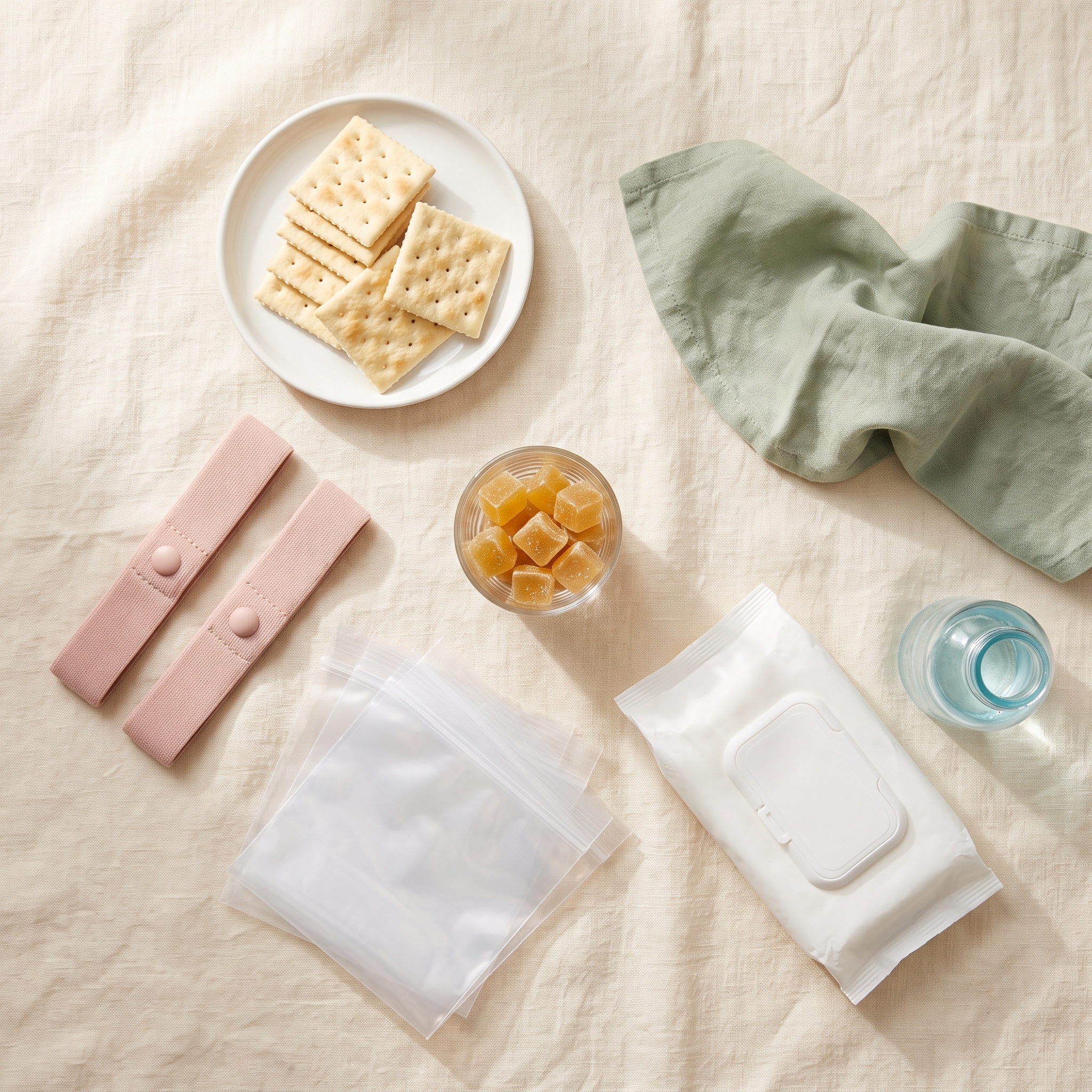
Keep a dedicated pouch in your car’s door pocket or glove box. You’ll want it within reach, not buried in the trunk.
- Resealable plastic bags: The unsung heroes of any family car trip
- Unscented wet wipes and a small hand towel: For quick cleanup without adding more smells to the mix
- A change of clothes for each kid: Rolled up in a labeled gallon Ziploc bag
- Ginger chews or ginger candies: Gin Gin’s or any brand with real ginger
- Sea-Band acupressure wristbands: Get the kids’ size; they’re worth having even if you’re not sure they’ll work
- Plain crackers or pretzels: In a snack-size bag, ready to go
- A small insulated water bottle: Cold water, not juice
- Correct dose of Dramamine for Kids: Pre-measured in a labeled snack bag so you’re not fumbling with packaging mid-crisis
- A spare grocery bag: For anything soiled that needs to be contained for the rest of the drive
Setting this kit up once and keeping it stocked means you’re never scrambling when a trip goes sideways.
Age-by-Age Quick Reference
Under 2 Years Old
Infants and toddlers under 2 are rarely affected by motion sickness. If vomiting is happening in this age group, it’s more likely related to illness than car movement. No OTC motion sickness medication is recommended under age 2 without direct guidance from your child’s doctor. Focus entirely on non-medication strategies if you’re concerned.
Ages 2 to 5 (Toddlers and Preschoolers)
This is when motion sickness can start appearing, and since toddlers can’t articulate queasiness, you’re watching for the non-verbal cues: pallor, excessive yawning, restlessness, sudden disinterest in food. Fresh air and driving during nap time are the most effective strategies at this age. Dimenhydrinate (Dramamine for Kids) is labeled for age 2 and up; diphenhydramine (Benadryl) isn’t typically recommended for motion sickness before age 6 unless your pediatrician okays it sooner. Check with your pediatrician first either way. Ginger chews and acupressure bands are a low-risk starting point.
Ages 6 to 12 (The Most Susceptible Window)
This is the peak window for car sickness in kids. The good news: children this age can communicate their symptoms early if you teach them to speak up at the first sign of queasiness rather than pushing through. Audiobooks and horizon-gazing are your most effective distraction tools. OTC medication is more practical at this age since dosing is more straightforward. If a pattern of dread before trips is forming, start working on the anxiety loop actively.
FAQ: Car Sickness in Kids
What can I give a child for car sickness?
For kids 2 and older, dimenhydrinate (Dramamine for Kids) is the most commonly recommended over-the-counter option; diphenhydramine (Benadryl) is sometimes used off-label but isn’t typically recommended before age 6 unless your pediatrician says otherwise. Either one should be given about 1 hour before travel. For milder cases, ginger chews and acupressure wristbands (Sea-Bands) are safe to try first. Always confirm dosing with your child’s pediatrician, especially for kids under 6.
Why does my toddler get car sick but my baby didn’t?
Motion sickness is rare in infants, then increases as a child’s sensory processing systems develop and start sending competing signals. The peak window is ages 2 to 12, with ages 6 to 12 typically the most affected. It’s completely normal for it to appear in the toddler years and not before.
Can motion sickness in toddlers under 2 be treated with medicine?
OTC motion sickness medications are not recommended for children under 2 without a doctor’s guidance. Stick to non-medication approaches for this age group: fresh air, driving during nap time, forward-facing positioning, and pulling over when symptoms start. These strategies are effective and carry no risk.
Do car sickness symptoms go away as kids get older?
For most kids, yes. Motion sickness tends to improve through the teen years as the vestibular system matures and sensory processing becomes more consistent. Some people do experience it into adulthood, but the severe childhood version typically eases up significantly by the mid-teens.
Are there natural remedies for car sickness in kids?
Ginger (chews, real ginger ale) and acupressure wristbands like Sea-Bands are the most supported natural options. Peppermint can help some kids over age 2. These work best for mild cases and are great first-line options before reaching for medication. For severe susceptibility or long trips on winding roads, have an OTC backup ready regardless of what natural options you try. According to the CDC’s traveler’s health guidance, lying down, shutting eyes, and focusing on a fixed point are also useful strategies when nausea starts mid-trip.


