
Indoor Toddler Activities for Rainy Days
Indoor toddler activities are simple, low-prep play experiences, like sensory bins, balloon games, and art projects, that keep children ages 1–4 engaged and learning at home without needing to leave the house.
Last updated: June 2026
Quick Answer: Indoor Toddler Activities for Rainy Days
The best indoor toddler activities combine short bursts of physical play with creative and sensory experiences, rotated every 30–45 minutes to match a toddler’s attention span. You don’t need specialty toys or a Pinterest-perfect setup. Painter’s tape, a bin of dry rice, and a pack of balloons will take you surprisingly far. This guide covers 12 activities organized by energy level, plus a sample day schedule and a simple prep method to keep the chaos manageable.
You’re looking out the window. It’s raining. Your toddler has already lapped the living room twice before 8 a.m. and is now trying to climb the bookshelf. These rainy day toddler activities are built for exactly that moment, and most of them require almost nothing you don’t already own.
Age Range: 12 months–4 years | Prep Time: 5–15 minutes per activity
Materials: The Rainy Day Supplies Shortlist
You probably already own 90% of this. The goal here is to shop your own pantry and junk drawer before you spend a dime.
Pantry and Recycling Bin Items
- Dry pasta, rice, or oats: sensory bin filler that keeps little hands busy for longer than you’d expect
- Empty plastic containers with lids: stackable, scoopable, perfect for water or sensory play
- Painter’s tape (1–2 rolls): the single most useful rainy day supply in the house, full stop
- Balloons (a pack of 12–20): cheap, versatile, and endlessly entertaining
- Aluminum foil: great for sculpting, crinkling, and sensory exploration
Basic Craft Supplies
- Washable finger paints: emphasis on washable, always
- Large construction paper or a roll of butcher paper: bigger is better for toddlers
- Pom poms in mixed sizes: for sorting, pushing, and color matching
- Foam stickers: easy for small hands, no scissors needed
- Two fly swatters: yes, really. They show up in two activities below and kids love them
Everything listed is available at Target or a dollar store for under $25 total if you’re starting from scratch. Most of it you won’t need to buy at all.
Steps: How to Set It Up Before the Rain Hits
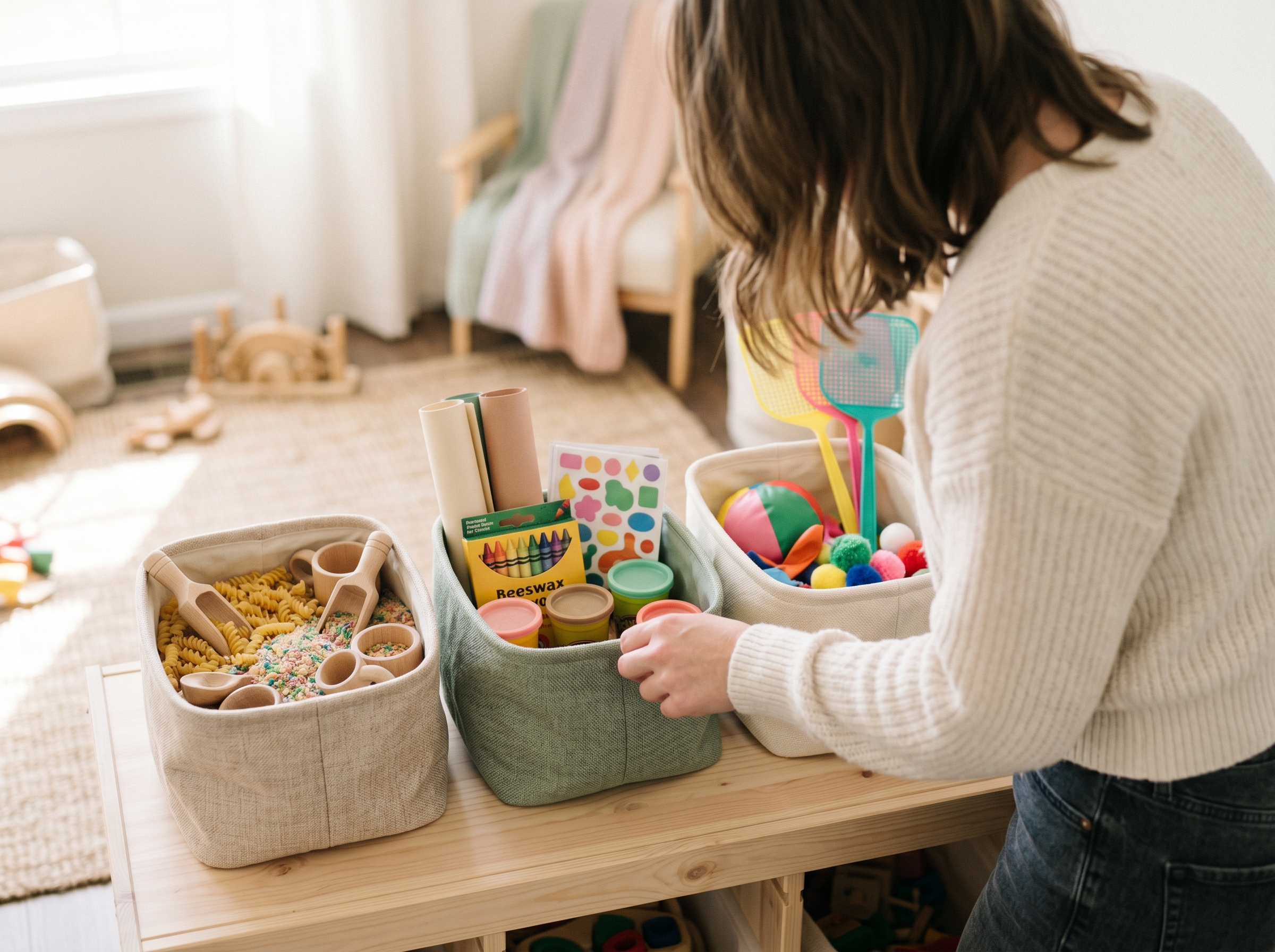
Doing two minutes of pre-staging the night before a forecast rainy day saves you from 45 minutes of chaos in the morning. This is what I call the 5-Basket Method, and it’s the single biggest thing that makes indoor days feel manageable instead of frantic.
- Check the weather forecast the evening before so you’re not caught off guard at 7 a.m.
- Pull out 3–5 plastic bins or baskets (dollar bins at Target are perfect, or just use mixing bowls).
- Fill each basket with supplies for one activity type: one for sensory, one for art, one for gross motor play, one for quiet activities.
- Stage the baskets in a closet, pantry shelf, or low cabinet your toddler can’t reach on their own.
- Rotate one basket out every 45–60 minutes to keep things feeling fresh and prevent the dreaded 10 a.m. meltdown.
Pro tip: Toddlers 18–24 months have an average independent play attention span of about 3–5 minutes. Two-year-olds stretch to roughly 5–8 minutes, and 3–4-year-olds can go 8–12 minutes before needing a transition. Plan your rotations around those windows, not around waiting for a meltdown to tell you it’s time to switch.
The Best Indoor Toddler Activities, Organized by Energy Level
Instead of throwing 12 random ideas at you, I’ve grouped these by energy level so you can build a realistic rainy day schedule. High energy first, creative in the middle, quiet to wind down. It sounds simple, but this sequence is what keeps the whole day from going sideways.
High-Energy: Burn the Zoomies
Start here. A toddler who hasn’t moved their body yet is a toddler who’s about to redecorate your living room.
- Balloon Hockey: Blow up two balloons, hand each of you a fly swatter, and keep the balloon off the floor. For 3-year-olds, set up a “goal” using two plastic cups. This works on gross motor skills and hand-eye coordination without requiring an inch of outdoor space.
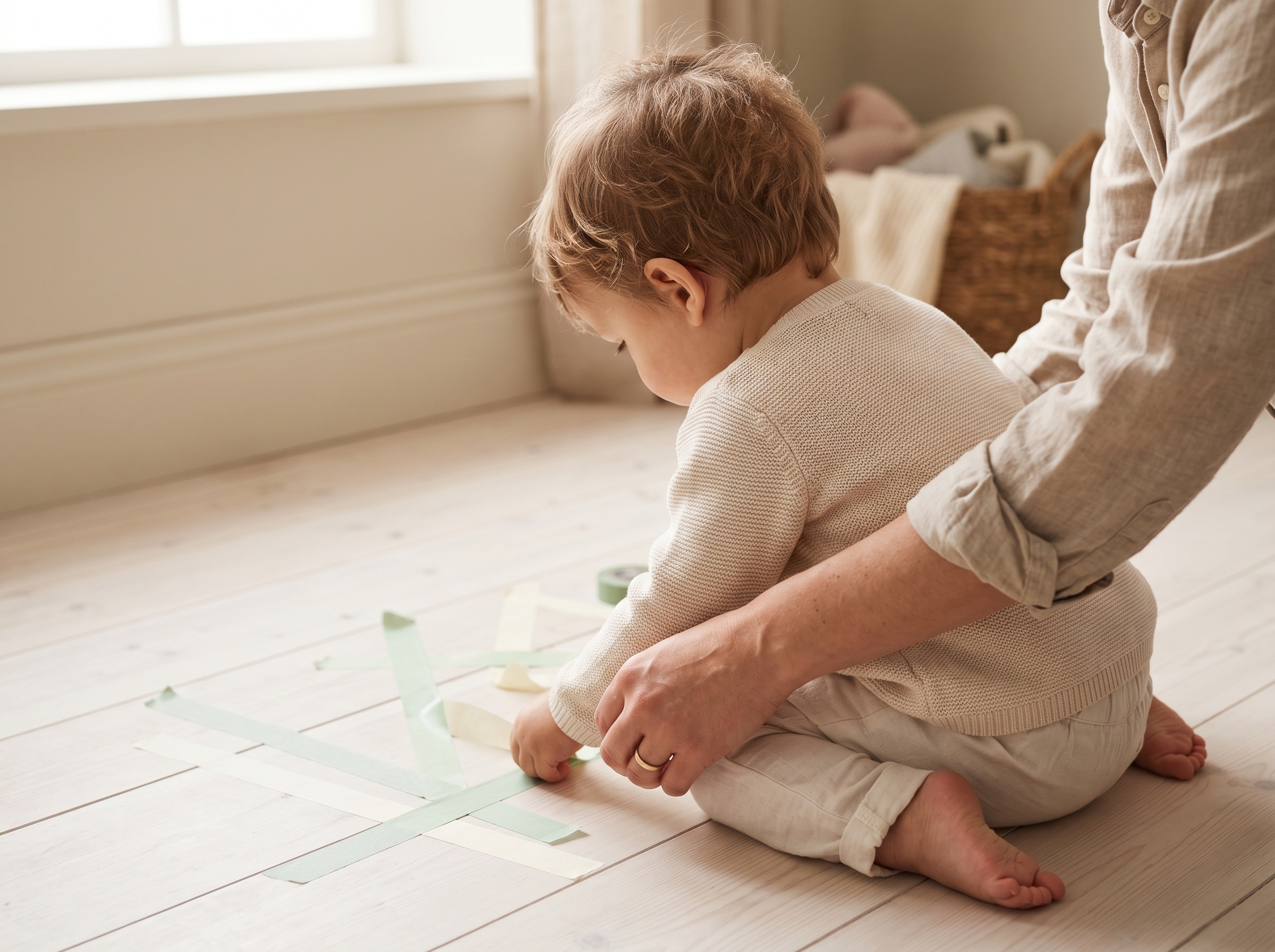
- Painter’s Tape Obstacle Course: Tape a walking path, balance beam line, and jumping dots directly onto hardwood or tile. It peels up cleanly afterward and costs about $3. Scale it for 18-month-olds (simple path to follow) or 3-year-olds (hops, skips, directional arrows).
- Indoor Bowling: Line up six empty plastic water bottles in the hallway and roll a small rubber ball at them. Easy to reset, naturally satisfying for toddlers who love knocking things down (and who doesn’t at this age).
What kids build: balance, bilateral coordination, spatial awareness
Creative and Messy: Embrace the Chaos With a Trash Bag Down
Lay down a shower curtain liner or a trash bag under the table and just accept that things are going to get messy. The cleanup is worth it.
- Pom Pom Push and Color Sort: Cut small holes in a plastic lid, then let younger toddlers push pom poms through. Older toddlers can sort by color into a muffin tin first. Fine motor skills, color recognition, and it buys you a solid chunk of focused time.
- Foil Sculpting: Tear off 12–18 inch sheets of aluminum foil and let your toddler go wild. Crinkle it, mold it, flatten it, wear it as a hat. Zero mess, zero prep, and interesting sensory texture for kids who are still exploring how materials feel.
- Big Paper Mural: Tape a 3-foot section of butcher paper or flattened grocery bags to the kitchen floor. Let your toddler crawl-paint with fingers or foam brushes. Going big like this taps into gross motor movement even during art time, which keeps wiggly kids more engaged.
According to ZERO TO THREE, play activities for toddlers aged 12–24 months serve a dual purpose: they keep children entertained while actively building language and communication skills. Narrating what your toddler is doing during these creative activities, “you’re pressing the red pom pom through the hole!”, builds vocabulary at the same time.
Two more rainy-day favorites worth adding to the rotation: no-mess painting for color play that stays contained, and the baking soda and vinegar experiment for a quick hit of fizzy kitchen science.
What kids build: fine motor skills, color recognition, creative expression, sensory processing
Quiet and Focused: Wind-Down and Nap Transition Activities
These work well before nap, during the 4–6 p.m. witching window, or any time you need to bring the energy down a few notches.
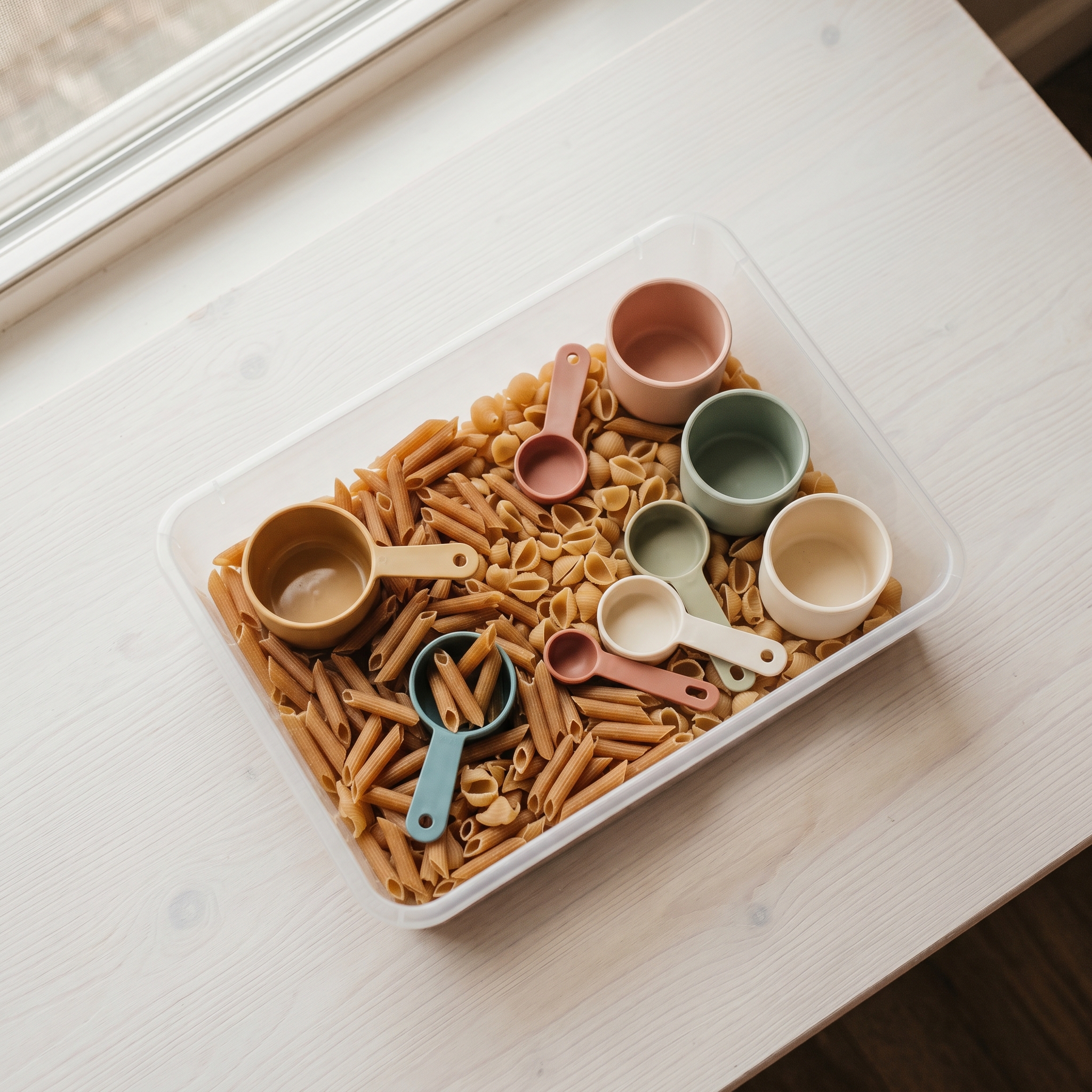
- Dry Sensory Bin: Fill a plastic storage bin with 2 cups of dry rice or oats, then bury a few small cups, scoops, and toys inside. Place the bin on a flat bedsheet to catch any spills. Takes four minutes to set up and keeps toddlers occupied for far longer than logic would suggest.
- Sticker Story Pages: Give your toddler a sheet of construction paper and a pile of foam stickers. Two-year-olds will “tell” you what they’re making as they go. It’s early narrative language development disguised as pure fun.
- Pillow Book Fort and Story Time: Stack two couch cushions, drape a blanket, and bring in 5–7 board books. This is especially effective in the late afternoon slump. Something about an enclosed cozy space makes toddlers settle in faster than a regular book reading session on the couch.
What kids build: sensory exploration, early literacy, language development, self-regulation
Indoor Games for Toddlers That Use Zero Supplies
These are your backup plan when the sensory bin is drying and everyone’s climbing the walls at 3 p.m. No supplies, no setup, just go.
- Copy Cat or Mirror Game: You make a face or body movement, they copy. Then switch. Builds social-emotional connection and body awareness, and toddlers find it hilarious.
- “Find the [Color]” Scavenger Hunt: Call out a color and race to touch something that color somewhere in the room. No materials needed, burns energy, and teaches colors through movement instead of flashcards.
- Freeze Dance: Any kids’ playlist (Cocomelon, Raffi, Jack Johnson Kids) plus the rule to freeze when the music stops. Works for 18 months and up. Younger toddlers don’t always follow the freeze rule, which is half the fun.
- Sock Slide Racing: Hardwood or tile floor plus socks equals a free activity that kids love. Set up a “finish line” with a couch cushion and race down the hallway.
These indoor activities for toddlers don’t require you to own a single thing. They’re worth keeping in the back of your mind for the moments when you’ve run out of prepared ideas and still have two hours until dinner.
The Rainy Day Activity Rotation Schedule
Here’s roughly how I’d sequence a full rainy day with a 2-year-old using the activities above. Adjust for your child’s nap time and energy. Activities are interchangeable.
| Time | Activity Type | Example Activity |
|---|---|---|
| 8:00–8:45 AM | High-Energy | Balloon Hockey or Tape Obstacle Course |
| 9:00–9:30 AM | Creative/Messy | Big Paper Mural |
| 9:30–11:00 AM | Free play and snack | Sensory bin stays out |
| 11:00–11:30 AM | Quiet Focus | Sticker Story Pages |
| After nap | Zero-supply game | Freeze Dance or Color Hunt |
| 4:00–5:00 PM | Wind-down | Book Fort and Story Time |
The American Academy of Pediatrics consistently points to unstructured play as important for toddler development, which is why the free play window in the middle of the day is worth protecting. Don’t fill every minute. The sensory bin sitting out while your toddler drifts in and out of playing with it counts.
If the rain clears by late afternoon, even 10 minutes of puddle jumping outside can reset everyone’s mood before dinner. Bookending a long indoor day with a little outdoor time, even a short one, makes a real difference.
For more screen-free ideas that build early skills with everyday items, the toddler learning activities roundup pairs naturally with this list.
Looking for more like this? Browse all our kids activities and crafts.
Frequently Asked Questions
How do you entertain a 2-year-old indoors?
The most effective approach combines short rotation windows (switch activities every 30–45 minutes), a mix of physical and creative play, and minimal screen time. Sensory bins, painter’s tape obstacle courses, and balloon games are all reliably engaging for 2-year-olds, whose attention spans run roughly 5–8 minutes for focused independent play. Having supplies pre-staged in labeled bins makes the transitions much smoother so you’re not scrambling between activities.
What are the best indoor activities for toddlers under 2?
For toddlers under 2, focus on sensory-rich and movement-based play with close supervision. Dry sensory bins with rice or oats, foil sculpting, mirror games, and freeze dance where you hold and sway together are all great fits. Keep activities short and follow their lead; at this age, 3–5 minutes of engaged play is a win, not a disappointment.
Are there free indoor toddler activities I can do at home?
Yes, and a lot of them. The zero-supply games section above (Copy Cat, Color Hunt, Freeze Dance, Sock Slide Racing) costs nothing at all. Foil sculpting uses aluminum foil from your kitchen. A dry rice sensory bin uses pantry staples. If you need to pick up a few things like painter’s tape, balloons, and pom poms, the full list of 12 activities can be covered for under $15 in new supplies total.
How do I keep my toddler busy on a rainy day without screens?
The rotation method is your best tool here. Toddlers struggle with long stretches of any single activity, so the trick isn’t finding one magical thing that holds attention for three hours. It’s cycling through high-energy, creative, and quiet activities in sequence, with short free play windows in between. Physical variety matters too; you can’t stack quiet activities back to back without an energy spike happening in the middle of them.
How long should each indoor activity last for a toddler?
Use developmental attention span benchmarks as your guide rather than waiting for frustration to signal it’s time to switch. Toddlers 18–24 months do well with 3–5 minute focused stretches. Two-year-olds can manage roughly 5–8 minutes. Three and four-year-olds can often stretch to 8–12 minutes before needing a change. Build your rotation schedule around those windows and you’ll find the day flows much more smoothly than it does when you’re reacting to meltdowns.


