
Teaching Kids to Swim: When and How to Start
Teaching kids to swim means building water survival skills and swimming ability, with formal lessons appropriate for many children starting as early as age 1.
Last updated: July 2026
Quick Answer: Teaching Kids to Swim
According to the American Academy of Pediatrics, swim lessons can begin for many children starting at age 1, though emotional and developmental readiness matters just as much as age. Before that milestone, parent-infant water acclimation classes are a wonderful starting point. The goal in those early years isn’t stroke technique; it’s comfort, safety instincts, and building a foundation of confidence in the water. You can read the AAP’s full guidance on swim lessons for more detail.
There’s something about swim season that brings out low-grade parenting anxiety like nothing else. You’re standing at the edge of a pool wondering if your kid is ready, if you waited too long, or if you’re somehow already behind. Teaching kids to swim is one of those decisions that feels bigger than it looks on the surface, and honestly, it kind of is. This post covers when to start, how to read your child’s readiness cues, what actually happens inside those lesson pools, and what to do if your older kid still hasn’t learned.
Swimming Isn’t Just a Summer Skill, It’s a Safety Skill
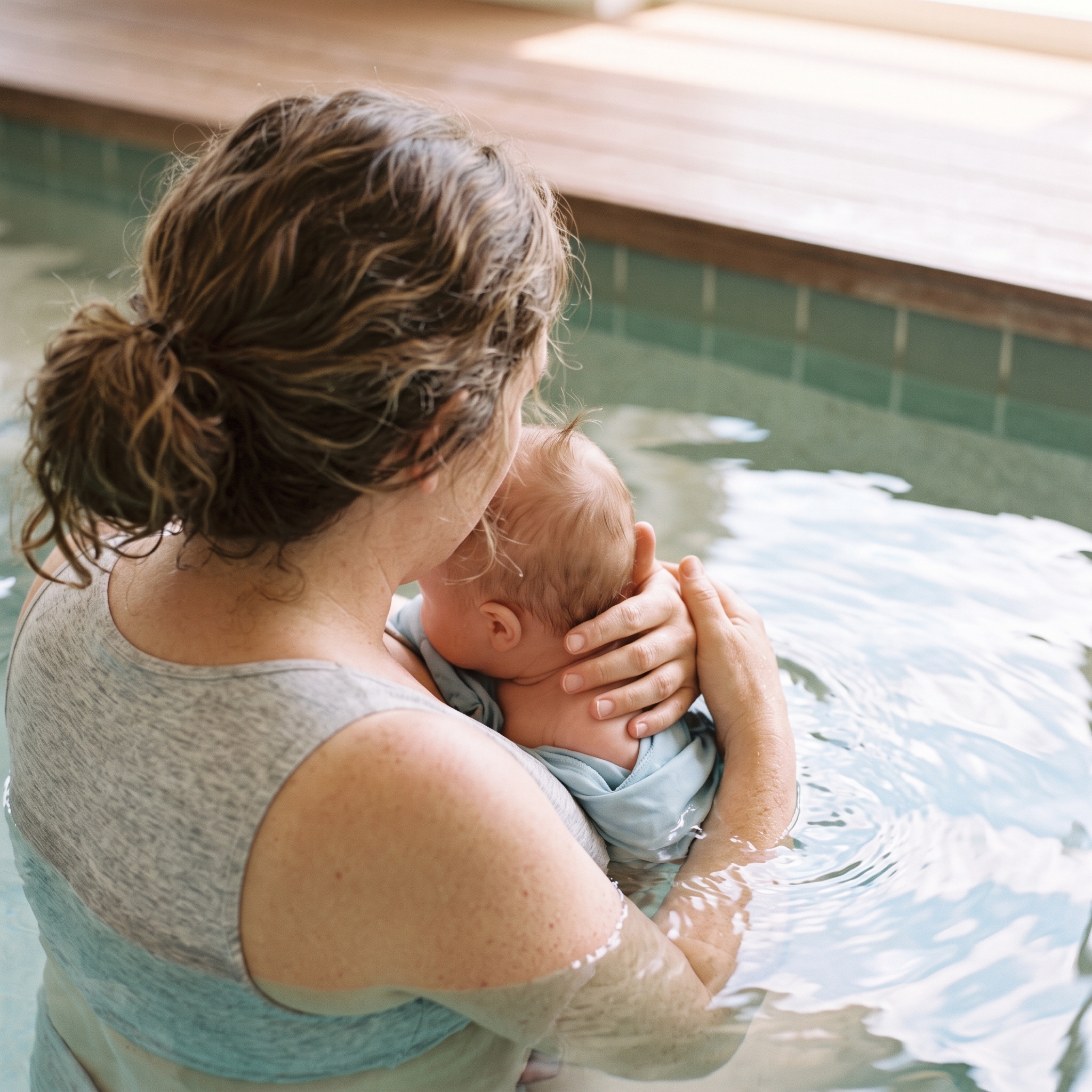
I don’t want to lead with fear, but this context matters. According to the CDC, drowning was the leading cause of unintentional injury death for children ages 1 to 4 in the United States between 2015 and 2019. The CDC also reports that approximately 800 children under age 14 drown each year in this country. That’s a real number, and it’s worth sitting with for a second.
The AAP frames swim lessons as one protective layer among several, not a guarantee of safety, but a meaningful one. Supervision, fenced pools, and swim lessons together form a net that no single strategy can replace on its own. This is exactly why the when and how of getting your child into a quality program deserves more attention than it usually gets.
So When Should Kids Actually Start Swim Lessons?
This is the question almost every parent Googles at some point. The answer isn’t one-size-fits-all, but there are some clear guideposts by age group.
Baby Swim Lessons (Under 12 Months)
Before age 1, the AAP does not recommend formal swim lessons. That doesn’t mean you can’t get your baby near water, though. Parent-infant water acclimation classes are wonderful from birth onward. Think singing, gentle splashing, and getting comfortable with the sensation of water on the face. No swimming technique, no pressure, just sensory exposure and bonding.
These sessions typically run 15 to 20 minutes and are as much about you feeling confident in the water with your baby as they are about your little one. If your area offers them, they’re worth it.
Toddler Swim Lessons (Ages 1 to 3)
The AAP updated its guidance in 2019 to reflect that swim lessons can begin for many children at age 1, provided they’re developmentally ready. This isn’t a blanket instruction to enroll every one-year-old on their birthday; it’s a green light for families whose toddlers seem ready and curious.
At this age, you’re usually in the water with your child. Parent-child formats are standard, and the focus is on survival basics: back floating, grabbing the wall, learning how to enter and exit. Sessions stay short, typically 15 to 20 minutes. More than that and you’re fighting attention spans, not teaching swimming.
If your toddler is anything like most, they’ll have opinions about the pool that change week to week. Some days they’re fearless; some days they’re clinging to you like a barnacle. Both are normal. Pairing swim practice with other toddler learning activities that build body awareness and confidence can help carry that progress beyond the pool.
Preschool and School-Age (Ages 4 and Up)
By their 4th birthday, the AAP says most children are ready to start swim lessons if they haven’t already. By this age, kids can follow instruction more consistently, process cause and effect, and respond to a teacher’s cues without a parent in the water beside them.
Most community programs, including the YMCA and American Red Cross Learn-to-Swim, structure their independent lessons starting at age 4. By ages 5 and 6, most children can realistically float on their back, kick with coordination, and swim short distances on their own. Lessons at this age typically run 30 minutes, and children 6 and up can handle up to 45 minutes productively.
How to Tell If Your Child Is Ready (Age Isn’t Everything)
Age is a starting point, not a finish line. In my experience, some of the most important readiness signs have nothing to do with the birthday. Look for these before you book:
- Water comfort: Your child can be near or in water without panicking.
- Instruction following: They can handle simple two-step directions (“kick your feet, then reach your arms”).
- Separation tolerance: For classes where you won’t be in the pool, they can handle brief separation without falling apart.
- Curiosity over fear: They show interest in water rather than consistently avoiding it.
If your child is fearful, that’s not a reason to skip lessons. It’s a reason to choose the right program and instructor. Fear is workable; the wrong teacher can make it worse. If you’re unsure where your child lands developmentally, their pediatrician is a good first call.
What Actually Happens in Baby, Toddler, and Kid Swim Classes
Walking into your child’s first swim class is a lot less intimidating when you know what to expect. Here’s a quick breakdown by age:
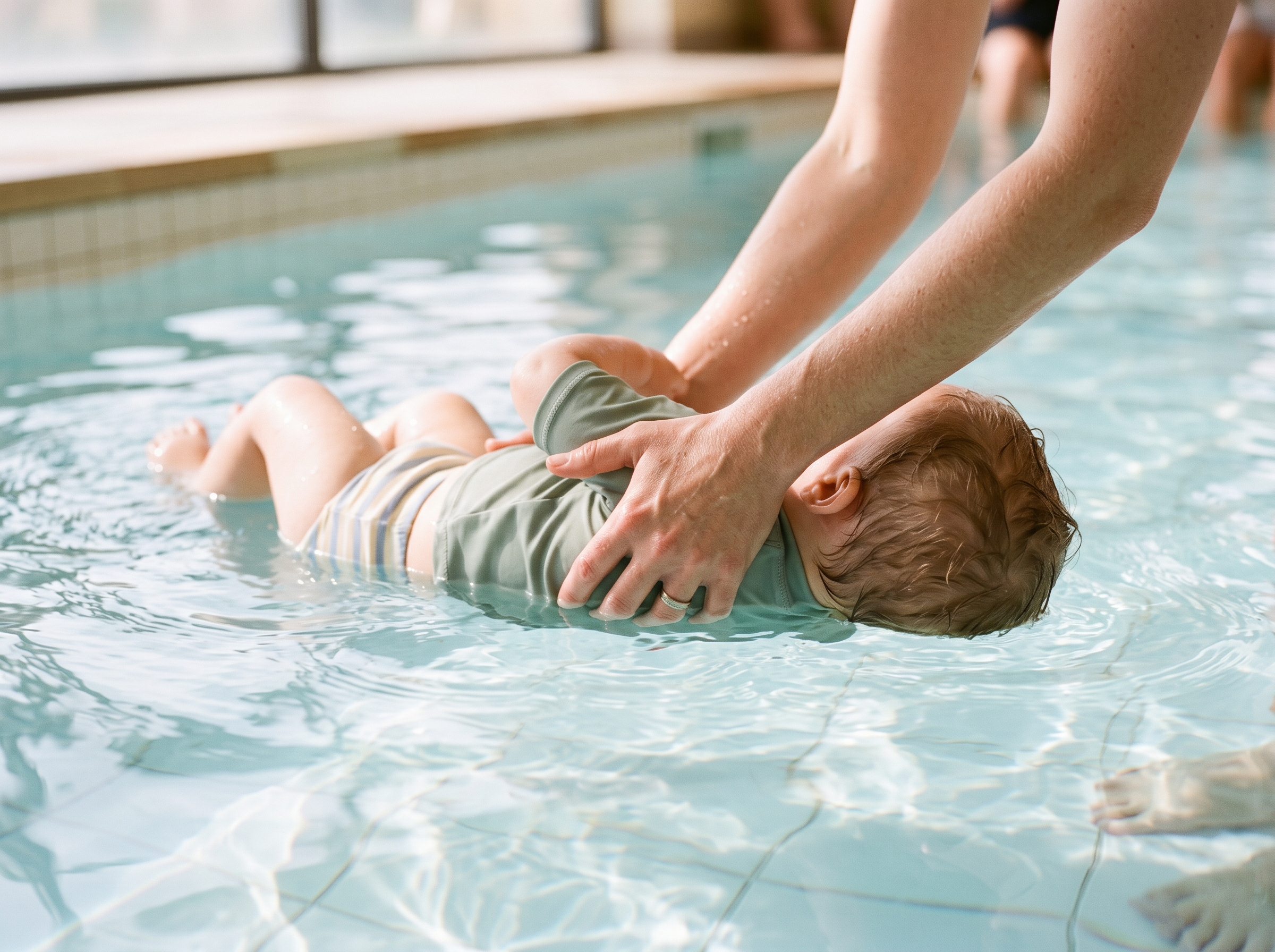
- Infant and baby classes: Parent in water with baby; songs, gentle water pours over the head, brief face-in-water experiences, floating with full support. No technique, all sensory.
- Toddler swim lessons: Parent often in the water or poolside; games, music, wall grab practice, back float with support, water entry and exit drills.
- Ages 4 to 6: Instructor-led small groups (4 to 6 kids is a good ratio); freestyle kick, basic arm movement, breath control introduction.
- Ages 7 and up: Stroke refinement, diving, distance swimming, and timed challenges introduced.
You may also come across the ISR method, which stands for Infant Swimming Resource. It’s a specific survival-focused program designed to teach infants and young toddlers to float independently after a water entry. It’s different from traditional group lessons and uses a one-on-one format. It’s worth researching if early survival skills are your top priority.
A quality class at any age should have a clear progression system, positive reinforcement, low child-to-instructor ratios, and zero forced submersion. If an instructor is pushing a child’s head underwater against their will, that’s a red flag.
What to Look For When Choosing a Swim Program
This is the step most parents skip because they assume any swim program is a good swim program. Not quite. Here’s what actually matters:
- Instructor certification: Look for a Water Safety Instructor (WSI) credential from the American Red Cross or an equivalent certification body.
- Child-to-instructor ratio: No more than 4 to 1 for children under 3; no more than 6 to 1 for ages 4 to 6.
- Pool temperature: The ideal temperature for young children is between 84 and 89 degrees Fahrenheit, per American Red Cross guidance. A cold pool tanks lesson retention fast.
- Curriculum transparency: Can they show you what skills are covered at each level and how your child progresses?
- Progression system: Are there clear milestones so you know your child is actually advancing?
Program types to consider include the YMCA, American Red Cross Learn-to-Swim, private instructors, and community recreation centers. Each has trade-offs in cost, flexibility, and class size. Private lessons cost more but offer faster individual progress, especially for nervous or older beginners.
The biggest red flag: any program that uses fear, shame, or force as teaching tools. A child who’s been traumatized in swim class is harder to reach the second time around.
Practicing at Home Between Lessons (What Actually Helps)
Here’s something the top swim lesson guides rarely mention: what you do between lessons matters a lot. You don’t need to be a swim coach to reinforce what an instructor is teaching. The goal is reinforcement, not replacement.
A few age-appropriate at-home ideas that work well:
- Bathtub (infants and toddlers): Blow bubbles into the water, practice pouring water over the face willingly (not by surprise), kick the legs while holding the sides.
- Backyard pool (toddlers and preschool age): Wall grab drills, jump-in-and-turn-to-wall practice, floating with light parental support under the back.
- Full pool (school-age): Freestyle arm-and-kick coordination, treading water with a timer, underwater ring retrieval games.
At-home practice always requires direct adult supervision in the water, not just an adult present nearby. That rule doesn’t flex. When heading to open water like the beach or a lake, the preparation shifts too; the beach hacks that actually keep kids safe apply just as much as what they’ve learned in the pool.
Sticking to the two or three skills your instructor introduced that week is the most effective approach. Consistency between the pool and home keeps the momentum going without confusing your child with new technique before they’ve locked in the basics.
The Floaties Question, Here’s the Honest Answer
Most parents assume floaties (water wings) are a safe training tool. Swim instructors largely disagree, and here’s why: traditional arm floaties hold a child in a near-vertical body position, which is the opposite of the horizontal position needed for actual swimming. Kids who rely on them often have to unlearn that upright posture before they can progress.
What instructors tend to recommend instead: kickboards, swim noodles, and puddle jumpers used during supervised play, not as a substitute for staying close. If your child refuses to get in without floaties, use them as a temporary confidence bridge while working through lessons in parallel. Transition away from them gradually as skills improve.
One non-negotiable: a US Coast Guard-approved life jacket is always appropriate in open water, regardless of your child’s swim level. That’s not a floatie; that’s a safety device, and the two aren’t interchangeable.
Teaching Older Kids Who Never Learned (Or Who Are Scared)
If your 9-year-old can’t swim, I want you to hear this: you didn’t miss the window. Older kids can and do learn, often faster than toddlers because they understand instruction and can self-correct more efficiently.
What does get more complicated is the emotional layer. Older kids feel embarrassed. They compare themselves to younger children in group classes. Parents sometimes carry guilt about not starting sooner. All of that is normal, and naming it out loud actually helps.
A few things that make a difference for older beginners:
- Private lessons over group classes: For children ages 8 and up who are nervous or behind their peers, private instruction removes the social pressure and lets them progress at their own pace.
- Instructors who specialize in anxious beginners: Ask specifically when you’re inquiring about programs. Not every instructor has the temperament for this.
- A clear skill progression: Breath control first, then floating, then kick, then freestyle arms, then putting it all together. Breaking it into small wins keeps older kids from feeling overwhelmed.
Many YMCAs and Red Cross programs quietly offer teen and adult beginner tracks alongside their kids’ classes. These exist, they’re worth asking about, and there’s no shame in using them. Progress at 10 or 12 years old is still progress.
Frequently Asked Questions About Teaching Kids to Swim
At what age should kids start swim lessons?
According to the American Academy of Pediatrics, swim lessons can begin for many children starting at age 1. Before that, parent-infant water acclimation classes are a great introduction without any pressure to perform. The AAP considers swim lessons a priority for most families by age 4. Keep in mind that emotional and developmental readiness matters as much as the birthday, so when in doubt, loop in your pediatrician.
Can I teach my child to swim at home without a formal instructor?
Parents who are strong swimmers can reinforce skills between lessons at home, things like blowing bubbles, wall grabs, and floating practice are all fair game. That said, initial instruction from a certified swim instructor ensures your child builds correct technique and water safety habits from the start. Home practice works best as a supplement to formal lessons, not a replacement.
Should I use floaties when teaching my toddler to swim?
Traditional arm floaties tend to work against independent swimming by encouraging a vertical body position instead of a horizontal one. Swim instructors generally prefer kickboards, noodles, or instructor-supported floating for actual skill-building. If your child needs floaties to feel safe, treat them as a short-term confidence tool and phase them out as formal lessons progress. US Coast Guard-approved life jackets remain essential for open water at any skill level.
What if my child is 8, 10, or 12 and still hasn’t learned to swim?
It’s not too late. Older kids often progress faster than toddlers once they’re in the right setting because they can follow instruction and process feedback more easily. Look for beginner-specific programs or private lessons with instructors who have experience working with anxious or older beginners. Many community pools, YMCAs, and Red Cross programs offer exactly this, and it’s worth asking directly rather than assuming it doesn’t exist.
How long should a swim lesson be for a toddler versus an older child?
Infant and toddler lessons should cap out at 15 to 20 minutes; more than that and you’re working against their attention span, not with it. Children ages 3 to 5 can typically handle up to 30 minutes. Kids ages 6 and up can sustain a productive 45-minute session. Longer doesn’t mean better, especially for the youngest learners where fatigue and overstimulation can undo the progress made in the first half of class.


