
Fine Motor Spider Activity for Preschoolers
Spider activities for preschoolers are hands-on, themed learning tasks that use spider imagery, props, and books to build fine motor skills, counting, and sensory exploration in children ages 2 to 5.
Last updated: July 2026
Quick Answer: Spider Activities for Preschoolers
The best spider activities for preschoolers combine fine motor practice with playful theming: paper plate web lacing, spider counting mats, and book-companion crafts are all low-supply, high-engagement options. These activities work for Halloween season, a fall bug unit, or any time your family is curious about the natural world. Most take under 20 minutes to set up, and everything you need runs about $5 to $8 from a dollar store.
Real spiders? Hard pass. But plastic spider rings on a hand-laced paper plate web? I’m into it. If you’ve got a spider theme week coming up at school or you’re just looking for something more purposeful than screen time on a Tuesday afternoon, this guide covers everything: the core paper plate web lacing activity, age-specific variations, a book companion idea, and the little tips that keep things from going sideways mid-craft.
This activity is designed for ages 2 to 5, takes 10 to 20 minutes to set up, and lands somewhere in the low-to-medium mess range. It builds fine motor skills, counting, and bilateral coordination, which sounds fancy, but really just means both hands working together.
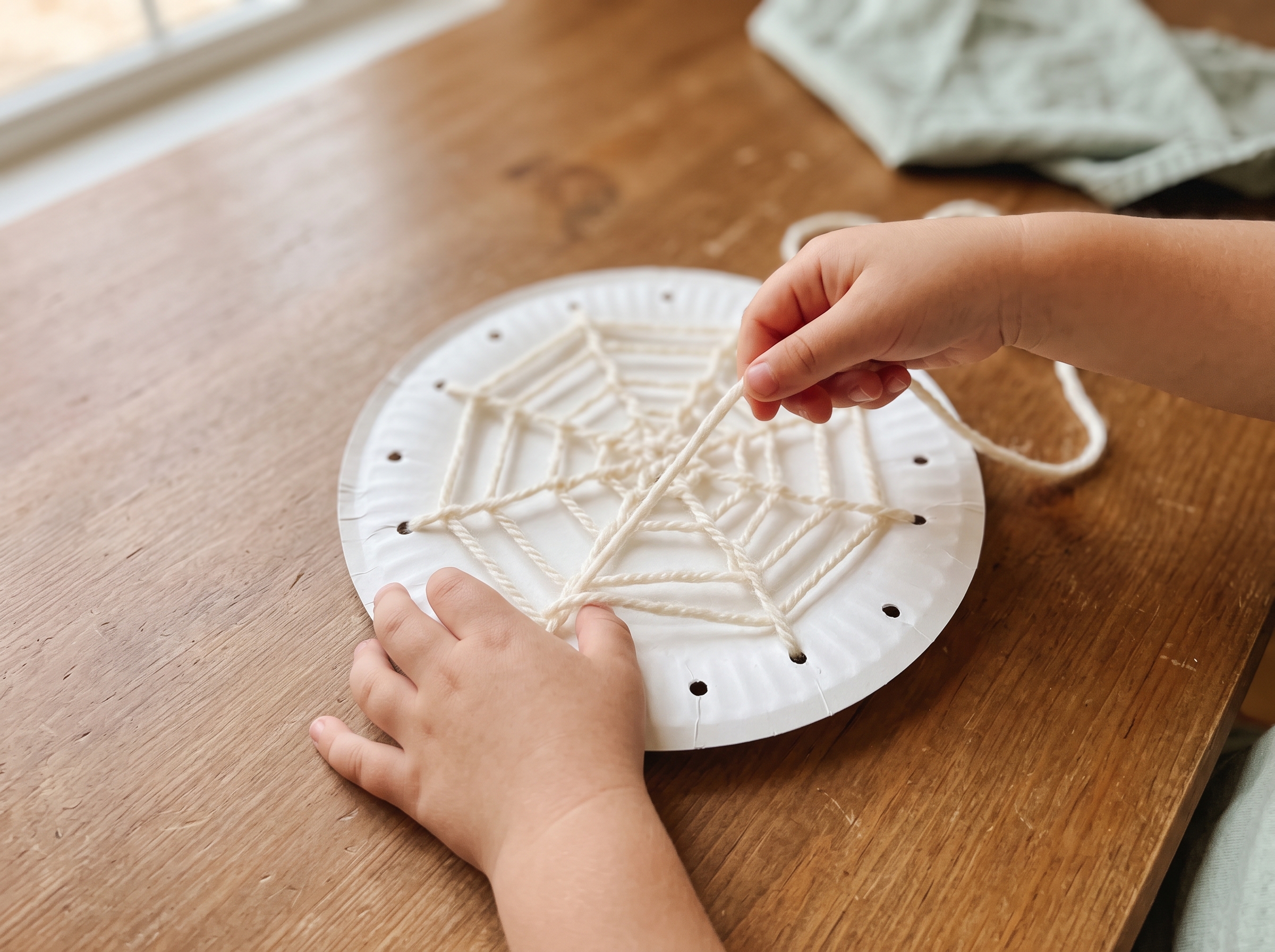
Why Spider Activities Are Perfect for Preschool (and Honestly, Any Time of Year)
Spiders aren’t just a Halloween prop. They’re a legit science topic: arachnids with eight legs, multiple eyes, and the ability to spin silk. That’s fascinating to a four-year-old who has approximately zero fear filter. A spider theme works as a standalone activity, a companion to a longer fall unit, or a springtime bug study extension.
The seasonal flexibility is one of the biggest selling points. October is obviously peak spider season in classrooms, but spring bug units fit the theme just as well. And if your preschooler has recently discovered The Very Busy Spider by Eric Carle, this paper plate web activity is the perfect hands-on follow-up. Reading the book first, then building the web together, makes the whole experience feel cohesive instead of random.
If you’re also looking for sensory-focused setups to run alongside this craft, a toddler sensory activity using rice or sand pairs well with a spider theme bin.
What Kids Learn (The “Why This Works” Section)
Fine motor development is the obvious win here, but it’s worth unpacking what that actually means at different ages. By around age 3, most children can begin snipping with child-safe scissors. By ages 4 to 5, cutting along a line in 3 to 4 inch strips becomes more manageable, and cutting out spider leg strips directly targets that skill.
Hole-punching builds intrinsic hand muscles, which are the same small muscles that support pencil grip, a skill that typically starts emerging around ages 3.5 to 4. Lacing yarn through the holes adds bilateral coordination, meaning both hands have to work together and take turns. That’s a meaningful milestone for 3 to 5 year olds.
The focus piece is worth mentioning too. A lacing activity asks a 3-year-old to stay engaged for roughly 5 to 10 minutes. A 5-year-old working on a more complex web can stretch that to 15 to 20 minutes. That kind of sustained attention isn’t a small thing at this age.
There’s language learning tucked in here as well. Naming spider anatomy (legs, body, web, silk, spinnerets) builds vocabulary naturally during the activity. And counting exactly eight holes for eight legs reinforces one-to-one correspondence, which is a foundational early math concept.
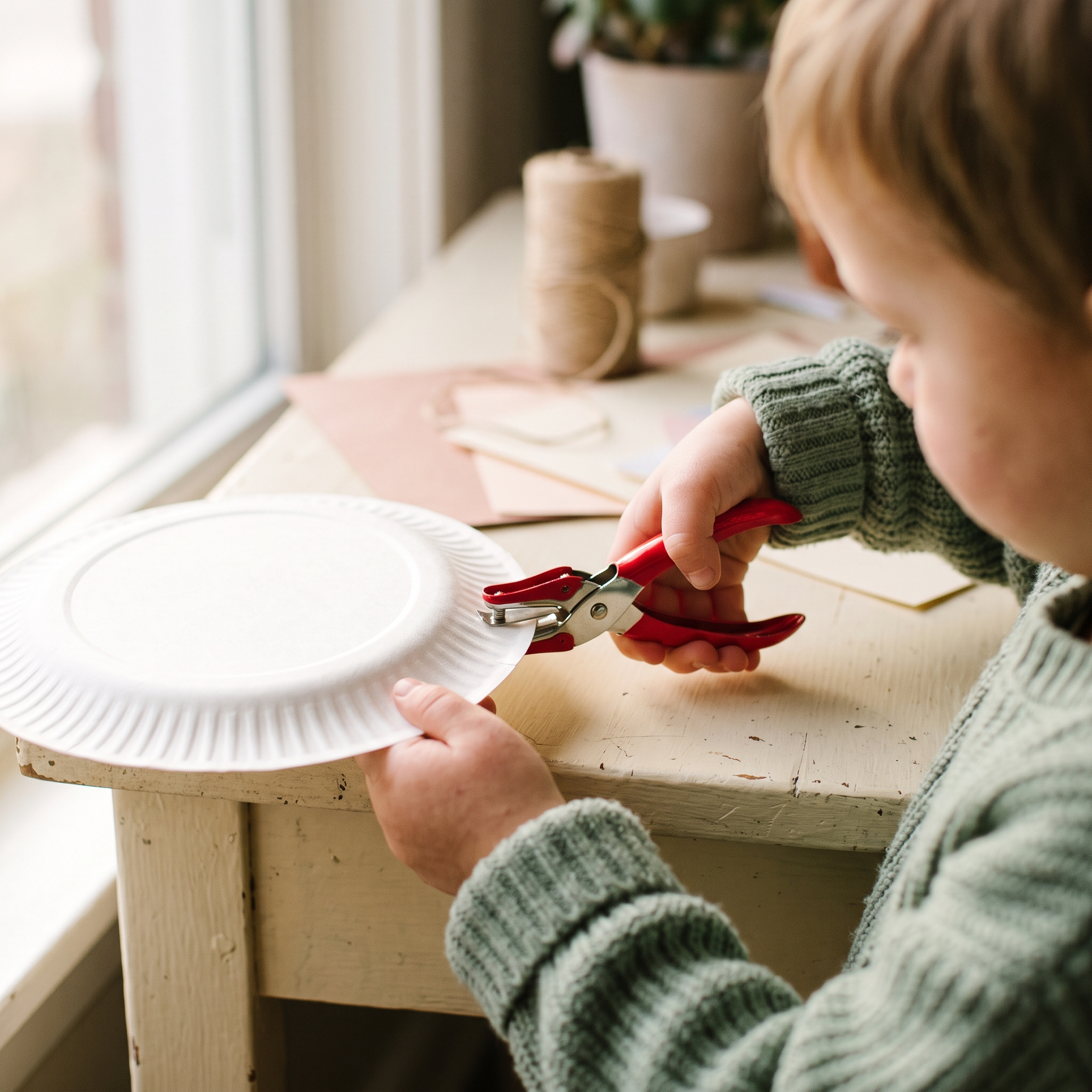
What You’ll Need
This activity runs about $5 to $8 total when you shop the dollar store. Per child, that works out to roughly $1 to $2, which makes it practical for classroom and daycare settings too.
- Paper plates: Standard 9-inch white plates, one per child
- Hole punch: Single-hole, standard size
- Yarn: White or sparkly yarn cut into approximately 1-yard lengths, one per child (stretchy white cobweb craft fiber also works great)
- Tape: Clear tape to wrap yarn ends and create a DIY needle tip
- Black marker or black paint: For drawing the web pattern on the plate
- Child-safe scissors: 5-inch blunt-tip, for kids who want to try cutting their own leg strips
- Plastic spider rings or spider stickers: For decorating the finished web
- Optional: Pony beads (at least 9mm) for the spider necklace variation
- Optional: The Very Busy Spider by Eric Carle for the read-aloud pairing
How to Set It Up
These steps work for home or classroom. If you’re prepping for a group, punch the plates the night before, punching 15 or 20 plates solo is a lot, so recruit a helper or do it in batches.
- Use a black marker to draw a simple spider web pattern on the paper plate, or let older preschoolers sketch their own.
- Punch 8 to 12 evenly spaced holes around the outer edge of the plate using the hole punch.
- Cut yarn into approximately 1-yard lengths, one per child.
- Wrap a 2-inch piece of tape tightly around one end of each yarn piece to create a stiff “needle” tip.
- Tie the other end of the yarn securely to one of the punched holes with a simple knot.
- Show children how to weave the yarn through the holes across the plate, creating lines that form the web.
- Once the web is complete, clip a plastic spider ring onto the finished design.
- Optional: Punch two additional holes at the top of the plate and loop a ribbon through to create a hanger.
Spider Activity Variations to Try
The core paper plate activity is a strong starting point, but there are plenty of ways to adapt it based on your child’s age and what skills you want to target.
For Toddlers (Ages 2 to 3)
Spider activities for toddlers work best when the setup is minimal and the sensory experience is front and center. Reduce the hole count to 6 instead of 12 for easier lacing. Pre-punch all holes and pre-tie the yarn so your toddler only handles the weaving part.
Finger painting a spider web with white paint on black paper is another great toddler-friendly option, and marble rolling in white paint works beautifully for this. For more sensory-rich ideas alongside this activity, a no-mess painting setup keeps things contained and toddler-approved.
For Preschoolers (Ages 4 to 5)
Let older preschoolers use the hole punch independently to add their own holes around the plate. That grip-and-squeeze motion is a solid hand-strength exercise in itself. You can also make the math intentional: punch exactly eight holes together, counting aloud as you go, to reinforce the eight-legs concept.
Tracing spider leg lines on paper before cutting adds a pencil control layer that transfers directly to early writing readiness. It’s a small addition that packs a developmental punch.
The Very Busy Spider Book Companion Version
Read The Very Busy Spider by Eric Carle before starting the craft. Talk through how the spider built her web, thread by thread, ignoring all the farm animals trying to distract her. Then build your own web together.
After lacing, use the finished web as a prop to retell the story. Bring in small farm animal figurines or stuffed animals from around the house and act out each page. This is where the very busy spider activities idea really comes alive, because the craft becomes a literacy tool and a dramatic play extension all at once.
Spider Necklace Fine Motor Variation
Thread pony beads (at least 9mm for toddler safety) onto a pipe cleaner, counting out eight beads for eight legs. Bend the pipe cleaner into a simple spider body shape. This variation is great for ages 3 and up with supervision, and it’s one of those activities that keeps little hands busy longer than you’d expect.
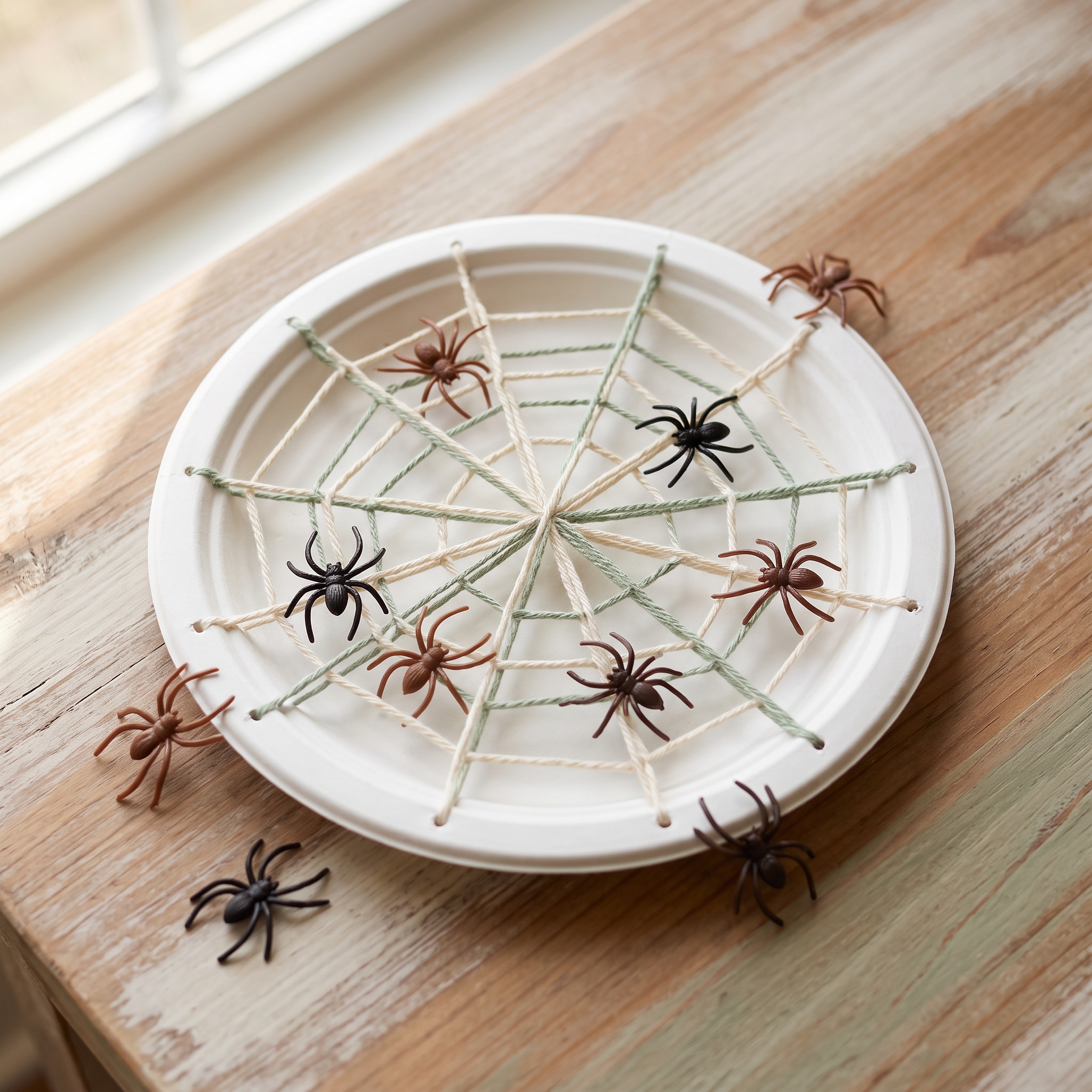
Tips for Making This Activity Run Smoothly
A few things that make the difference between a craft that works and one that ends in tangled yarn and tears:
- Yarn tangle prevention: Only give each child their pre-cut length. Longer yarn means more tangles, especially for younger kids.
- Hole punch struggles: If your 3-year-old can’t squeeze the punch on their own, show them to use two hands on the handle. This is completely normal at that age and not a sign they’re doing it wrong.
- Tape needle tip: Keep a few pre-made tape-tipped yarn pieces as spares. The ends fray mid-activity, and having a backup ready saves the whole session.
- Group settings: Pre-assemble plates the night before if you’re running this for a class. Recruit a helper or punch in batches of five so it doesn’t become a solo marathon.
- Display idea: Hang finished webs on a sunny window. Light coming through the yarn creates a beautiful effect, and kids love seeing their work displayed.
- Small-parts safety: Plastic spider rings and pony beads are small enough to be a choking hazard for any child who still mouths objects. Keep them out until you’re supervising the craft directly, and for your youngest toddlers, swap the rings for flat spider stickers instead.
The American Academy of Pediatrics notes that open-ended, hands-on creative play supports both fine motor development and early problem-solving in preschool-age children. You can explore their guidance at HealthyChildren.org.
For printable spider counting mats and classroom-ready spider theme resources, Early Learning Ideas has a solid collection worth bookmarking. And for developmental milestone context as you plan age-appropriate activities, the CDC’s developmental milestones guide is a helpful reference.
Frequently Asked Questions About Spider Activities for Preschoolers
What are the best spider activities for preschoolers at home?
Paper plate web lacing, spider marble painting, spider counting mats, and book-companion crafts tied to The Very Busy Spider are all strong home options. They require minimal supplies, most of which you probably already have, and they work for a range of ages without a lot of prep.
Are spider activities appropriate for toddlers?
Yes, with a few modifications. Simplify lacing by reducing the number of holes and pre-tying the yarn so your toddler only handles weaving. Swap any sharp tools for safe alternatives and lean into the sensory and tactile elements. Spider activities for toddlers work best when the setup is short and the hands-on time is long.
What fine motor skills do spider activities build in preschoolers?
This type of activity targets hand strength (hole punching), pincer grip (threading yarn), bilateral coordination (lacing with both hands), scissor control (cutting leg strips), and pencil grip development (tracing web lines). It covers a lot of ground in a single, playful session.
How do I connect spider activities to The Very Busy Spider?
Read the book first, then use the paper plate web activity as a hands-on retelling tool. After the craft, bring out small farm animal figures so your child can act out the story using their finished web as the main prop. It turns a simple craft into a full literacy experience.
Can I use these activities in a preschool classroom or daycare?
Absolutely. The supply cost runs about $1 to $2 per child, which makes it budget-friendly for group settings. Pre-punch all plates the night before, and prep a few extra tape-tipped yarn pieces as backups. For mixed age groups, offer the simplified toddler version (fewer holes, pre-tied yarn) alongside the full version for older preschoolers so everyone can participate at their own level.


