
Valentine Heart Bird Feeder Craft
A heart bird feeder is a DIY feeder made by pressing a birdseed-and-gelatin mixture into a heart-shaped cookie cutter, letting it set overnight, and hanging it outdoors, a simple Valentine’s Day craft kids ages 4 and up can finish in about 30 minutes of active time.
Last updated: July 2026
Quick Answer: Heart Bird Feeder for Kids
This craft comes together with pantry staples and one heart-shaped cookie cutter. Kids mix birdseed with a gelatin-and-flour binder, press it into the mold, poke a hole for twine, and let it dry overnight. The next day you’ve got a Valentine’s craft that keeps giving, every time a chickadee swoops in, your kid gets to see their own handiwork at work. It doubles as a neighbor gift, a classroom project, and a gentle intro to backyard wildlife, all in one.
Everyone assumes Valentine’s Day crafts are either too messy, too fussy, or forgotten the minute the glitter hits the table. This one’s different. It takes a little patience (the overnight dry time is non-negotiable), but the payoff is a feeder that hangs outside for weeks and brings actual birds to your window. That’s the part kids talk about long after February 14th is behind you.
If your family already loves a good heart-shaped art project, this one adds a nature twist that extends way beyond the craft table. And if you’re making these for gifting, a batch of four to six hearts fits perfectly in a kraft paper bag with a handwritten tag.
Why Kids Love This Bird Feeder Craft
Most crafts have a short life span. You hang them on the fridge, they fall behind the couch, done. A bird feeder craft for kids changes that dynamic because the craft keeps doing something after it’s made. Kids can watch from the window, track which birds visit, and feel responsible for feeding something wild. That’s a different kind of pride than coloring a worksheet.
According to the U.S. Fish and Wildlife Service, an estimated 59 million Americans feed birds in their yards, making backyard bird feeding one of the most popular wildlife activities in the country. Joining that group with a homemade feeder feels more meaningful than dropping a plastic one from a box.
This is also a gentler entry point than a pine cone bird feeder craft if you don’t have pine cones on hand. The cookie cutter mold gives younger kids (ages 4 and up) a clean shape to work with, and the pressing and patting step is satisfying in a sensory way. Toddlers ages 2 to 3 can pour and stir with supervision, though they’ll need help with the mold step.
The heart shape makes it holiday-perfect, but the recipe works year-round. Make it in spring with flower-shaped cutters, at Thanksgiving with leaf shapes, the method is the same. Speaking of which, if you’re looking for more warm-weather inspiration, there are plenty of ideas waiting in our spring crafts for kids roundup to keep the momentum going after Valentine’s Day.
Materials
You probably have most of this on hand already. The one ingredient worth a special trip is unflavored gelatin, it’s the binder that holds everything together and usually runs about $2 for a box of four packets at any grocery store. A 4-cup bag of mixed birdseed costs around $5 to $6 at Walmart or Target, making the whole batch under $8 total.
- 4 cups birdseed: mixed variety works well; avoid mixes heavy in milo (the small round red seed most North American birds skip)
- 1 envelope (¼ oz / 7g) unflavored gelatin: Knox is the most widely available brand
- ¾ cup all-purpose flour
- ½ cup warm water
- 3 tbsp coconut oil or vegetable shortening: melted
- Large mixing bowl
- Whisk and spatula or wooden spoon
- Heart-shaped cookie cutter: 3 to 4 inches recommended
- Nonstick cooking spray
- Parchment-lined baking sheet or tray
- Metal straw or pencil: for poking the hanging hole
- 12 to 18 inches of natural twine or jute rope: per feeder
- Scissors
One quick note before you dive in: this mixture is for the birds, not for little tasters. It’s got raw flour in it, so keep an eye on hands headed for mouths while you mix, and no sneaking a “dough ball” snack once it’s pressed into the mold.
Steps
Here’s the step-by-step. It moves fast once you start mixing, so have your cookie cutter sprayed and your tray lined before you pick up the whisk.
- Spray the inside of your cookie cutter generously with nonstick cooking spray and place it on your parchment-lined tray.
- Whisk warm water and melted coconut oil together in your large bowl until combined.
- Sprinkle in the gelatin and whisk for about 30 seconds until fully dissolved. No lumps, undissolved gelatin means crumbly feeders, so don’t rush this step.
- Add flour gradually while stirring; the mixture will thicken into a loose paste.
- Add all 4 cups of birdseed and fold in with your spatula until every seed is coated.
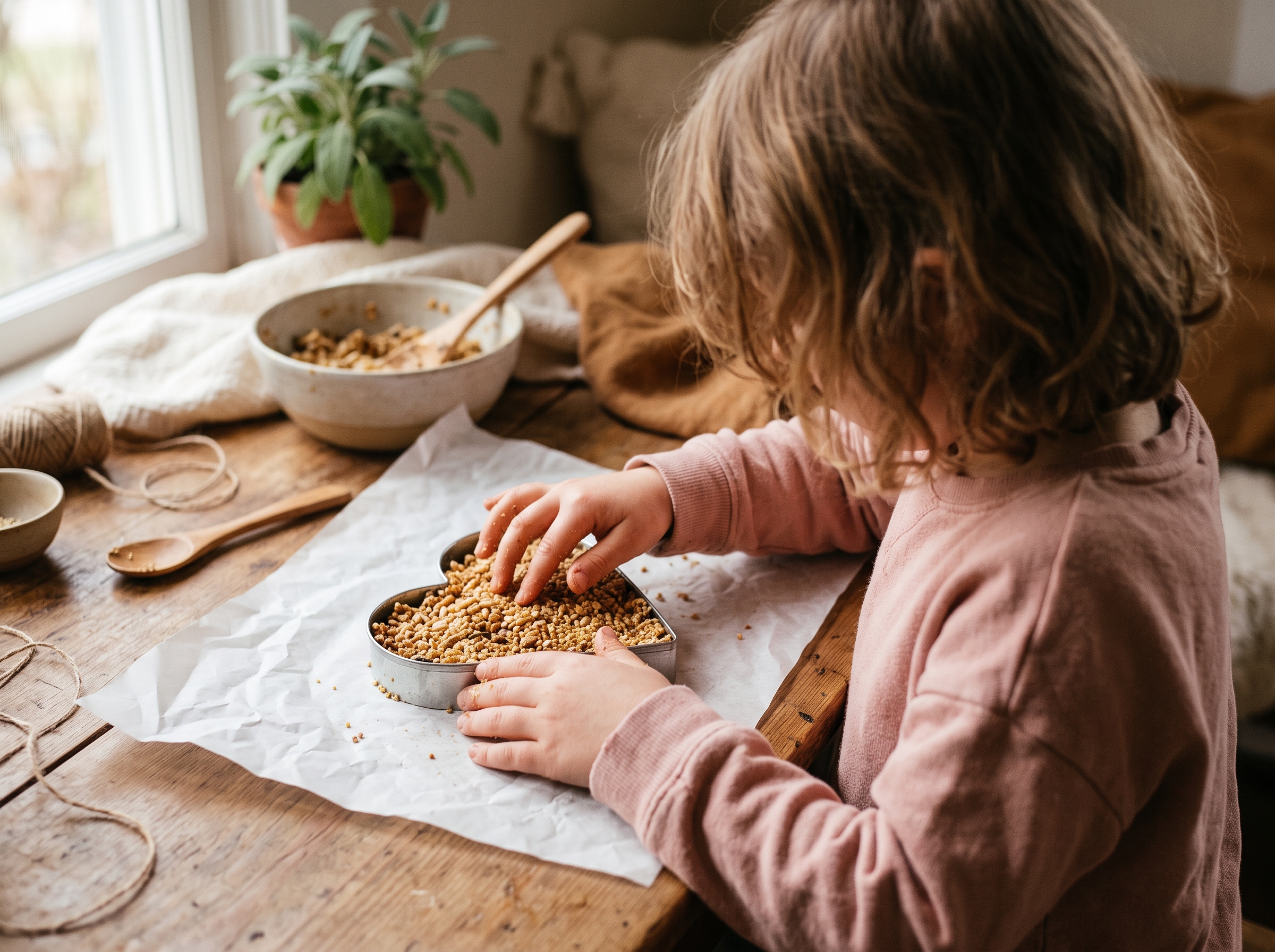
- Press the mixture firmly into the cookie cutter, packing it as tight as you can. Have kids use their palms and lean into it, this is the most tactile, satisfying step, and it’s also what determines whether the feeder holds its shape.
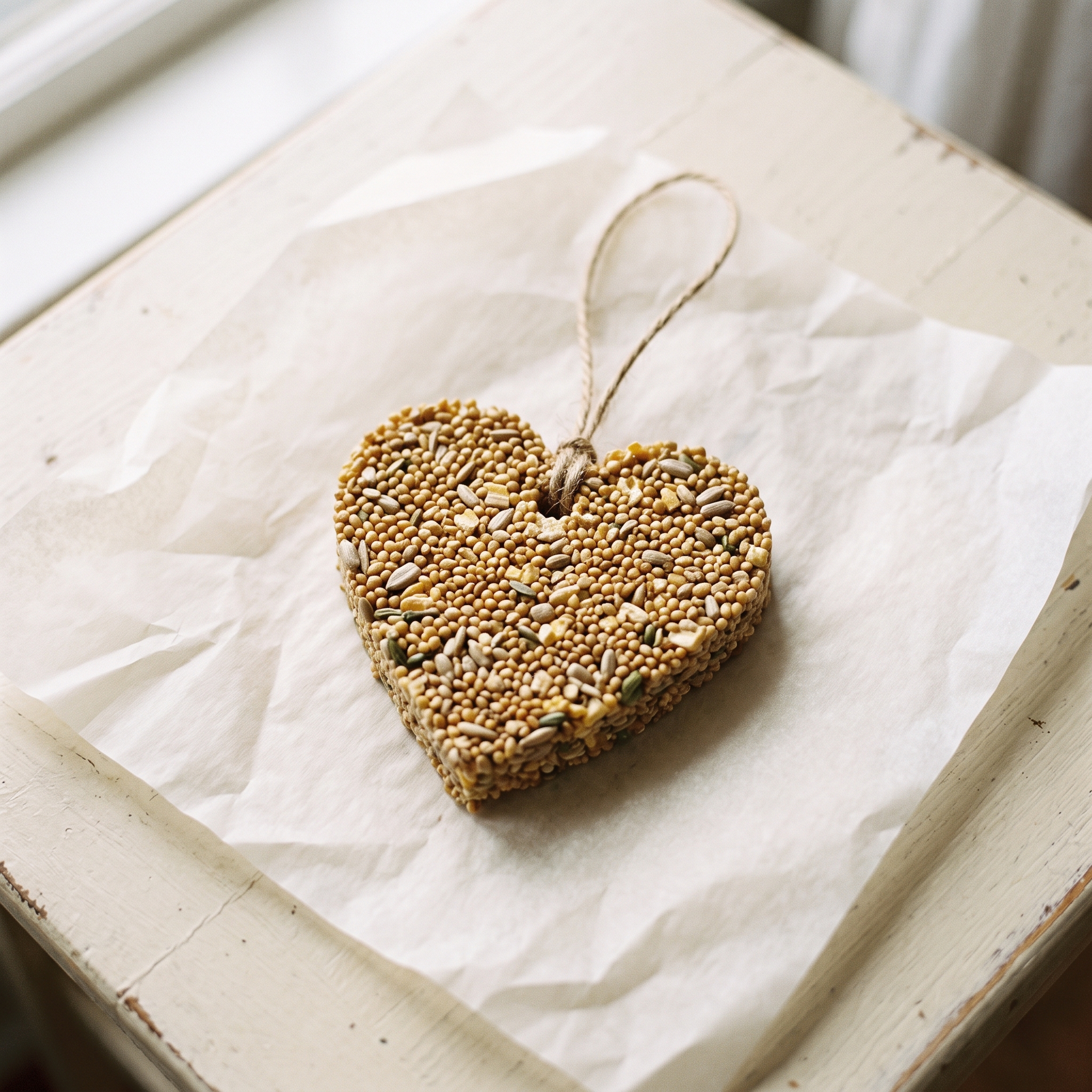
- Push a metal straw through the top of the heart, about ½ inch from the edge, to create a clean hanging hole.
- Let the feeder set at room temperature for at least 6 to 8 hours, or overnight. In humid climates, go the full 8 hours minimum.
- Gently slide the cookie cutter off once the feeder is completely firm. If it feels soft at the edges, give it another hour.
- Thread twine through the hanging hole, tie a secure double knot, and hang outdoors on a branch or shepherd’s hook.
Tips for a Heart Bird Feeder That Actually Holds Together
This is where a lot of homemade bird feeder tutorials go silent. Competitors mention drying time, but not much else. After making a few batches with kids, here’s what actually matters.
Binder ratio: The 1-packet-of-gelatin to ¾-cup-flour ratio is the sweet spot. Add too much flour and the feeder dries crumbly. Add too little and it never firms up. Stick to the recipe the first time, then adjust from there.
Humidity is the enemy: If you’re in the South or Pacific Northwest where humidity is a factor, add 1 extra tablespoon of flour and plan on the full 8-hour dry time. Rushing it in a humid kitchen is the most common reason feeders fall apart on the hanger.
Thickness matters: Pack the mixture at least ¾ inch thick. Thinner than that and the feeder may snap when you thread the twine or hang it outside. A 3-inch cutter yields about 6 feeders; a 4-inch cutter yields about 4.
Outdoor durability: Gelatin-based feeders hold up well in dry, cold weather. Rain will soften them. Plan to replace after heavy rain or every 2 to 3 weeks as a general rule. Think of them as consumable and make extras.
Variations
1. Peanut Butter Pine Cone Version
Roll a peanut butter-coated pine cone in birdseed for the simplest version of a pine cone bird feeder craft, no baking or drying required. It works for ages 3 and up, takes about 10 minutes, and is great when you want something instant. Plain peanut butter mixed with a little cornmeal is a bird-feeding staple recommended by the National Audubon Society, so standard grocery-store peanut butter works fine here.
2. Valentine’s Gift Set
Make a batch of 4 to 6 hearts, let them dry overnight, and wrap in a small kraft paper bag tied with red ribbon. Add a handwritten tag that says “Be mine… and the birds’!” They make low-waste, thoughtful gifts for grandparents, neighbors, and teachers who have outdoor space, no candy required.
3. Cardinal Mix
Swap standard mixed seed for a sunflower-heavy blend to attract Northern cardinals. Nyjer seed or thistle in the mix brings in American goldfinches. Check the seed label, a mix with roughly 50% or more black-oil sunflower seeds will draw the most varied visitors.
4. Cookie Cutter Garland
Use a variety pack of small 2-inch cutters (stars, circles, and hearts) and hang several together on one long strand of twine. The garland effect is adorable draped across a porch railing or low branch, and the smaller size means faster drying and more feeders per batch.
5. Classroom Scale-Up
For 24 kids, multiply the recipe by 6, use 2-inch cutters, and pre-mix all dry ingredients at home before class. At school, kids add the water and oil, stir, and press. Active time drops to about 15 minutes per group, and every child goes home with their own feeder. Pre-bag individual dry ingredient portions in sandwich bags to make it even smoother.
What Birds Will Actually Visit Your Heart Bird Feeder
Kids need to know what they’re watching for. Setting that expectation ahead of time makes the whole project more exciting, and it turns window-watching into an actual activity instead of a vague “maybe a bird will come.”
With a standard mixed birdseed blend, these are the most common backyard visitors across most of the U.S. in winter:
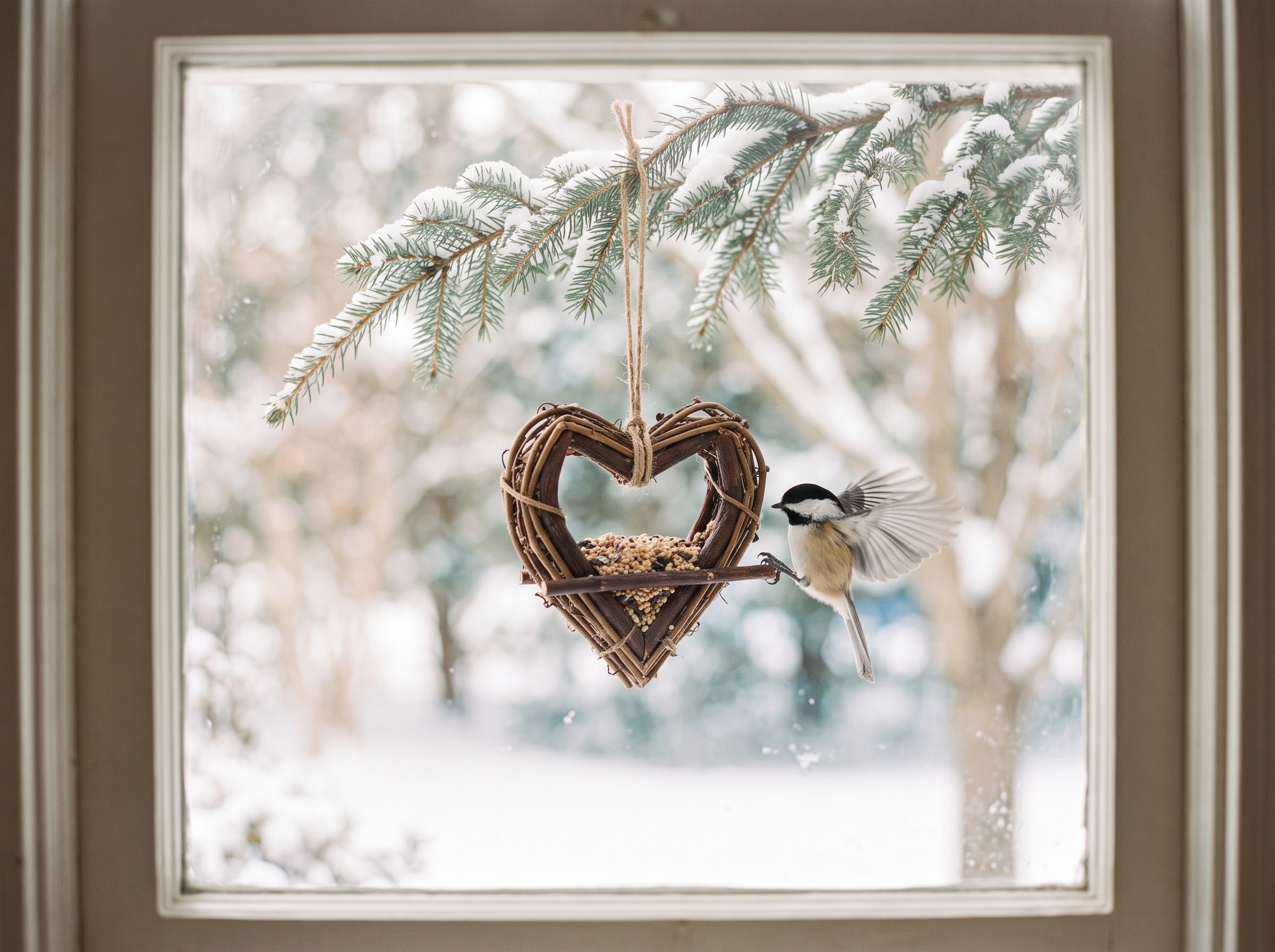
- Black-capped chickadees: usually the first to find a new feeder, bold and curious
- Dark-eyed juncos: ground feeders who’ll pick up anything that falls below the feeder
- House sparrows: arrive in small flocks and move fast
- Northern cardinals: drawn to sunflower seeds; the male’s red coloring makes him easy to spot
- American goldfinches: more likely if your mix includes nyjer seed; bright yellow in summer, olive-yellow in winter
For best results, hang the feeder at least 5 feet off the ground and within 10 feet of shrubs or a tree line. Birds feel safer approaching a feeder when they have a quick escape route nearby. Print a free backyard bird ID chart from the Cornell Lab of Ornithology and tape it to the window so kids can check off each species as they spot it. That simple add-on turns a one-day craft into a weeks-long nature project.
Frequently Asked Questions
How long do homemade heart bird feeders last outside?
In dry, cold winter weather, a gelatin-based heart bird feeder typically holds up for 2 to 3 weeks. Rain and humidity will cause them to soften and crumble faster. Replace them after any heavy rain or every couple of weeks as a general rule. Making extras when you first mix a batch means you’ll always have a fresh one ready to swap in.
Can I make a heart bird feeder without gelatin?
Yes. Two tablespoons of corn syrup or unsalted peanut butter work as substitutes. Corn syrup feeders are stickier and may not hold a clean shape as well as gelatin. Avoid honey entirely, it can harbor bacteria that’s harmful to birds, according to bird welfare guidelines from the National Audubon Society.
What’s the best birdseed to use for a bird feeder craft?
A standard mixed birdseed with black-oil sunflower seeds works well for most backyard birds. For cardinals specifically, increase the sunflower seed ratio. Avoid cheap mixes that are heavy in milo (the small round reddish seed), most North American birds skip it entirely, and it just ends up on the ground.
Is this the same as a pine cone bird feeder craft?
They’re similar in concept. Both use birdseed and a binder, but this heart bird feeder uses a cookie cutter mold instead of a pine cone, which gives you a cleaner shape and works better for younger kids. Pine cone feeders are a great no-mold alternative for ages 3 and up, especially if you want something even faster to assemble.
Can kids make this as a Valentine’s Day gift?
Absolutely. Make a batch of 4 to 6 hearts, let them dry overnight, and tuck them into a small kraft bag with a ribbon and handwritten tag. They make thoughtful, low-waste gifts for grandparents, neighbors, or teachers who have a yard or balcony. A gift that feeds birds for weeks is the kind that people actually remember.


