
Recycled Art Projects for Kids
Recycled art projects for kids are crafts that use household materials headed for the trash, cardboard tubes, egg cartons, plastic bottles, and tin cans, to create art, sculptures, and functional objects while building creativity and sustainability habits.
Last updated: June 2026
Quick Answer: What Are Recycled Art Projects for Kids?
Recycled art projects for kids turn everyday throwaway items into something your child actually made with their own hands. Egg cartons become dragonflies. Cereal boxes become robots. Toilet paper tubes become bird feeders. These projects cost next to nothing, fill a rainy afternoon beautifully, and quietly teach kids that trash has a second life. Ages 3 through 12 can all participate, just at different levels of complexity.
Here’s the thing: if you’ve ever stood over the recycling bin holding an egg carton and thought, “my kid could do something with this,” you’re already halfway to a craft project. That little pause is where all of this starts. Let me show you how to actually act on it, without turning your kitchen table into a permanent landfill.
Age Range: 3-12 (with notes by age below) | Time: 20-45 minutes depending on complexity | Mess Level: Medium, manageable with a drop cloth
Why Recycled Art Is More Than Just a Craft
I know it can feel like just a fun way to pass time, but recycled art is doing double duty. Kids who build and create with materials that were headed for the trash start to see garbage differently. That shift in perspective, in my experience, sticks with them in a way that a classroom lesson alone doesn’t.
There’s also the money angle. These projects are essentially free. You’re not running to the craft store, you’re just saving what you’d toss anyway. That makes recycled art projects a reliable go-to for rainy days, school breaks, and Earth Day activities without spending a dime.
Groups like the National Wildlife Federation have long paired hands-on crafts with nature education, through programs like Ranger Rick, on the idea that kids build a stronger bond with conservation when they’re making something with their own hands, not just hearing about it. It makes sense to me too. When a kid glues bottle caps onto a robot they built themselves, recycling becomes something personal, not just a rule. You can read more about how they blend crafts with nature education at nwf.org.
And for the developmental side of things, these projects build fine motor skills, spatial reasoning, and creative problem-solving in ways that open-ended play does best. Worth the egg carton savings.
Set Up Your Home Recycling Craft Bin First
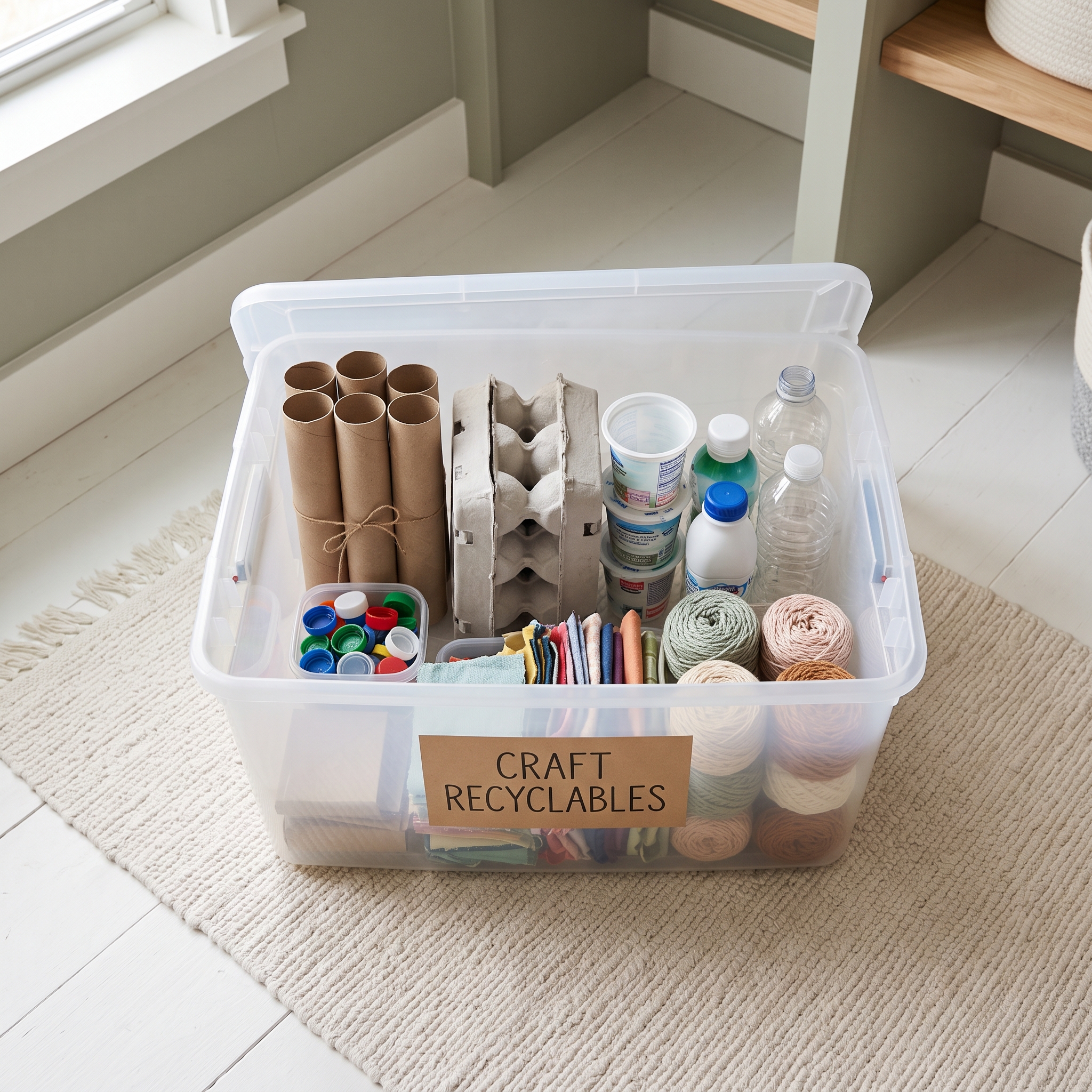
Before you can do any of these projects, you need a system. Without one, recyclables end up in a pile that stresses you out instead of inspiring your kids. A dedicated bin solves this completely.
One lidded tote (around 12 gallons) works well. Keep it in a corner of the garage, laundry room, or craft closet. Label it clearly so everyone in the house knows what goes in.
What to collect:
- Cardboard tubes (toilet paper, paper towel)
- Egg cartons (paper or foam, rinsed)
- Plastic bottles, rinsed thoroughly
- Bottle caps in various sizes
- Tin cans with edges taped smooth
- Old CDs or DVDs
- Cereal boxes and shoeboxes
- Newspaper and junk mail
- Fabric scraps and yarn
- Foam produce trays, rinsed well
What to skip:
- Greasy pizza boxes
- Anything with sharp unfinished edges
- Single-use produce bags (too flimsy to work with)
- Meat trays, especially for school projects
One practical tip: do a quick cleanout every 2-4 weeks. Pull out anything that’s gotten too squished or soggy, and suddenly the bin feels fresh and exciting again. Your kids will actually dig through it looking for ideas.
Materials
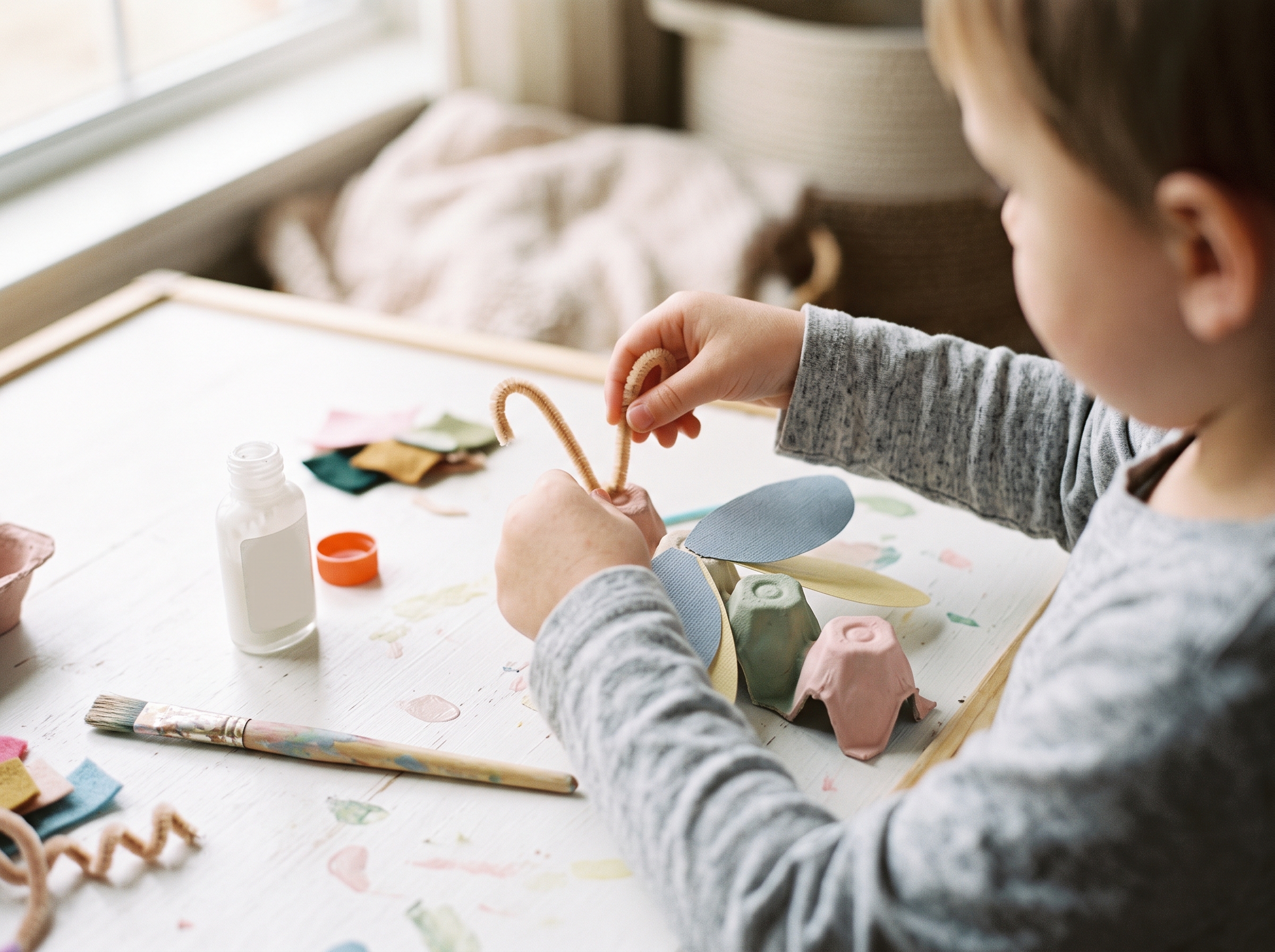
The list below supports the featured step-by-step project (Cardboard Junk Robot) and most of the variations. The good news: almost everything here costs $0 because it’s already in your bin. Only the glue, paint, and embellishments may need a quick purchase.
- Cardboard boxes (cereal, shipping, or shoeboxes) in a few different sizes
- Toilet paper and paper towel tubes
- Egg cartons (paper or foam)
- Plastic bottle caps in various sizes
- Tin cans with edges smoothed using tape or sandpaper
- Old CDs or DVDs
- Craft glue or a low-temp hot glue gun (adult use only)
- Acrylic or washable tempera paint
- Foam brushes and sponges
- Googly eyes, pipe cleaners, and yarn (optional embellishments)
- Markers or paint pens for detail work
Steps: Cardboard Junk Robot
The robot is a great featured project because it works for ages 4 through 12, hits that school-project sweet spot, and produces the kind of result kids want to show off. There’s no wrong way to build it, and the wilder it looks, the better.
- Gather 3-5 cardboard boxes in different sizes for the body, head, and limbs.
- Paint all pieces with a base coat in your child’s color of choice and let dry completely, about 20 minutes.
- Lay out the robot’s layout flat on the table before gluing anything so you can adjust placement first.
- Glue the largest box as the torso and a smaller box directly on top as the head.
- Attach toilet paper tubes as arms and legs using craft glue or hot glue (adult-only step).
- Press bottle caps onto the body as buttons, dials, and decorative panels.
- Cut egg carton cups apart and glue them on as ears, a nose, or antenna bases.
- Add pipe cleaners, yarn, or torn paper strips as wires, hair, or finishing details.
- Use markers or paint pens to draw on facial features, circuit lines, or a name plate for the robot.
- Let the finished robot dry flat for at least 30 minutes before standing it upright.
The messier and more personality-packed, the better. If it looks perfectly tidy, it’s probably not quite done yet.
Variations
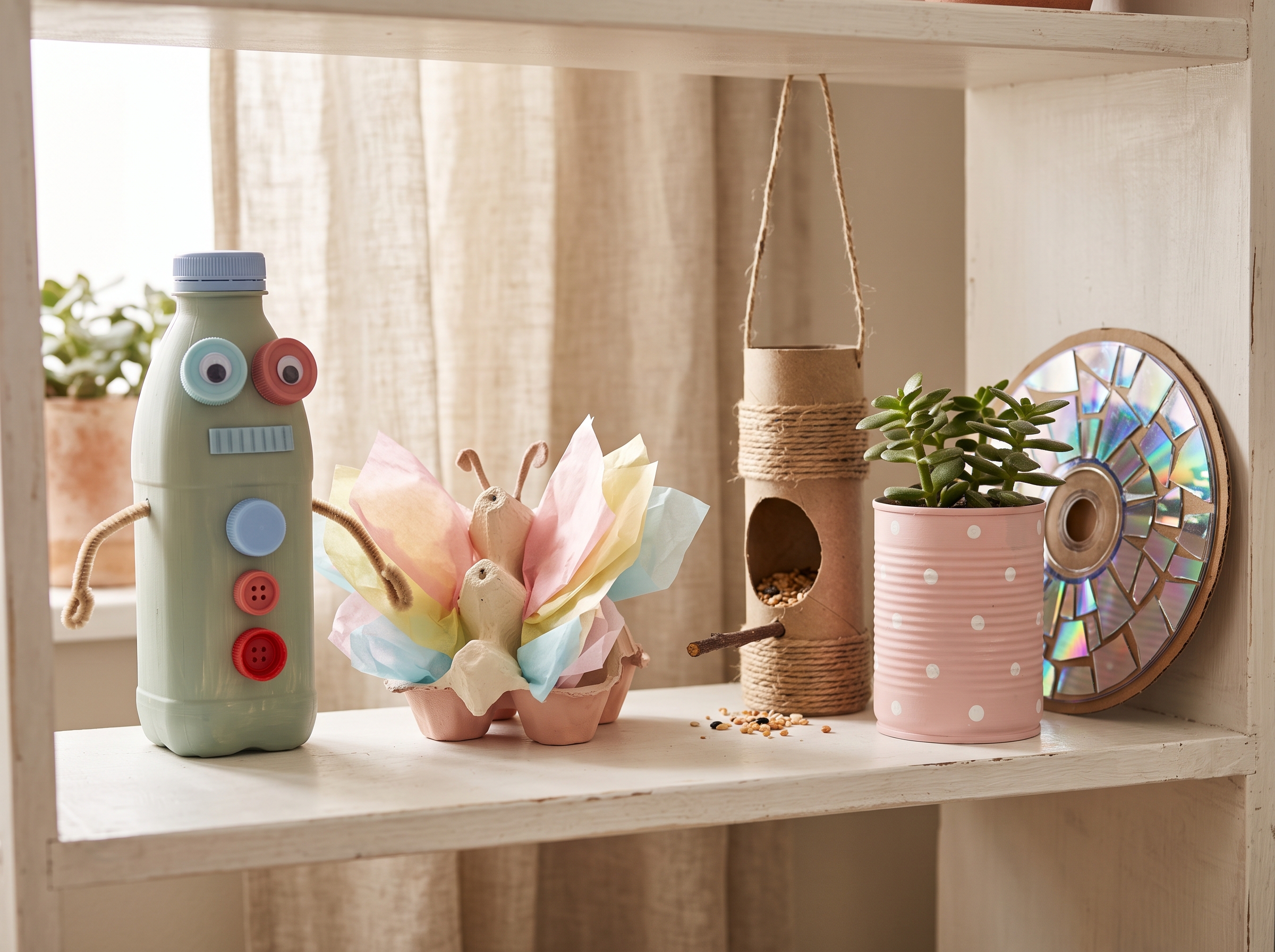
Once your kids get the idea, they’ll want to keep going. These variations cover a range of ages and different recyclable materials, so you can grab whichever one fits what you have on hand.
Egg Carton Dragonfly (Ages 3-5): Cut egg carton cups into segments, paint them bright colors, add pipe cleaner antennae, and attach construction paper wings. Fast, low-mess, and kids this age absolutely love the end result.
Plastic Bottle Fish Scene (Ages 5-8): Flatten clean water bottles slightly, cut them into fish shapes, paint with acrylic, and mount on blue poster board for a display piece. This one is great for a school bulletin board or a bedroom wall.
Tin Can Wind Chimes (Ages 6-10): Paint rinsed tin cans with taped edges, punch small holes in the bottom, and thread with twine. Hang bottle caps or old keys below each can as clappers. These look beautiful on a porch and kids love that they actually make sound.
CD Mosaic Wall Art (Ages 8-12): An adult breaks old CDs into irregular shards (safety goggles required), then kids arrange the pieces on a canvas or wood board with strong adhesive in a mosaic pattern. The reflective surface is stunning, and this one works as a middle school art project.
Cardboard Collage (All Ages, Collaborative): Inspired by the process-art approach you’ll see at ARTBAR, this one is perfect for sibling groups or classrooms. Glue a mix of assorted recyclables onto a large piece of cardboard, then paint the whole structure in mixed colors. Every single person who tries this ends up proud of it.
If your toddler is itching for a no-mess painting option alongside these projects, a sealed-bag painting activity pairs really well with any of these for the under-3 crowd who just want to be part of the action.
Recycled Art Projects Broken Down by Age
One of the biggest challenges with any craft is figuring out whether it’s too hard or too easy for your specific kid. Here’s a quick guide so you’re not mid-project before realizing you need four more hands.
Ages 3-5 (Preschool and Kindergarten)
At this age, the process matters way more than the outcome. Focus on tearing, pressing, and simple gluing rather than cutting. Egg carton stamping, bottle cap collages, and tissue paper layered onto cardboard all work beautifully. Pre-cut every piece ahead of time and let your child assemble and paint freely. Expect 15-20 minutes before attention moves on, and that’s completely fine.
Ages 6-8 (Early Elementary)
This age group can follow simple multi-step instructions and paint with a lot more control. Toilet roll bird feeders, the cardboard junk robot, and plastic bottle fish are all great fits. The key tip here: let them make their own design choices. Resist the urge to step in and “fix” the proportions or the color choices. Their version is the right version.
Ages 9-12 (Upper Elementary and Middle School)
Older kids can plan ahead, use a hot glue gun with supervision, and handle more complex designs. CD mosaic art, tin can lanterns, and cardboard architectural models all hit well for this group. Try framing the project as a design challenge, something like “build the tallest freestanding structure using only cardboard and tape,” and you’ll get way more engagement than a straightforward craft prompt. Many upper-elementary and middle school recycled art projects also count toward science or environmental studies assignments, so it’s worth mentioning to the teacher before the project starts.
For more hands-on activities across different age ranges, the toddler learning activities guide has ideas that build the same fine motor and creative skills in the youngest kids, so siblings aren’t left out.
More Quick Recycled Art Ideas by Material
If you’ve already made the robot and you want to keep going, here are more ideas organized by what you have on hand.
- Newspaper: Papier-mache bowls, origami animals, or rolled paper beads for jewelry
- Cereal boxes: Bookmarks, mini notebooks, or weaving looms (score and fold the flat cardboard)
- Plastic bags: Melt two sheets between parchment paper with a low iron to create fused-plastic “stained glass” panels (adult supervision required)
- Cardboard tubes: Kaleidoscopes, stamp tools (cut slits in the end and fan out), or sections of a marble run
- Glass jars: Painted lanterns, DIY snow globes, or small terrarium displays
- Foam produce trays: Printing plates, draw a design with a dull pencil to press into the foam, roll paint over it, then press paper on top to print
The foam tray printing technique in particular is one of those ideas that sounds too simple and then completely surprises you with how good the results look. Kids can make repeat prints, layer colors, and create their own wrapping paper or greeting cards.
Tips for Making Recycled Art Projects School-Ready
Many US elementary schools welcome recycled art for science, environmental studies, and art class. A few things make the difference between a project that lands well and one that falls apart on the display shelf.
- Use hot glue for structural pieces: White school glue works for flat collages, but anything that needs to stand upright or hang on a wall needs a hot glue gun. Keep that step adult-only for kids under 8.
- Add a materials card: A small index card listing what each material was recycled from gives the project a writing component, and teachers tend to love that. It also shows the child actually understands the purpose of the project.
- Distribute supplies for group projects: If a whole class is participating, assign each child one material type to bring in. You’ll end up with a diverse supply without one family hauling in everything.
- Rinse everything thoroughly: Some schools have specific guidelines about food containers. When in doubt, rinse twice and skip meat trays entirely for school settings.
- Check with the art teacher first: A quick email before sending your kid in with a shoebox robot can save everyone confusion and give the teacher a heads-up to carve out display space.
The EPA’s recycling education resources are also a great add-on if your child’s teacher wants to tie the project into a broader sustainability unit.
Frequently Asked Questions About Recycled Art Projects for Kids
What are the easiest recycled art projects for kindergarten kids?
Egg carton caterpillars, bottle cap collages, and cardboard tube animals are ideal for ages 3-5. They require minimal cutting, use chunky materials that small hands can handle, and can be done in under 20 minutes. Pre-cut all the pieces beforehand and let your child do the assembling and painting freely. The American Academy of Pediatrics’ HealthyChildren.org points out that open-ended art activities, gathering, arranging, and coloring materials on their own, build both creativity and fine motor skills in young kids. You can read more at healthychildren.org.
Can recycled art projects work as school assignments?
Yes, and many teachers are glad to receive them for science, environmental studies, and art class. Make sure containers are thoroughly rinsed, use hot glue for anything structural, and include a brief label explaining which materials were recycled and why. A written component like that turns it into a cross-subject assignment, which most teachers appreciate.
What recycled materials are best for kids’ art projects?
The most versatile materials are cardboard boxes and tubes, egg cartons, plastic bottle caps, and tin cans with smoothed edges. These hold paint well, are easy to cut with child-safe scissors or adult prep, and are available in almost every US household for free. Bottle caps are particularly great because they come in so many sizes and add instant texture and color to any project.
Are recycled art projects good for kids’ development?
Beyond creativity, they build fine motor skills, spatial reasoning, and problem-solving. Kids have to figure out how to make materials work together, which means they’re doing design thinking without calling it that. The environmental awareness piece is a bonus: kids who regularly create with recycled materials tend to think more carefully about what they throw away.
How do I keep recycled art supplies from becoming clutter?
One labeled bin with a lid is the whole system. Keep only what fits inside it, and do a quick purge every 2-4 weeks. That natural limit actually helps kids get more creative because they’re working with whatever’s in there rather than waiting for the “perfect” supply. When the bin is full, it’s time to make something.


