
Best Preschool Board Games for Learning Through Play
Preschool board games are structured tabletop games designed for children ages 3–5 that build early skills like counting, color recognition, turn-taking, and letter identification through guided play.
Last updated: June 2026
Quick Answer: Best Preschool Board Games for Ages 3–5
The best preschool board games combine five rules or fewer, play times between 10 and 20 minutes, and chunky pieces small hands can manage independently. Standout picks include The Sneaky, Snacky Squirrel Game for youngest players, Zingo for early readers, and Hi-Ho Cherry-O for counting practice. Each one covers multiple developmental skills in a single 15-minute session, which is a win for everyone at the table.
You know that moment when you pull out a 300-piece puzzle, your 3-year-old scatters half of it across the floor, and you’re already questioning your life choices before 8 a.m.? Same. The good news: the right preschool board game changes everything. Simple rules, short sessions, and a surprising amount of real learning happening while they giggle. That’s the sweet spot we’re going after.
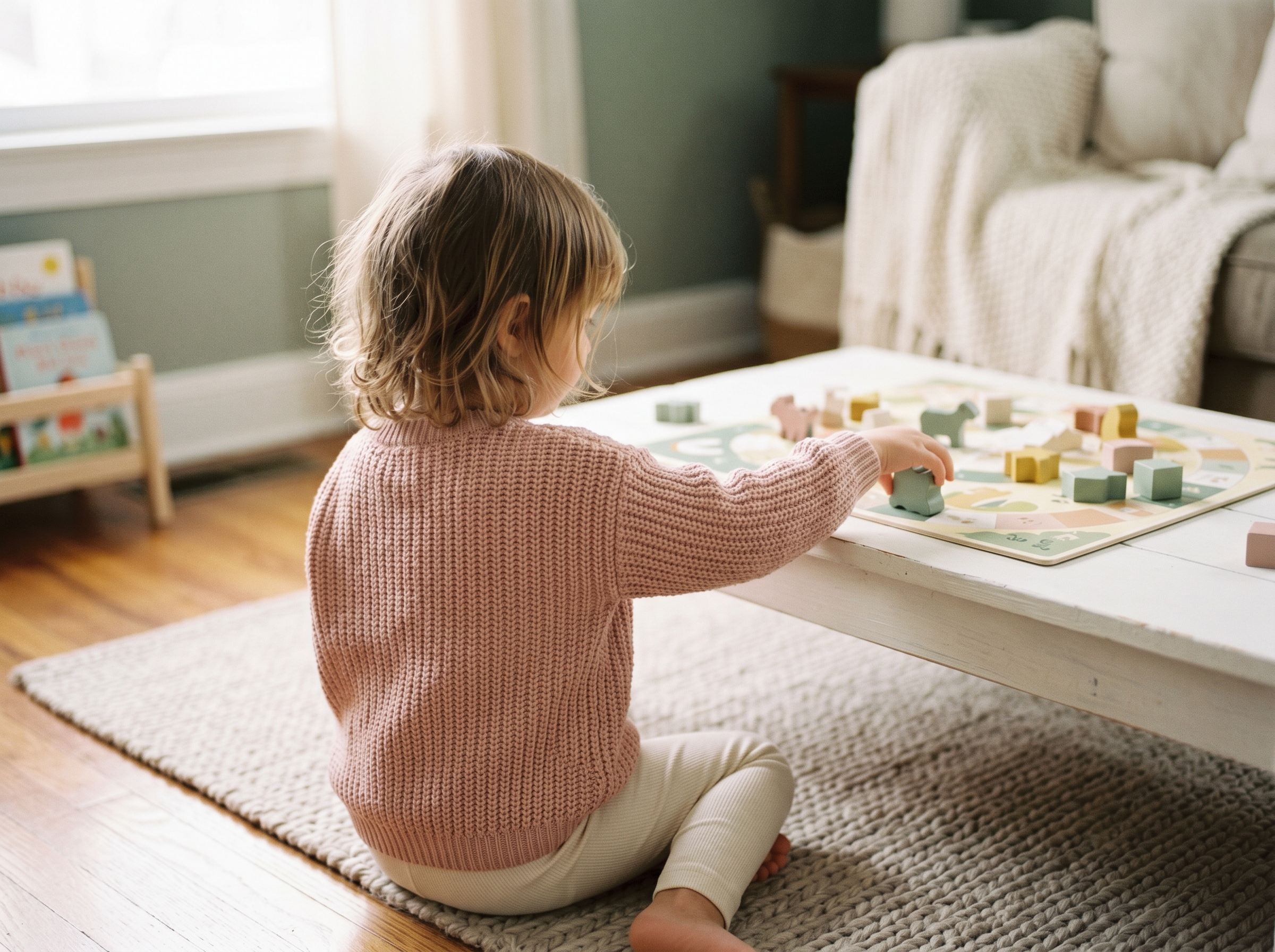
Age Range: 3–5 years (specific age notes per game below) | Time Per Game: 10–30 minutes | Players: 2–6 (most picks work with just 2)
Why Preschool Board Games Are Worth the Shelf Space
The American Academy of Pediatrics points to play-based learning as a powerful driver of healthy cognitive development in children ages 3–5, and structured tabletop play fits squarely in that category. A single game session can cover three to five developmental domains at once: language, early math, executive function, fine motor skills, and social-emotional learning. That’s a lot happening while your kid is just trying to collect acorns.
According to ZERO TO THREE’s guidance on choosing toys for toddlers, board games encourage counting, matching, and memory, while also teaching self-control as children learn to follow rules and practice being gracious. Screen time can hit some of those same goals, but it doesn’t give you the face-to-face connection or the physical manipulation of pieces that small hands actually need. Some of our best conversations as a family happen over a game of Hi-Ho Cherry-O. Priceless.
If you’re looking for more ways to fill an afternoon, a rotation of indoor toddler activities pairs perfectly with a regular game shelf.
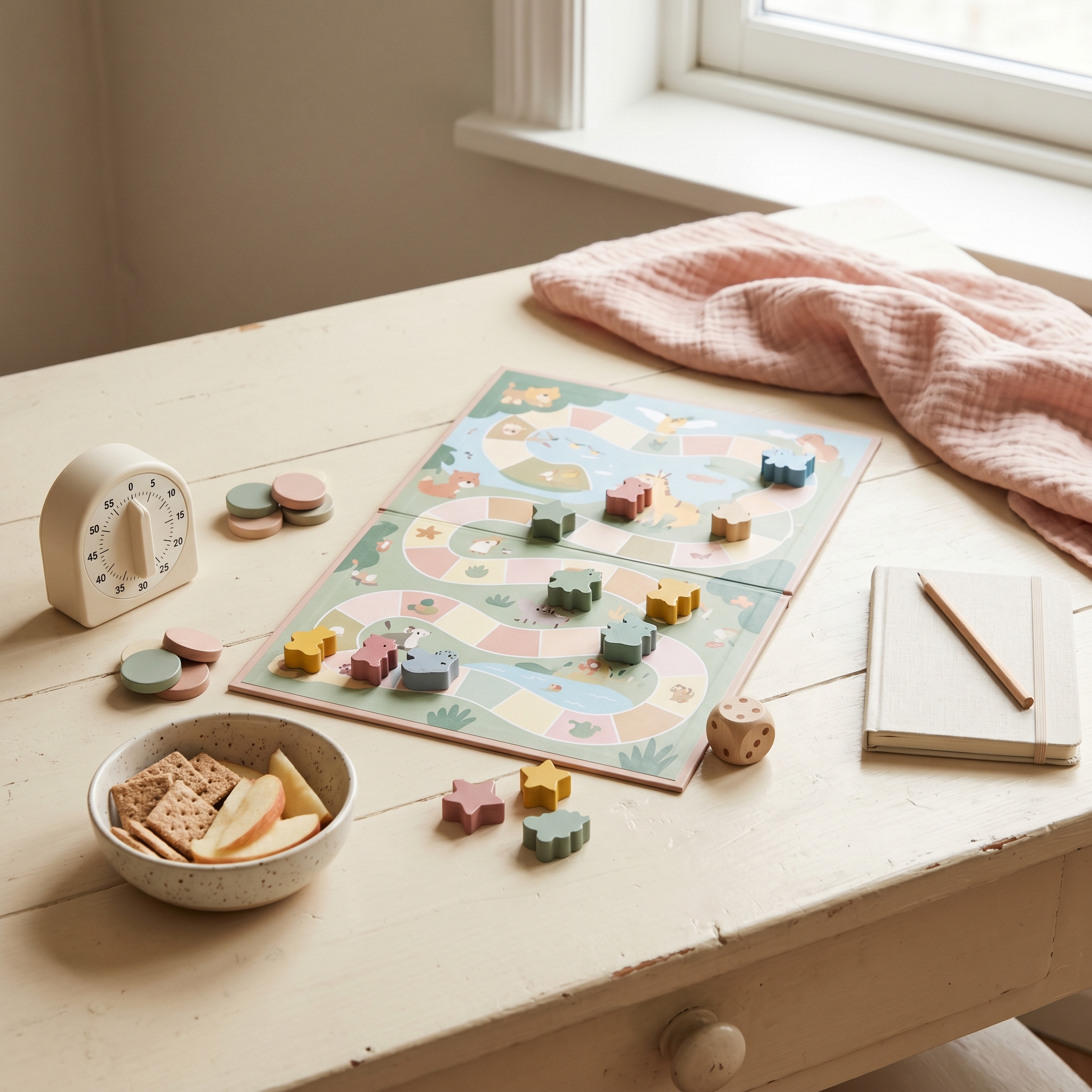
What You’ll Need to Run a Preschool Game Session
- A flat surface at kid height: the floor or a coffee table around 16–18 inches works best
- A game with 5 rules or fewer: non-negotiable for ages 3–4
- 10–20 minutes of uninterrupted time: post-nap or right after school is the sweet spot
- A small snack nearby: optional, but it dramatically reduces mid-game hangry meltdowns (real talk). A bowl of easy snacks for kids keeps everyone fueled through a full round
- 2–6 players: every pick on this list works perfectly with just one parent and one child
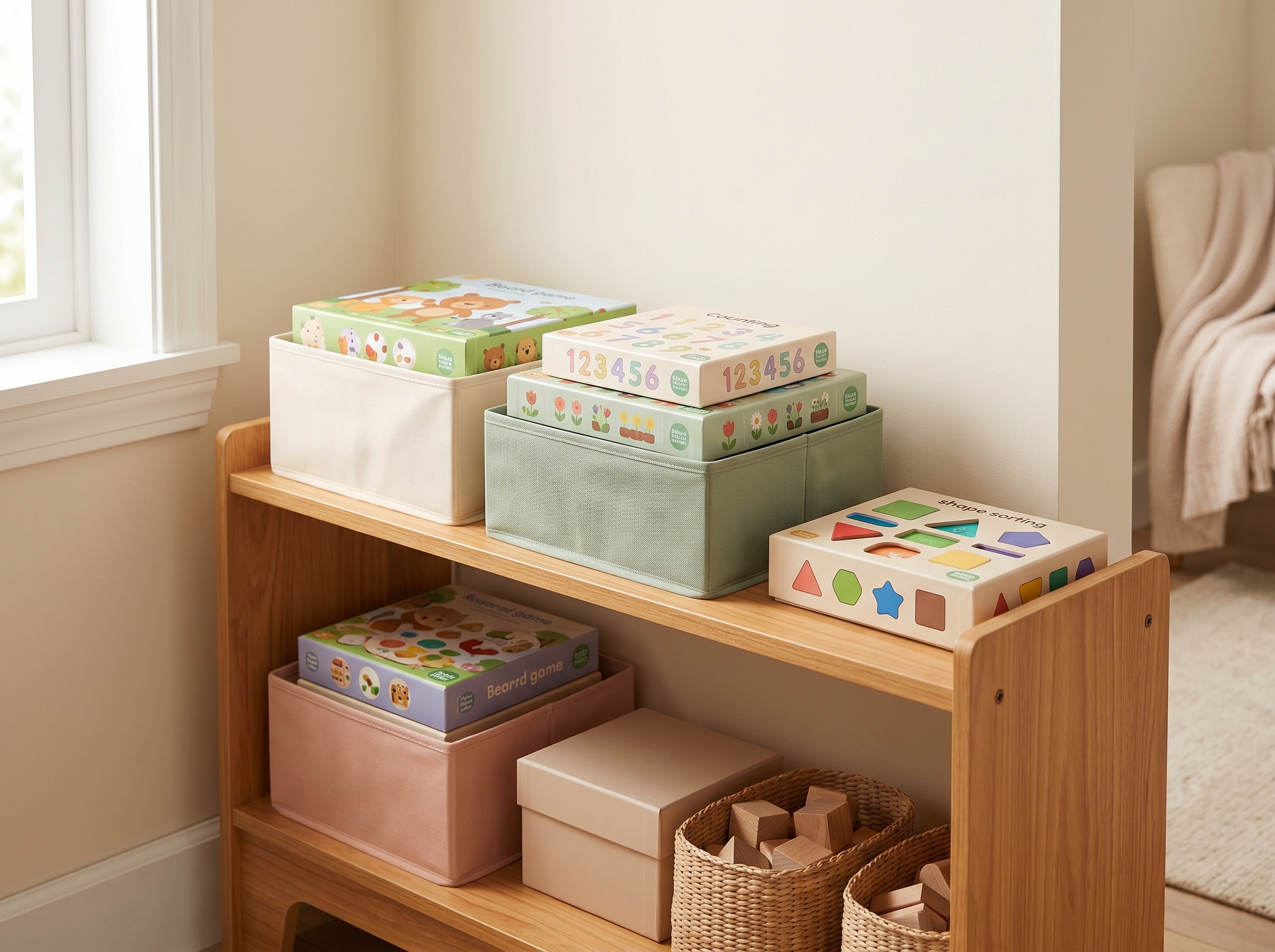
- A low shelf or bin kids can reach independently: giving them ownership of game time means they’ll actually ask to play
How to Set Up Your First Preschool Game Session
The setup matters as much as the game. A little prep on your end means fewer tears on theirs.
- Choose a game rated for your child’s exact age. A 3-year-old and a 5-year-old need very different complexity levels, and the per-game callouts below spell that out clearly.
- Read the rules yourself first. It takes two or three minutes and means you won’t be fumbling through the insert while your toddler starts eating the pieces.
- Set up the board before your child sits down. Reducing setup time removes the “I’m already bored” window that derails everything.
- Do one practice round out loud: “Watch what Mommy does first.” Kids this age learn by watching, not by reading instructions from a folded insert.
- Keep the first session to one game only, even if they beg for more. Ending while they’re still excited is what makes them ask again tomorrow.
- Let your child help put the pieces away when you’re done. It’s a bonus fine motor round and builds the habit of caring for the game.
What Kids Actually Learn, Broken Down by Skill
Most articles about learning games for preschoolers just list titles. What they skip is the “why it works” part. Here’s what’s actually developing across the table.
Early Math Skills
Counting from 1 to 10, one-to-one correspondence (touching each object as you count it), color sorting, and shape recognition are all covered by the right game. Hi-Ho Cherry-O builds exactly this: players collect 10 cherries one at a time, so every turn is a live counting exercise. Sneaky, Snacky Squirrel adds color matching on top of that.
Early Literacy and Language
Letter recognition, vocabulary, and picture-to-word association emerge naturally in games like Zingo, where a tile shows both a word and an image simultaneously. The American Academy of Pediatrics notes that rich vocabulary exposure in the preschool years directly supports kindergarten reading readiness, and a 10-minute Zingo session delivers more word repetition than most parents realize.
Executive Function (The One Parents Overlook)
Executive function covers three things: impulse control (waiting your turn instead of grabbing), working memory (remembering the rules from one turn to the next), and emotional regulation (not flipping the board when you lose). These aren’t soft skills. According to the Harvard Center on the Developing Child, executive function skills in early childhood are a critical foundation for school readiness, and strengthening them early pays off across learning and life. Every turn-based game your child plays is a rep toward that skill.
Fine Motor Skills
Picking up small game pieces, spinning a spinner, and holding cards in a small hand all build the hand strength and coordination that will later transfer to pencil grip and writing. Games with oversized or tool-based pieces (the Sneaky Snacky Squirrel tongs, the wooden animals in Animal Upon Animal) are the right call for ages 3 to 3.5, when that dexterity is still developing.
Social-Emotional Skills
Taking turns, winning without gloating, and losing without a full meltdown are genuine skills that need practice. Board games are one of the few structured environments where kids get consistent, low-stakes reps at all three. More on handling the inevitable meltdown below.
For more skill-building ideas that use everyday materials, the toddler learning activities roundup covers a lot of complementary ground.
The Best Preschool Board Games, Organized by What They Teach
Instead of a straight ranked list, I’ve organized these by skill so you can match the game to what your child actually needs right now.
Best for Color and Counting (Ages 3+)
The Sneaky, Snacky Squirrel Game (Educational Insights)
Ages 3+, 2–4 players, about 15 minutes, around $20. Players use a squirrel-shaped tong to pick up colored acorns and fill their log. It teaches color matching, counting to 5, and fine motor coordination all at once. The tongs are the real star here: kids who struggle with pencil grip get a sneaky fine motor workout without knowing it. Worth it. One thing to know: this is the most consistently recommended starting point for a child who just turned 3.
Hi-Ho Cherry-O (Hasbro)
Ages 3+, 2–4 players, about 10 minutes, around $12. Players spin and collect exactly 10 cherries to win, making every turn a live one-to-one counting exercise. It’s fast, it’s visual, and the concept of “more” and “less” shows up naturally as the game progresses. One thing to know: the cherries are small. If you have a younger sibling still at the mouthing stage, keep this one on a high shelf until they’re past it.
Count Your Chickens (Peaceable Kingdom)
Ages 3+, 2–4 players, about 15 minutes, around $16. This is a cooperative game: everyone wins together or everyone loses together. There is zero competition stress, which makes it the ideal first board game for a sensitive child or a kid who isn’t quite ready to process losing yet. I love recommending this one for families making their very first game-shelf purchase.
Best for Letters and Early Literacy (Ages 3–5)
Zingo (ThinkFun)
Ages 4+, 2–6 players, about 10 minutes, around $20. Zingo works like Bingo but uses picture-and-word tiles instead of numbers. Players match tiles to their card, building word-picture associations and visual scanning speed along the way. It comes with 72 tiles and 6 double-sided cards, so replayability is strong. One thing to know: the Zingo slider is extremely satisfying. Your child will want to work it on every single turn, other players’ turns included.
Chuckle and Roar Family Bingo
Ages 3+, 2–6 players, about 15 minutes, around $15. This one is a 4-in-1: Animal Bingo, Alphabet Bingo (upper and lowercase), Sight Words Bingo, and Traditional Bingo. I’d start with Animal Bingo at age 3, move to Alphabet at 4, and introduce Sight Words around 5. One box grows with your child for two-plus years, which is a good value for something that lives on the shelf that long.
Best for Fine Motor and Dexterity (Ages 3–5)
Animal Upon Animal (HABA)
Ages 4+, 2–4 players, about 20 minutes, around $25. Players stack chunky wooden animals into a tower, taking turns adding pieces without toppling the pile. It builds hand steadiness, spatial reasoning, and balance awareness in a format where the tower falling is funny rather than frustrating. HABA uses sustainably sourced wood, and the chunky pieces are safe for preschool hands. This one is the first thing I’d point to for a 4-year-old who needs a dexterity challenge.
Suspend Jr. (Melissa and Doug)
Ages 3+, 1–4 players, about 15 minutes, around $20. Players hang colorful rods on a balancing frame without knocking it over. Cause and effect, patience, and early STEM concepts around weight and balance all show up in a game that feels more like a magic trick than schoolwork.
Best Classic Games (Simplified for Preschoolers)
Candy Land (Hasbro)
Ages 3+, 2–6 players, about 20 minutes, around $9. Zero reading required. Players draw a color card and move to the matching space, full stop. That simplicity is what makes it a true independent-play option for a just-turned-3-year-old. The Bluey Edition released in 2024 has renewed preschool interest significantly, and if your kid is in a Bluey phase, this version is a slam dunk.
Chutes and Ladders (Hasbro)
Ages 3+, 2–4 players, about 25 minutes, around $10. The numbered board exposes kids to numbers 1 through 100 at a recognition level, and the visual storytelling (good choices = ladders, bad choices = chutes) sparks genuine conversation. Honest note: if luck runs cold, this game can stretch past 30 minutes with a younger child. Setting a “stopping number” in advance keeps it from outlasting everyone’s patience.
Best for Growing Readers (Ages 4.5–5)
Sequence for Kids (Jax)
Ages 3+ on the box, but I’d say 4.5 in practice. 2–4 players, about 25 minutes, around $13. Players match cards to pictures on the board to build a sequence. It introduces basic strategy concepts that most of the other games on this list don’t touch. Think of it as the graduation game: once a child has mastered the picks above, Sequence for Kids is the natural next step.
If you’re shopping for a birthday or holiday, the gift ideas for kids guide covers board games alongside a lot of other picks that kids will actually return to.
How to Know When Your Child Is Ready to Level Up
Age on the box is a starting point, not the whole answer. Developmental readiness matters more, and there are some clear signals to watch for.
Signs your preschooler has outgrown starter games:
- Follows 3-step verbal instructions without needing a reminder mid-step
- Understands that someone wins and someone doesn’t and can recover within about two minutes
- Can hold 4–6 game cards in one hand (a fine motor and working memory milestone together)
- Asks “why” questions about the rules rather than just accepting them
- Completes a 10-minute game without wandering off mid-turn
When you start seeing most of those consistently, it’s time to introduce Sequence for Kids, Spot It Jr., Sleeping Queens, or Sorry! The jump in complexity is real, but a child who’s ready will meet it.
How to Handle Losing Without a Full Meltdown
This is the part no other board game roundup covers, and it’s the part every preschool parent actually needs. Losing gracefully is a skill, and like all skills, it takes practice.
Before the Game
Name it before it happens: “Someone will win and someone won’t, and that’s what makes it exciting to try.” Framing losing as a normal part of the game, not a surprise punishment, lowers the stakes before a single piece hits the board. Avoid letting your child win every round. It’s tempting, but it works against the executive function development you’re going for.
During the Game
Narrate your own unlucky turns out loud. “Oh, I landed on a chute! That’s frustrating. Okay, my turn is over.” Seeing a parent model disappointment and move on without drama is more instructive than any conversation about feelings. Keep your reaction genuine but proportionate.
When the Meltdown Happens Anyway
It will. Here’s a script that works: “I know that feels really big right now. Do you want a hug before we put the game away?” Don’t force a “Good game!” handshake. Authentic emotional practice beats a scripted performance every time. A two-minute cool-down rule before offering a rematch gives everyone a reset without turning the moment into a bigger deal than it needs to be.
The Harvard Center on the Developing Child emphasizes that these self-regulation skills aren’t innate; children build them through everyday interactions and practice, with supportive adults helping them name and manage big reactions rather than avoid them. Coaching your child through the disappointment, rather than around it, is exactly that kind of practice.
Frequently Asked Questions About Preschool Board Games
What is the best board game for a 3-year-old?
The Sneaky, Snacky Squirrel Game and Hi-Ho Cherry-O are the most consistently recommended for exactly age 3. Both require zero reading, run on two to three simple rules, and finish in under 15 minutes. Candy Land is an equally solid pick because it uses color cards only, making it a true independent-play option for the youngest players.
Are there good preschool board games with cards?
Yes. Zingo uses picture-and-word tiles that function like a matching card game. Sequence for Kids is a card-and-board hybrid that works well for ages 4.5 to 5. Chuckle and Roar Family Bingo uses calling cards across four game modes. All three are covered with full age specifics in the game picks section above.
What do preschoolers learn from board games?
A well-chosen game covers five skill areas in a single session: early math (counting, color and shape recognition), early literacy (letter and word recognition), executive function (impulse control, working memory, emotional regulation), fine motor skills (picking up pieces, using tools, holding cards), and social-emotional skills (turn-taking, winning and losing gracefully). The “What Kids Actually Learn” section above maps specific games to each area.
Can a 2-year-old play preschool board games?
Most games on this list are officially rated 3+. At 24 to 30 months, structured game play is generally too abstract for consistent engagement. Free play with the physical pieces (sorting acorns by color, stacking wooden animals) is developmentally appropriate at that stage. By around 33 to 36 months, most kids are ready for Sneaky, Snacky Squirrel’s basic rules with a parent guiding each turn.
How long should a preschool board game session last?
Ten to 20 minutes is the developmental sweet spot for ages 3 to 4. By age 5, most kids can sustain 25 to 30 minutes comfortably. The best move is to end the session while they still want to keep playing. That’s what makes them ask for it again tomorrow.


